
Perfect Fit Roller Blinds
in Rainham
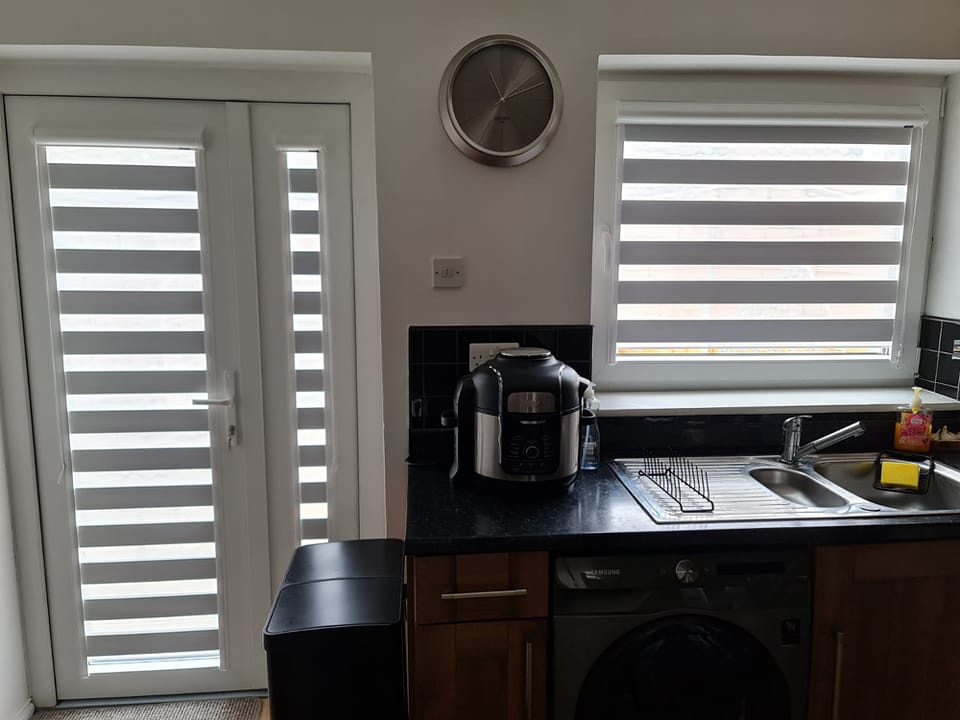
Home Decisions supplies and installs made to measure Perfect Fit roller blinds across Rainham and East London, clipped directly onto uPVC window frames with no drilling and no screws.
Perfect Fit Roller Blinds Fitted Across Rainham & East London
Perfect Fit Roller Blinds in London – Versatile Window Solutions for Every Room .
Want a roller blind that clips onto the window itself, without a single hole drilled into the frame?
That is the whole point of a Perfect Fit roller blind. Instead of brackets screwed into the wall or the recess, the blind’s own slim frame clips onto the glazing bead of a uPVC window, so it moves with the sash when it tilts or opens and comes off just as cleanly if you ever need it gone. It is the version of a roller blind most requested by tenants who cannot drill, by owners of newer uPVC-framed homes, and by anyone who has just had replacement windows fitted and does not want to put a hole in them straight away.
Home Decisions supplies and fits made to measure Perfect Fit roller blinds across Rainham (RM13), Romford (RM1 to RM7), Hornchurch (RM11 to RM12), Dagenham (RM8 to RM10), Barking (IG11), Upminster (RM14), Ilford (IG1 to IG3), and throughout East London. Every blind is made at our Rainham workshop to the exact bead measurements of your window, and fitted by the same team that measured it. No contractors, no separate installers, no gap between the person who took the measurements and the person doing the fitting.
Every job starts with a free home visit. We check your window’s bead profile and depth to confirm Perfect Fit is actually the right system for it before anything is ordered, bring physical fabric and frame samples so you can see the exact colour and opacity in your own room, and leave you with a written price. Nothing is ordered until you say yes.
What Are Perfect Fit Roller Blinds?
A Perfect Fit roller blind is a single panel of fabric wound around a small tube, housed inside a slim aluminium frame that clips onto the uPVC bead around your window rather than being screwed to the wall or recess. It is one fabric style within the wider Perfect Fit system, which also covers day and night, double roller, and pleated versions in the same no-drill frame.
Because the frame clips to the sash itself, the blind travels with the window when it opens or tilts, which a wall-mounted blind cannot do without fouling the handle. Control is usually by a small wand or a self-tensioning spring built into the frame rather than a hanging chain, since the frame is too slim to carry one, which keeps the whole thing cordless.
For the full mechanics of how the clip and bead system works, including bead depth and handle clearance, see our Perfect Fit Blinds page. This page focuses on the roller version specifically: which fabrics suit it, which windows actually take it, and where it falls short.
Where Perfect Fit Roller Actually Works
This is the detail that gets skipped on most blinds sites, and it is the one that matters most before you order anything.
Perfect Fit roller blinds clip onto the bead of a rectangular uPVC window or door frame. That is the whole mechanism. Timber frames, most sash windows, and frames with an unusual or shallow bead profile do not give the clip anything reliable to grip, so the blind will not sit securely even if the measurements are correct on paper. For the full suitability checklist across every Perfect Fit style, our guide for modern homes covers it in more depth than we go into here.
In practice, across our service area, that splits fairly cleanly by housing age:
- Newer uPVC-framed homes across Rainham, Dagenham, Romford, and the newer estates around Hornchurch and Upminster are usually a straightforward fit.
- New-build apartments at Rainham Riverside and Barking Riverside, where uPVC casement and tilt-and-turn windows are standard, are some of the easiest properties to fit Perfect Fit roller blinds in.
- Victorian and Edwardian terraces across Barking, Ilford, and East Ham are more often timber sash, even where the glass has been upgraded, and usually need a standard roller blind or curtains instead.
- 1930s semis in Dagenham and South Hornchurch are mixed. Many had uPVC replacements fitted decades ago, and bead profiles from that era can be shallower than current standard, so we check this on site rather than assuming.
We would rather tell you on the home visit that Perfect Fit is not the right system for a particular window than fit something that rattles loose within a year. That check costs nothing and takes a few minutes per window.
Measuring for Perfect Fit Roller Blinds
A Perfect Fit roller blind is less forgiving of measuring errors than most other blind types, because the frame has to grip a specific bead profile rather than simply covering a window opening.
What We Actually Measure
- Width and drop, taken bead to bead rather than glass to glass, since the frame sits on the bead itself and not on the window opening.
- Bead depth, the single most important figure for Perfect Fit. It tells us whether the clip mechanism has enough to hold onto, and it is the measurement a DIY tape-measure job most often gets wrong.
- Handle clearance, particularly on tilt-and-turn windows, so the frame does not foul the handle when the window opens or the sash swings inward.
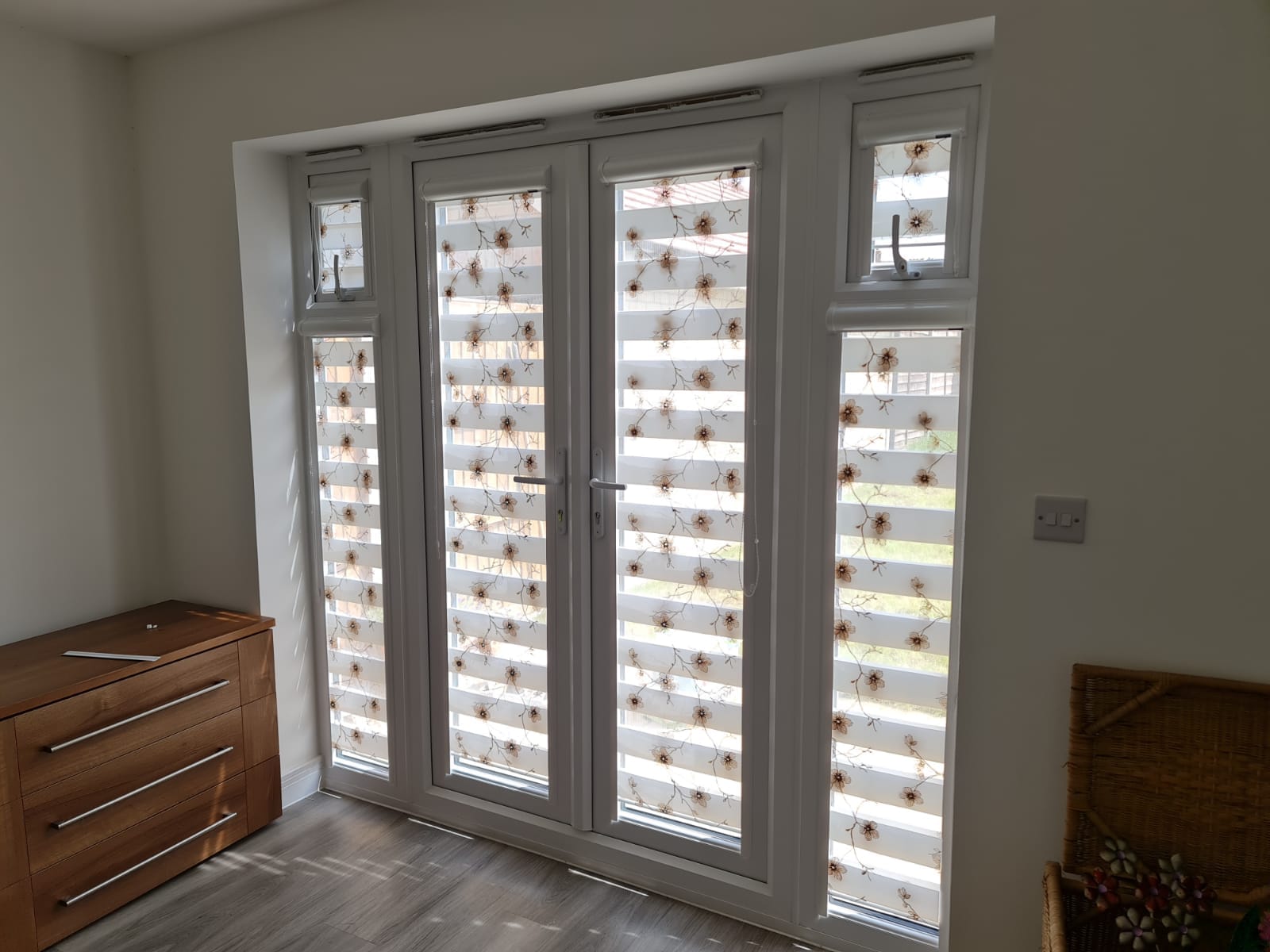
- Each pane separately on windows with more than one section, such as a French door or a bay, since every pane needs its own frame rather than one continuous blind stretched across all of them.
Why We Measure On Site Rather Than Sending a Kit
A few millimetres out on a standard roller blind still gives you a working blind, just with a slightly wider or narrower overlap at the sides. A few millimetres out on a Perfect Fit bead measurement can mean the frame does not clip on at all, or clips on but sits loose enough to let light through at the edges, which is the most common complaint about Perfect Fit blinds fitted without a proper survey. That is why every quote starts with a home visit rather than a set of instructions and a tape measure.
Stack Depth When the Blind Is Raised
The rolled fabric sits inside the frame at the top of the window, and how far it projects into the room when fully raised depends on the drop of your specific window. This matters more than people expect on windows with limited clearance above the glass, such as some tilt-and-turn openings where a handle or a trickle vent sits close to the top of the frame. It is one of the things we check and show you physically during the free home visit, rather than something to estimate from a spec sheet.
For the full measuring process across every Perfect Fit style, not just roller, see our step-by-step measuring guide.
Fabric Options for Perfect Fit Roller Blinds
The frame stays the same regardless of fabric. What changes is light control, privacy, and how the blind copes with the room it is in.
Blackout Fabric for Bedrooms and Nurseries
Blocks light fully when lowered. Popular in children’s bedrooms across Rainham and Dagenham where early summer sunrises disrupt sleep, and a common request for nurseries specifically because the frame carries no cord for a child to reach.
Light-Filtering Fabric for Living Rooms
Softens glare and keeps daytime privacy without blacking the room out. The most requested fabric for living rooms and home offices in the newer apartment blocks around Rainham Riverside and Barking Riverside.
Moisture-Resistant Fabric for Kitchens and Bathrooms
A PVC-faced or specially coated fabric that wipes clean and does not absorb steam. This is the fabric most people are actually looking for when they search for a small window blind for a kitchen or bathroom uPVC window, since standard fabrics mark and mildew quickly in that environment. Our kitchen blinds guide goes into more detail on layout-specific choices if your kitchen window sits close to the hob or sink.
Solar Fabric for Conservatories and South-Facing Glazing
An open-weave fabric that cuts heat and glare while keeping some visibility through the fabric. Relevant for conservatories and the south-facing glazing common in newer apartment developments, where the priority is usually heat rather than pure light control. See our Perfect Fit conservatory blinds page for how this plays out across a full conservatory rather than a single window.
Fire-Retardant Fabric for Rented and Shared Properties
Fabrics tested to BS 5867 Part 2 are available where a landlord or letting agent asks for it, which is worth raising at the home visit if the property is a rental or a house in multiple occupation. Not every household needs this, but it costs nothing to mention it if you are not sure whether it applies to you.
Caring for Perfect Fit Roller Fabric
Moisture-resistant and PVC-faced fabrics wipe clean with a damp cloth. Standard light-filtering and blackout fabrics should just be dusted or vacuumed on a low setting, since scrubbing them can mark the coating. We do not typically recommend a thermal-backed fabric for Perfect Fit roller blinds the way we would for a standard roller blind on an older, draughtier frame, since uPVC windows are already reasonably well sealed and the fabric choice here is driven by light and privacy rather than heat retention.
We do not typically recommend a thermal-backed fabric for Perfect Fit roller blinds the way we would for a standard roller blind on an older, draughtier frame. uPVC windows are already reasonably well sealed, so the fabric choice here is driven by light and privacy rather than heat retention.
Frame Colour Options for Perfect Fit Roller Blinds
The frame is not just a fitting, it is a visible strip around every pane it sits on, so getting the colour wrong is one of the few genuinely hard-to-undo mistakes on a Perfect Fit order. Most people choosing a frame colour are really asking one of two questions: what matches my window frame, or what matches my room. Those two answers are not always the same, and it is worth being clear on which one you are solving for before you pick.
White Frames for White uPVC Windows
White is still the standard uPVC colour across most of the older housing stock in Romford, Hornchurch, and Dagenham, and a white Perfect Fit frame on a white window is the safest, most invisible option there. It is also the easiest colour to get wrong in the other direction, since a slightly warm or slightly cool white frame against a mismatched window white is more noticeable than almost any other colour pairing.
Anthracite Grey and Black Frames for Modern uPVC
Anthracite grey and black uPVC window frames have become the default specification on newer developments, and this is exactly the trend behind a lot of the anthracite grey enquiries we get from the newer builds at Rainham Riverside and Barking Riverside. A grey or black window with a white Perfect Fit frame clipped onto it looks like an afterthought. Matching the frame colour is the difference between a blind that reads as part of the window and one that reads as bolted on.
Wood-Effect Frames: Oak, Mahogany & Nut Finishes
Foiled uPVC in an oak or mahogany finish is common on older extensions and on properties that wanted a more traditional look without going to timber windows. We stock golden oak, light oak, dark oak, mahogany, and nut finishes specifically to match these foils, since a plain white or grey frame against a wood-effect window is one of the more jarring mismatches we see on jobs that were not measured and specified together.
Silver and Brown Frames for Older uPVC Stock
Silver and brown were common specification choices on uPVC installed in the 1990s and early 2000s, and both are still available as frame colours for households whose original windows have not been replaced. These two colours come up less often in new enquiries but are still stocked precisely because that older housing stock has not gone away.
Should the Frame Match the Window or the Room?
Matching the window frame is the lower-risk choice and the one we recommend by default, since it keeps the blind visually part of the window rather than a separate object competing with it. Matching the room’s décor instead, for example a black frame against a white window to pick up other black fixtures in the room, can work, but it is a deliberate contrast rather than a safe default, and it is worth seeing a physical sample against your actual window before committing to it. We bring the full set of frame swatches to the free home visit for exactly this reason.
Other Products We Fit Alongside Perfect Fit Roller Blinds
Not every window in a home takes the same product, and most East London households end up with a mix.
Perfect Fit Day & Night Blinds and double roller versions cover windows where a single fabric layer will not do both jobs required of it.
Standard Roller Blinds are what we fit wherever Perfect Fit cannot go, mainly the timber and sash windows common in Barking, Ilford, and East Ham terraces.
Curtains are the usual alternative for period bay windows where a Perfect Fit frame was never going to be an option in the first place.
Vertical Blinds cover patio doors and wider glazed openings where a single roller panel would need to be unreasonably wide.
Fly Screens are frequently fitted on the same uPVC casement windows as Perfect Fit roller blinds, particularly on kitchen windows, and we check clearance between the two during the survey so both operate properly.
Which Perfect Fit Blind Style Is Right for Your Window?
Roller is the simplest and most requested style in the Perfect Fit range, but it is not the only one, and it is not always the right pick.
Choose roller for a clean, single-fabric finish where you want maximum light when raised and full coverage when lowered. It is the default for bedrooms, kitchens, and living rooms.
Choose day and night if you want daylight and privacy at the same time on a street-facing window, since it uses alternating sheer and opaque bands rather than one fabric layer.
Choose double roller if one window genuinely needs two functions, typically a sheer for daytime and a blackout for night, operated independently on the same frame.
Choose pleated where a folding fabric look suits the room better than a rolling one, or where a fully cordless spring operation matters more than fabric choice.
If you are not sure which of these fits your window and how you use the room, our team will talk through the options during the free home visit rather than defaulting to roller because it is the most common request.
Areas We Cover for Perfect Fit Roller Blind Fitting
We fit Perfect Fit roller blinds across Rainham, East London and surrounding areas, working from our workshop on Marsh Way, RM13. Our fitting service covers a wide range of homes with uPVC windows and doors, from newer developments to established properties with older frames.
In Rainham and South Hornchurch, RM13, we regularly fit Perfect Fit roller blinds, including in newer uPVC-heavy developments around Rainham Riverside. As our local area, customers can often arrange a home visit within two to three days, subject to availability.
Our service also covers Romford, Gidea Park, Harold Wood, Collier Row, Chadwell Heath, Hornchurch, Elm Park and Upminster, including postcodes RM1 to RM14. These areas have a mix of older and newer housing, with many properties using modern uPVC window and door frames that are suitable for Perfect Fit blinds.
Further across Dagenham, Barking and Ilford, we cover areas including RM8 to RM10, IG11, IG1, IG2 and IG3. Some properties here have Victorian or Edwardian timber-framed windows, so a Perfect Fit blind is not always the most suitable option. During the home visit, we can check the window frame and explain whether Perfect Fit or a standard roller blind would work better.
Why Rainham Homeowners Choose Us
Based in Rainham, RM13. Our workshop is on Marsh Way, so bookings and manufacturing turn around quickly.
We check compatibility before we quote. If a window’s bead will not take a Perfect Fit frame, we say so on the home visit rather than after you have paid a deposit.
Real samples, not swatches on a screen. Fabric and frame colour are shown to you in your own room, in your own light.
Same team, start to finish. The person who measures your window is part of the team that builds and fits the blind.
Cordless as standard. No hanging chain on any Perfect Fit roller blind we fit, which matters most in children’s rooms.
Guarantee on every fitting, and aftercare beyond it. If a corner sits wrong after we leave, we come back and fix it at no charge. If a blind needs retensioning a few years down the line, we handle that too rather than leaving you to work it out yourself.
Book Your Perfect Fit Roller Blinds Fitting
A Perfect Fit roller blind should disappear into the window rather than announce itself. Done properly, it looks like it was part of the frame from the start.
📍 Serving Rainham, London and surrounding areas
📞 Call us at +44 1708 505379


Perfect Fit Roller Blind FAQs
A standard roller blind is fixed to the wall or window recess with brackets. A Perfect Fit roller blind clips directly onto the uPVC window frame itself, using no screws or drilling, and moves with the window when it tilts or opens. Perfect Fit only suits rectangular uPVC frames, while standard roller blinds fit almost any window type.
Perfect Fit roller blinds typically start from around £60 per window for a standard light-filtering fabric, supplied and fitted. Blackout and PVC wipeable fabrics usually cost a little more. Price depends on window size and fabric choice, and a free home visit gives an exact figure before you commit to anything. Our full price guide breaks costs down by window size and fabric type.
The clip-fit frame itself costs more to manufacture than a simple roller bracket, and each pane in a window, such as in a bay or a French door, needs its own separate frame. You are paying for the no-drill mechanism and the precise bead fit, not just the fabric, which is why the price sits above a standard roller blind.
No, not reliably. Perfect Fit systems clip onto the glazing bead of a rectangular uPVC frame, and most timber and sash windows do not have a compatible bead profile. Victorian and Edwardian terraces across Barking, Ilford and East Ham, which are largely timber sash, usually need a standard roller blind or curtains instead.
Sometimes, but not always. Bifold doors need roughly 26mm of clearance around the frame for the Perfect Fit mechanism, and some slimmer bifold profiles do not have it. We check this specific clearance during the home visit, and where it will not work, a track-mounted vertical blind is usually the better option.
No. Perfect Fit roller blinds are operated by a small control wand or a self-tensioning spring rather than a hanging chain, since the slim clip-fit frame is not designed to carry one. This makes them fully cordless, which is one reason they are popular for children’s bedrooms and nurseries.
Yes. Blackout fabric is one of the most requested options for Perfect Fit roller blinds in children’s rooms and nurseries, since it blocks light fully and the frame has no cord to worry about. We bring blackout samples to the free home visit so you can check how dark the room actually gets.
This usually happens when the frame does not sit flush against the bead, often from a measuring error or a bead depth that is slightly out of spec. It is the most common complaint about Perfect Fit blinds fitted without an accurate home survey, which is why we measure bead depth at multiple points before ordering.
The glazing bead is the strip of uPVC that holds the glass pane inside the frame, running around all four edges. A Perfect Fit blind clips onto this bead rather than the wall, which is why its depth and profile, not just the window’s overall size, decide whether the system will fit.
Perfect Fit Roller Blinds
Perfect Fit Roller Blinds
Perfect Fit Roller Blinds
How Can We Help You?
We are ready to help you .
Our friendly customer service team are always happy to help. Whatever you may need, feel free to get in touch.