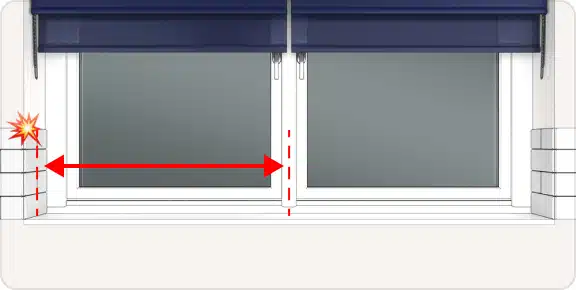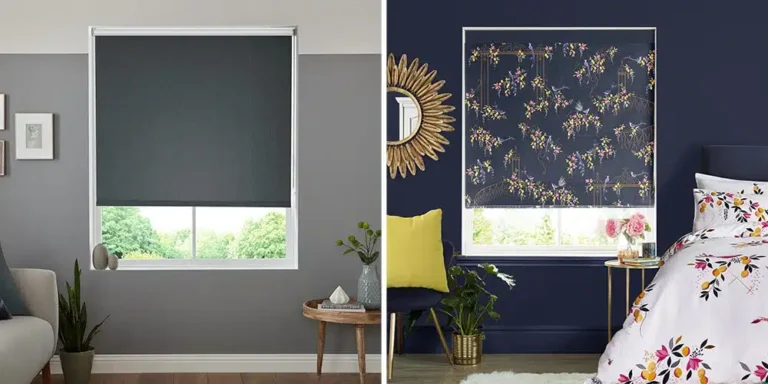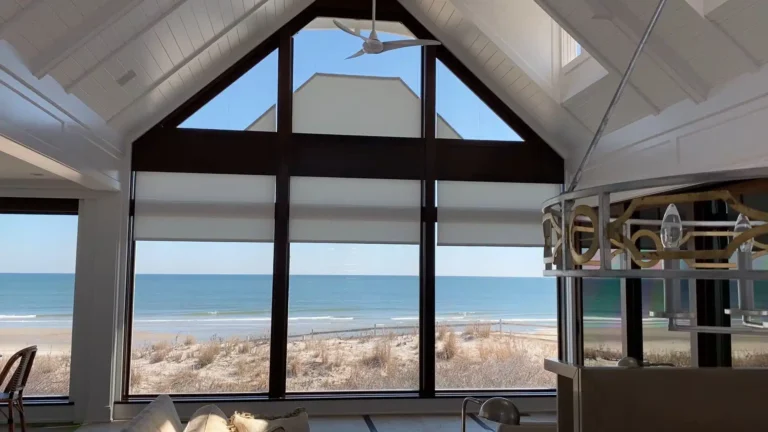
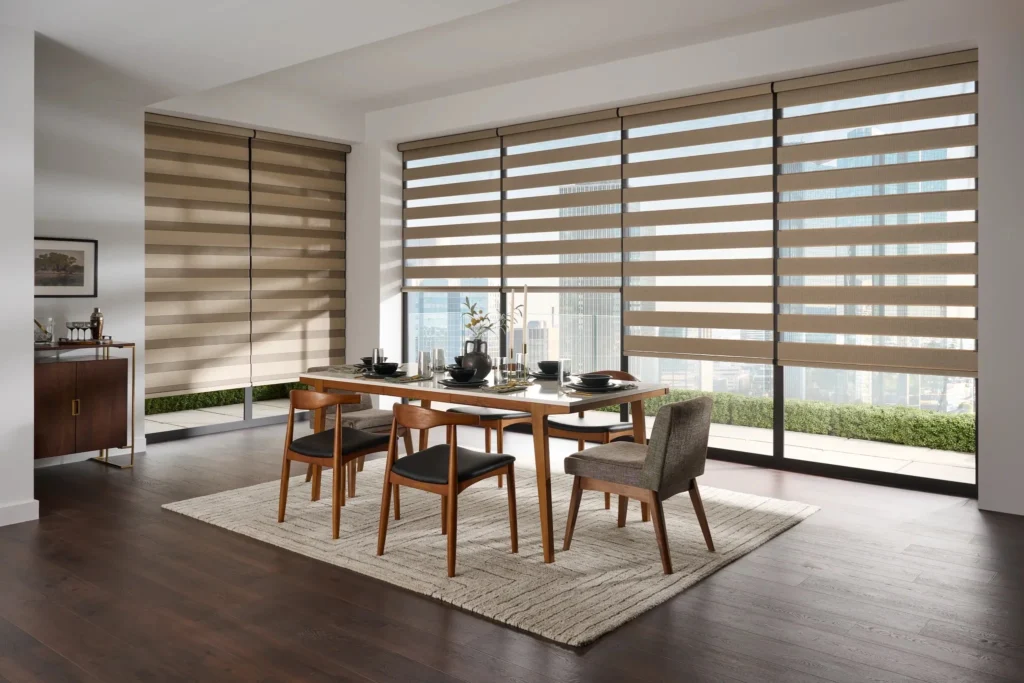
A roller blind works by winding its fabric around a hollow tube that sits in two brackets, and the tube is turned by one of three things: a chain clutch, a coiled spring or a small electric motor. Everything else about the blind, from how it stops where you want it to why it sometimes drops on its own, comes from which of those three is doing the turning. If you have ever asked how do roller blinds work, that is the short version. This guide to how roller blinds work covers chain, spring and electric mechanisms and the double roller.
We make roller blinds in our workshop in Rainham and fit them across East London and Essex, so we spend most days with the insides of these mechanisms in our hands. This guide explains each type in plain words, covers double roller blinds that put two fabrics in one window, lists the faults we are asked about most and says which mechanism we would pick for which room. It is written for anyone choosing a new blind or trying to understand why an old one has stopped behaving.
How do roller blinds work with a chain
A chain roller blind is turned by a plastic or metal clutch fixed into one end of the tube, and the looped bead chain hanging from that clutch is what you pull. Inside the clutch is a small sprocket wheel. The beads on the chain sit in the teeth of the sprocket, so when you pull one side of the loop the sprocket turns, the tube turns with it and the fabric either rolls up or unrolls.
The clutch is also a brake. A wrap spring inside grips the tube when nobody is pulling the chain, which is why the fabric stays exactly where you leave it rather than sliding down under its own weight. Pulling the chain releases the grip, letting go re-applies it. That is the whole trick, and it is why a chain blind can be stopped at any height, not just fully open or fully closed.
Why the clutch size matters
Clutches are rated for weight. A light voile on a 600mm kitchen window puts almost nothing on the mechanism, while a heavy blackout fabric on a 2.4 metre wide bifold puts a great deal on it. Fit a small clutch to a big blind and the chain feels stiff, the fabric creeps down and the plastic teeth wear quickly. When we make a blind in Rainham we match the clutch and tube diameter to the fabric weight and width, which is one reason a made to measure blind behaves differently from a cut down one.
The chain safety device
Every chain blind we fit comes with a tensioning device or a breakaway connector. Current UK child safety rules require the chain loop to be held taut against the wall or to snap apart under load, so a child cannot get caught in it. The tensioner also makes the blind nicer to use because the chain cannot swing and tangle. If an older blind in your home has a loose, dangling loop, that is worth sorting even if nothing else is wrong with it.
How a spring loaded roller blind works
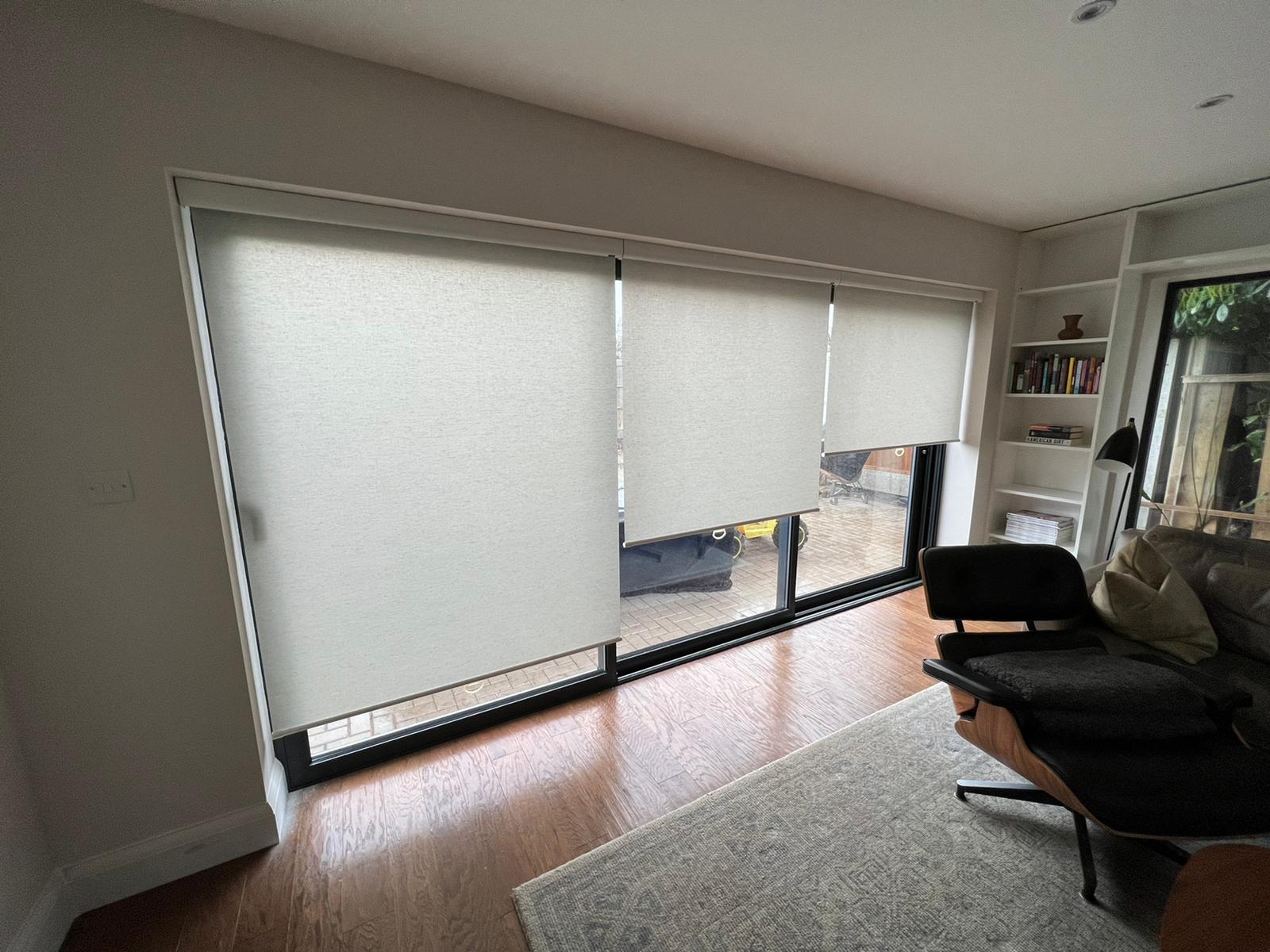
A spring loaded roller blind has a coiled spring inside the tube instead of a chain, and the spring is what pulls the fabric back up. You draw the blind down by the pull cord or bottom bar, which winds the spring tighter. A small pawl and ratchet at the end of the tube catches when you stop and release gently, holding the blind at that height. A short tug frees the pawl and the stored energy in the spring rolls the fabric back up.
Because there is no chain, there is nothing hanging down the side of the window. That makes spring roller blinds popular in children’s rooms and on doors, and it is the same idea used inside most Perfect Fit roller blinds, where the whole blind sits in a slim frame on the glazing bead. The feel is quick and light, and the blind is operated with one hand.
Why spring blinds lose tension
A spring blind that sags or will not go all the way up has usually lost tension. The spring itself rarely breaks. More often the blind has been taken down and refitted without the spring being pre-wound, or years of use have let a few turns out. The fix is to roll the fabric up by hand, take the blind out of its brackets, give the spring end a turn or two, and refit. We have a step by step on how to retension a roller blind that applies to most spring types. Overwinding is the opposite problem, where the blind snaps up too fast and the bottom bar bangs the tube.
How an electric roller blind works
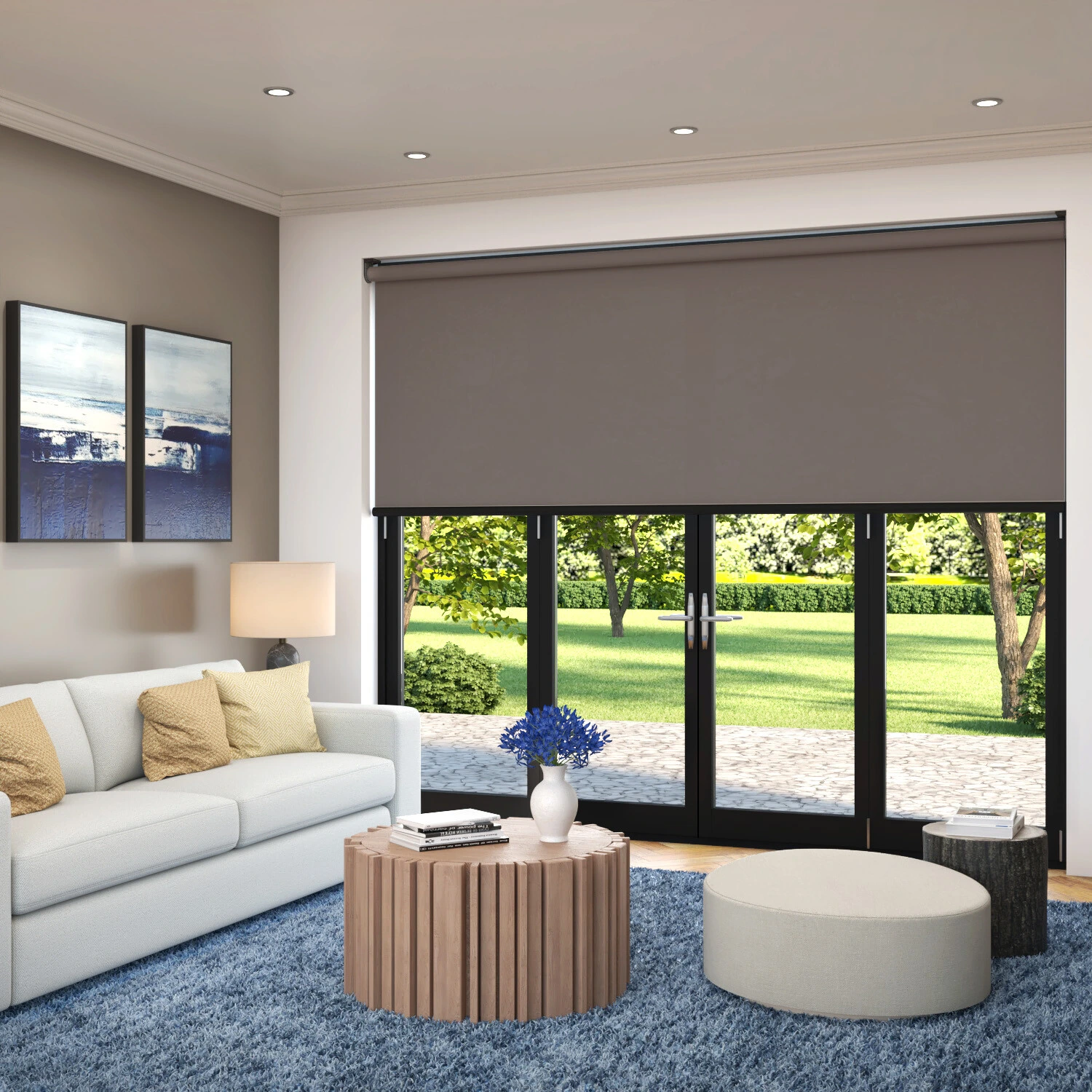
An electric roller blind has a tubular motor pushed inside the roller tube, so the motor itself turns the fabric and nothing hangs down the side of the window. A crown on the motor grips the inside of the tube, and a drive wheel at the end locks into it. The other end of the tube sits on a plain idle pin. From outside you see a normal roller blind with no chain and no cord, and you control it with a remote, a wall switch, a phone app or a voice assistant.
The motor is set with upper and lower limits during fitting, so it knows exactly where to stop at the top and the bottom. Most motors also accept a favourite position, which is handy for a blind you always want halfway down in the afternoon. We cover the options in detail on our electric roller blinds page.
Battery or mains power
Battery motors have a rechargeable lithium pack inside the tube and charge from a USB lead, so there is no wiring and no electrician. On a bedroom blind used twice a day a charge typically lasts several months. Mains motors are wired to a fused spur and never need charging, which suits a new build, a full rewire or a very large or very heavy blind. Solar trickle chargers that stick to the glass are a third option for sunny windows. Which to choose depends on how often the blind moves, how heavy it is and whether a cable can be hidden.
What happens in a power cut
A battery blind carries on as normal because its power is inside the tube. A mains blind stays where it was when the power went off. Neither type can be pulled by hand without damaging the motor gearing, so if you need a manual override on a mains blind, say that at the measuring visit and we will specify a motor that offers one.
How do double roller blinds work
A double roller blind puts two separate roller blinds in one window on a single double bracket, one tube in front of the other, so you can have a sheer sunscreen fabric down by day and a blackout fabric down by night. Each tube has its own chain or its own motor and runs independently. You can have the front blind down, the back blind down, both or neither, which is why people search for two roller blinds in one window.
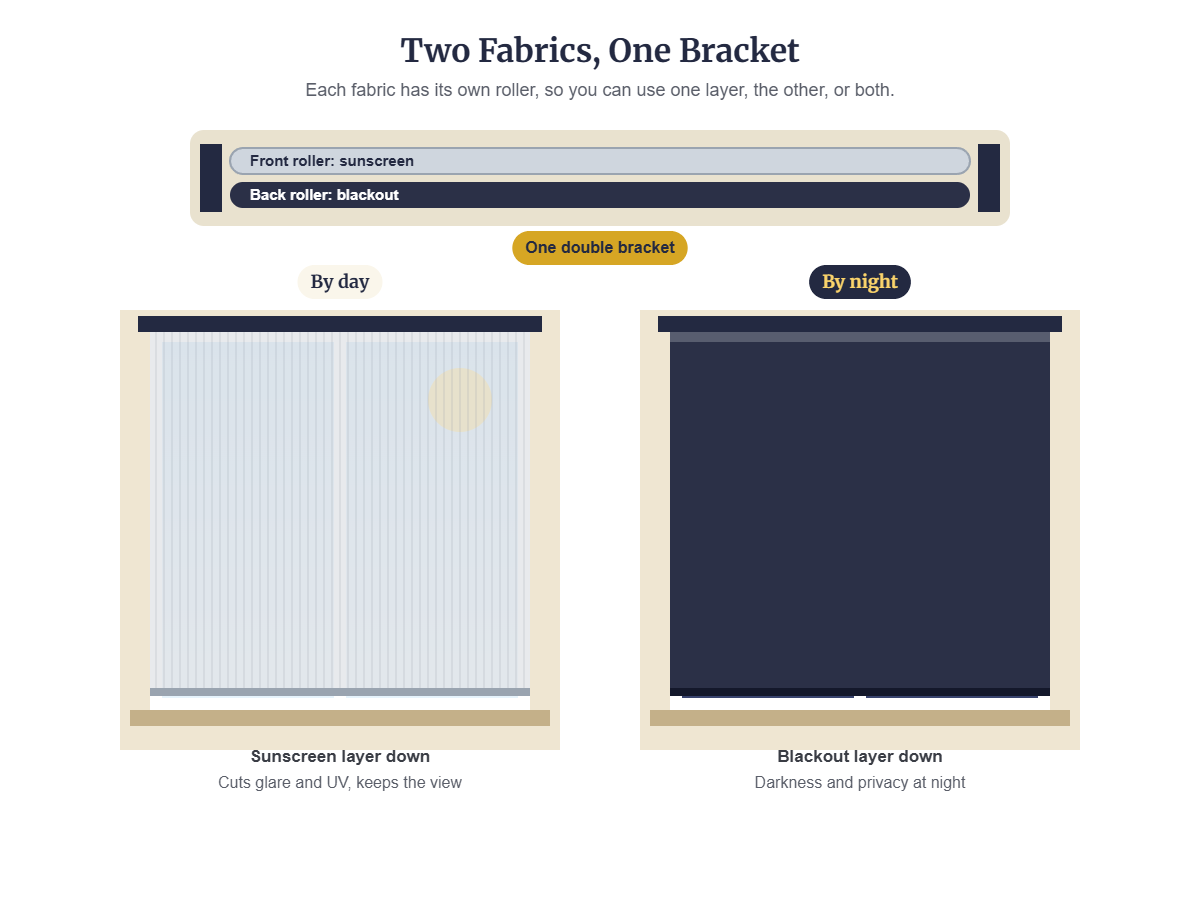
The bracket is deeper than a standard one, usually around 100mm front to back, so the window recess needs room for it or the blind is face fixed to the wall above. Our guide on how to measure a double roller blind covers the depth check. The result is a blind that does the job of a blind plus a curtain, which is why double roller blinds have become our most asked about product for bedrooms that face the street.
Double roller or day and night blind
People often mix these up. A day and night blind, sometimes called a zebra or vision blind, is one roller with a single fabric made of alternating sheer and opaque stripes that line up or offset as you move it. A double roller is two full blinds on one bracket. The day and night blind is slimmer and cheaper, the double roller gives proper blackout and proper privacy in two separate layers. If you want to sleep in a dark room and still have a soft filtered light in the day, the double roller is the one.
Which roller blind mechanism suits which room
Chain blinds suit most rooms, spring blinds suit doors and children’s rooms, and electric blinds suit anywhere the blind is large, high or used a lot. The table below is how we usually steer customers at a home visit, though the final choice is yours.
| Room or window | Mechanism we usually suggest | Why |
|---|---|---|
| Kitchen | Chain, wipe clean fabric | Cheap, reliable, easy to leave at half height over the sink |
| Children’s bedroom | Spring, or chain with tensioner | No loose loop, blackout fabric available on both |
| Main bedroom facing the street | Double roller, chain or electric | Sunscreen by day, blackout by night |
| Living room with a wide window | Electric, battery or mains | Heavy fabric and long drop are tiring on a chain |
| Tilt and turn or French door | Spring Perfect Fit roller | Moves with the sash, no drilling |
| Landing or stairwell window | Electric | Out of safe reach for a chain |
| Bathroom | Chain, moisture resistant fabric | Simple to operate with wet hands |
Within each mechanism there are tube choices too. A 25mm tube is fine for a small window, a 32mm or 38mm tube keeps a wide blind from bowing in the middle, and a cassette headrail hides the roll completely. Cassette roller blinds are worth a look if you dislike seeing the fabric roll and the brackets.
Common roller blind faults and how to fix them
Most roller blind faults come down to five things: lost tension, a worn clutch, fabric that has crept sideways on the tube, brackets that have moved, or a motor that has lost its limits. Here is what each looks like and what to do.
The blind will not stay up
On a spring blind this is lost tension, and a couple of turns on the spring end fixes it. On a chain blind it means the wrap spring in the clutch has worn or the clutch is undersized for the fabric. A new clutch is a cheap part and is a ten minute swap for a fitter. On an electric blind the motor should hold position on its own, so a blind that drifts down usually has a slipping crown or adaptor, not a bad motor.
The fabric runs to one side
If the fabric gradually walks to the left or right and rubs the bracket, the tube is not level. Check the brackets with a spirit level and pack one side with a thin washer. A single layer of masking tape on the tube at the opposite end to the drift will also steer the fabric back. Telescoping, where the roll gets taller in the middle, is the same problem with a wide blind.
The chain is stiff or skips
A stiff chain is usually a clutch full of dust or a chain that has stretched so the beads no longer sit in the sprocket. Clean the sprocket, and if the beads are uneven replace the chain. A chain that skips under load is the first sign the clutch is too small for the blind, and the long term answer is a heavier clutch or an electric motor.
The electric blind stops in the wrong place
If a motorised blind stops short of the sill or runs on past the top, the limits have been lost, often after a battery ran flat. Re-setting them takes a few minutes with the remote and the motor’s setting button. A blind that will not respond at all almost always needs charging first, before anything else is suspected.
Roller blinds for Rainham and East London homes
The right roller blind mechanism for a home around Rainham, Hornchurch, Romford or Dagenham depends mostly on the windows the house came with. The 1930s semis along the A125 and across Elm Park have deep timber or replacement uPVC recesses, which take a standard chain or double roller inside the reveal with room to spare. Many of them have bay windows, where we fit one blind per pane so each can be set to a different height as the sun moves round.
New build flats at Beam Park, along the Thames at Barking Riverside and around Stratford tend to have shallow recesses and tilt and turn or floor to ceiling glazing. There is often no room for a bracket inside the reveal, so we either face fix above the window or use Perfect Fit roller blinds that clip to the glazing bead and move with the sash. Leasehold rules in these blocks sometimes forbid drilling into the window frame, and Perfect Fit avoids that problem entirely.
Older terraces in Barking, Ilford and East Ham often have sash windows with slim reveals and a staff bead that gets in the way. A slim 25mm tube chain blind or a cassette fixed to the face of the architrave works well there. Across Grays, South Ockendon and Upminster, large rear extensions with bifolds are common, and that is where we talk about electric roller blinds, because a four metre span is a lot to ask of a chain. Whatever the house, we measure every window ourselves, make the blinds in Rainham and fit them, so the mechanism is chosen for the window rather than the other way round. Our made to measure roller blinds start at £65 and most fall between £65 to £290 per blind, with the exact figure in your written quote.
Every blind we make is fitted to current UK child safety rules. The Make it Safe campaign from the British Blind and Shutter Association explains what to check on blinds you already own.[1]
Frequently asked questions about how roller blinds work
Why will my roller blind not stay up?
On a spring blind it has lost tension and needs re-winding at the spring end. On a chain blind the clutch brake has worn or is too small for the fabric weight, and a replacement clutch fixes it.
Can I convert a chain blind to electric?
Often yes, if the tube is wide enough to take a tubular motor and the fabric is in good condition. We swap the clutch for a battery motor and re-use the fabric, though a very small tube or a worn fabric is usually better replaced as a complete electric blind.
What is a double roller blind?
It is two roller blinds, usually a sunscreen and a blackout, mounted one in front of the other on a single double bracket. Each is operated separately so you can have either fabric down, both or neither.
How does a spring roller blind work without a chain?
A coiled spring inside the tube is wound tighter as you pull the blind down and a ratchet holds it at any height. A short tug releases the ratchet and the spring rolls the fabric back up.
Do roller blinds work on tilt and turn windows?
Yes, as a Perfect Fit roller blind that clips to the glazing bead and tilts with the sash. A standard roller fixed to the wall above also works but gets in the way when the window is opened inwards.
How long does an electric roller blind battery last?
For a blind moved once or twice a day, several months between charges is normal. A heavy or very wide blind used more often will need charging more frequently, and a solar panel on the glass can top it up.
Get a free home visit in Rainham and East London
For anything in this guide to how roller blinds work that you want checked at the window, if you would like help choosing between chain, spring and electric, or you have an old blind that has stopped working and want to know whether it can be saved, book a free home visit or call 01708 505379. We measure at your home across Rainham, Romford, Hornchurch, Dagenham and the rest of East London and Essex, make the blinds in our workshop at C3, Star Business Centre, Fair View Industrial Estate, Marsh Wy, Rainham RM13 8UP, and send a written quote after the visit with no obligation.
References
- ^ Make it Safe from the BBSA. Make it Safe (British Blind and Shutter Association). Retrieved 25 October 2026.