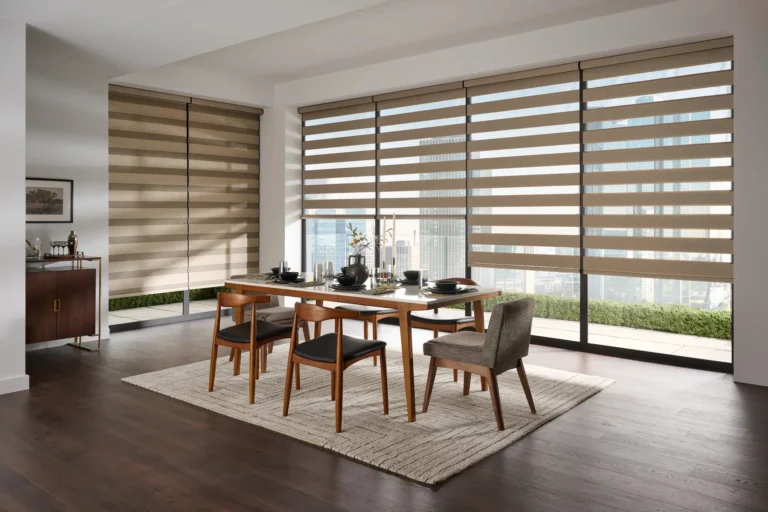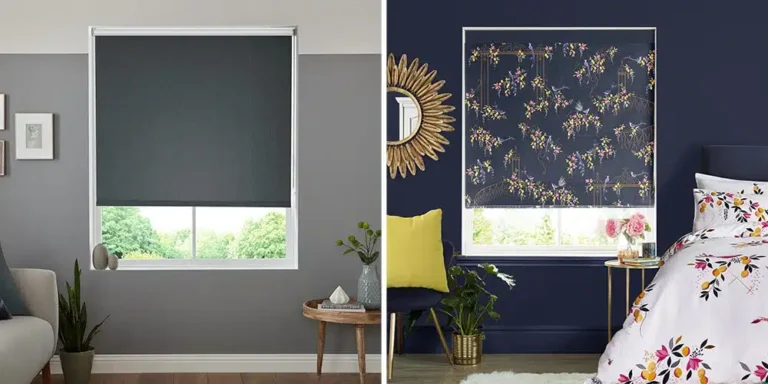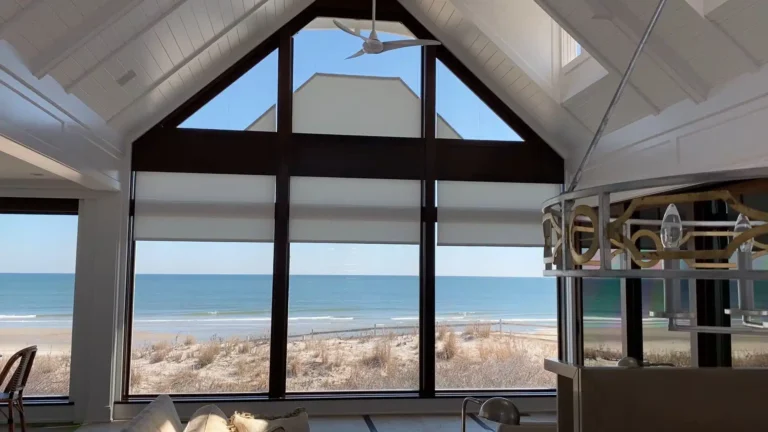
Double roller blinds give you the flexibility to switch between filtered daylight and complete privacy using two separate fabrics in one system. However, to make sure they fit and operate properly, the measurements need to be taken correctly. Unlike a standard roller blind, a double roller blind requires enough recess depth to accommodate two rollers and their brackets.
In this guide, HomeDecisions explains the simple checks you can do at home before ordering, including how to measure the width, drop, and, most importantly, the recess depth. You will also learn which measurements are useful to note down and which details our fitters will confirm during a free measuring visit in Rainham, East London and Essex, helping you choose the right solution for your windows with confidence.
Before You Measure: The One Check That Catches Most Problems
Most measuring guides start with width. The check that prevents the most problems is depth.
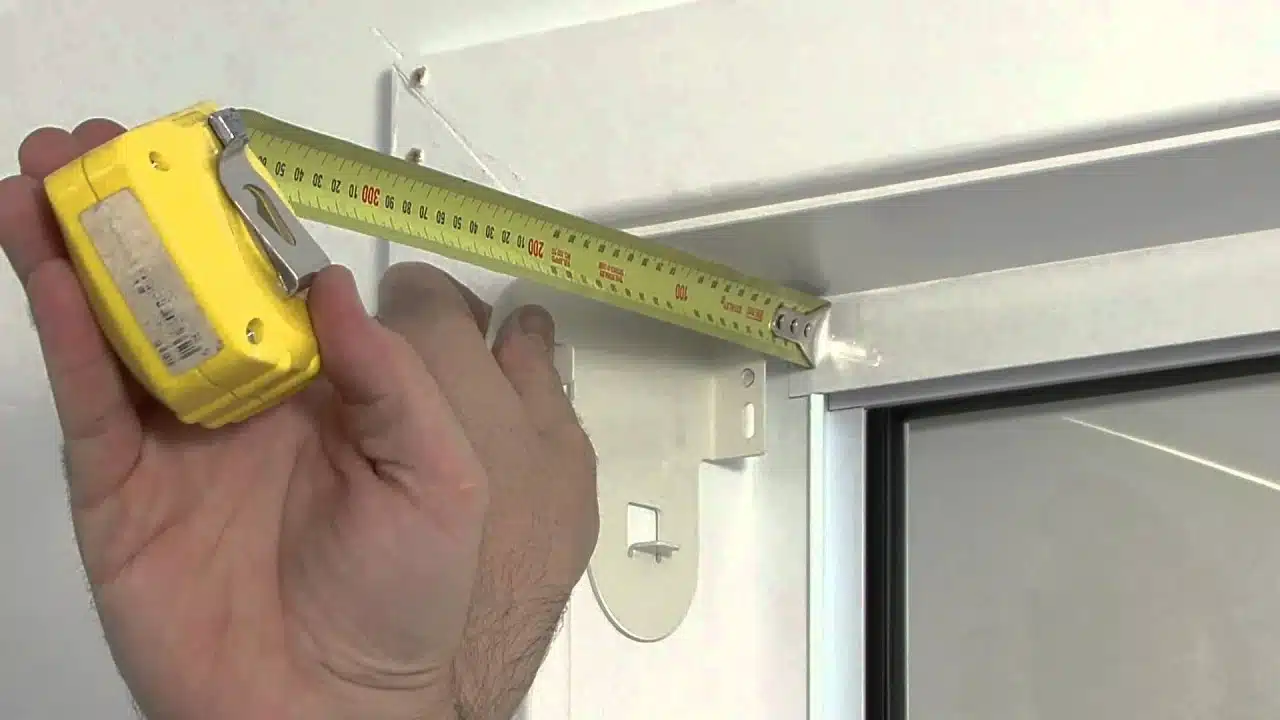
Measure your recess depth from the surface of the glass to the front edge of the window frame. That figure tells you immediately whether a recess fit is possible, or whether a face fix is needed.
A single roller blind cassette needs approximately 60 to 75mm. A double roller on one bracket needs considerably more.
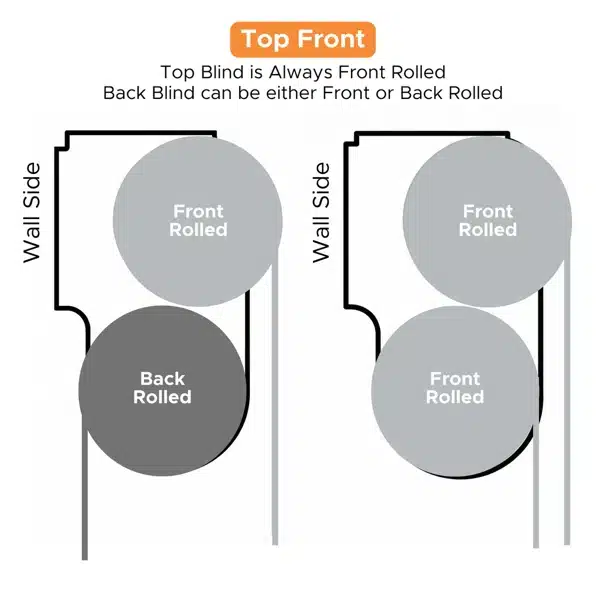
A double bracket is a single mounting unit that holds two independent roller tubes, one in front of the other, or more closely stacked on a slimline version. Each roller has its own operating chain and works independently. Both blinds sit within one bracket, which keeps the installation compact compared to mounting two separate brackets in the same recess.
| Blind type | Rough minimum recess depth | If shallower than this |
|---|---|---|
| Single roller blind | About 60 to 75mm | Usually still recess-fits with a slim cassette |
| Double roller blind (standard bracket) | About 110 to 130mm | Face fix required |
| Double roller blind (slimline stacked bracket) | About 90 to 100mm | Borderline: measuring visit needed |
These are rough guide figures, not specifications, and brackets vary from one system to another. The only accurate way to confirm your recess depth is a measuring visit. But the check above tells you which conversation to have when you get in touch.
How to Measure for Double Roller Blinds: Step by Step
Work through these six steps before you contact us. You do not need to be exact on every figure, as the fitter takes precise measurements on the day. What you need is enough information to have a useful conversation about fabric, bracket type and fit.
- Measure the recess depth from the glass face to the front edge of the frame. Compare against the table above before you go further.
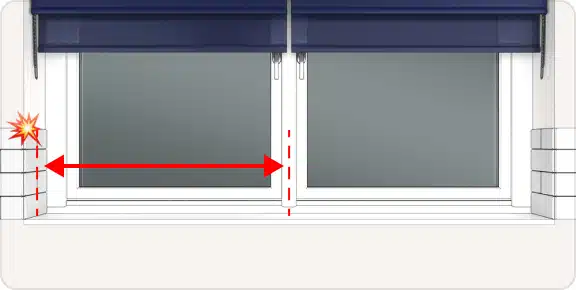
- Measure the recess width from reveal wall to reveal wall. Take the measurement in three places, at the top, middle and bottom of the recess, and note the smallest figure. Recesses in Victorian and Edwardian windows often taper slightly; modern uPVC frames are usually more consistent.
- Measure the drop from the top of the recess to where you want the blind to stop. Decide whether that is the window sill, a point below the sill, or the floor.
- Decide whether both rollers need the same drop. This step is easy to miss, and it matters. The blackout and sunscreen rollers on the same bracket are ordered as separate units. In a bedroom, the blackout roller may need to reach the floor for complete darkness, while the sunscreen roller only needs to reach the sill. If the drops are different, note both measurements separately.
- Note your window type. Tilt-and-turn windows need handle clearance checked before the bracket can be positioned. Bay windows need each section measured independently. Flag either of these when you contact us so the fitter knows what to expect.
- Take a photo of the window and the recess. A clear photograph of the full reveal, including the frame depth, is more useful than measurements alone when choosing between bracket types.
Double roller blinds usually work on tilt-and-turn windows, but handle clearance must be checked before the bracket is positioned. A tilt-and-turn window opens inward and the handle arc must remain unobstructed when the window is in use. Where handle clearance is very limited, Perfect Fit blinds that clip directly into the frame may be a better option for that window, and our guide on how to measure for Perfect Fit blinds explains how those are measured instead.
Width and Drop Deduction Reference
| Fit type | Width to give | Drop to give | Notes |
|---|---|---|---|
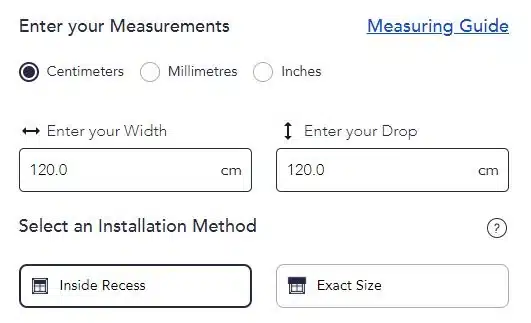
| Recess fit | Exact recess width at the narrowest point | Top of recess to stopping point | A small allowance, often around 10mm, is taken off when the blind is made so it runs freely |
| Face fix | Window width plus 50 to 100mm each side | From bracket mounting point to stopping point | Overhang reduces light bleed at the edges |
| Bay window (each section) | Each section measured independently | Recess or face fix per section | Fitter aligns cassette heights across sections |
What If the Recess Is Too Shallow? Face Fix Explained
If your recess depth is under approximately 90mm, a face fix is usually the correct solution. The double bracket mounts on the face of the window frame or on the wall above the window, outside the recess entirely. The two rollers still sit on one bracket and still operate independently. The function is identical to a recess fit; only the mounting position changes.
For a face-fix double roller, the width of the blind is ordered wider than the window opening, typically 50 to 100mm beyond the frame on each side. That overhang blocks the light that would otherwise creep around the edges. The fitter determines chain placement on the day, taking into account furniture, curtain tracks and door positions near the window.
This scenario is common in 1980s and 1990s uPVC builds, where reveals tend to be shallower than in Victorian and Edwardian houses in Ilford, East Ham and Stratford. If you are not certain whether your window is deep enough, that is what the free measuring visit is for. The fitter will confirm the recess depth and either confirm the window can take a slimline stacked bracket or specify a face-fix setup. Recess depth is the one measurement most buyers cannot assess accurately at home, and confirming it is exactly what the measuring visit is designed to do.
Bay Windows: Why Each Section Is Measured Separately
A bay window cannot be treated as a single opening for a double roller blind. Each section of the bay is measured and ordered as an independent unit, with its own bracket set. In a three-section Edwardian bay, or the bays on 1930s semis in Hornchurch and Upminster, that means three separate pairs of rollers, aligned so the cassette heights sit level across all sections.
The fitter handles that alignment on the day. What you should know before ordering is this: some light gap at the angled joins between sections is unavoidable.
The fitting method minimises those gaps, and the result is substantially better than a single face-fixed roller stretched across the whole bay, but the gaps do not disappear entirely. That is worth knowing before you decide on fabric opacity for the blackout roller.
What the Fitter Handles on the Day
The steps above give you enough to have a productive first conversation and make fabric choices with confidence. The rest is handled during the measuring visit:
- Precise reveal-to-reveal width measurement
- Recess depth confirmation and bracket selection (standard or slimline stacked)
- Chain placement decision: which chain goes on which side, based on your room layout and how you use the window
- Bracket positioning and visual alignment across bay sections
- Handle clearance check on tilt-and-turn windows
- Fabric and opacity recommendation based on room orientation, privacy requirements and whether you need different drops on the two rollers
- Motorised double roller blinds discussed if relevant, as motorisation removes the chain placement question entirely
Each roller has its own operating chain. The fitter decides which chain goes on which side of the window based on room layout, furniture position and ease of daily use. On some installations both chains are positioned on the same side of the window, staggered in length, so both are accessible without reaching across the blind. With two chains at one window, chain safety matters twice over. GOV.UK product safety guidance warns that blind cords and loops pose a potential danger to young children,[1] and the British Blind and Shutter Association advises that any blind with a cord or chain that could form a loop must be kept out of reach of babies and young children, so each chain is fitted with a tidy that keeps it taut.[2]
Measuring a double roller blind does not have to be complicated. Taking a few basic measurements at home gives you a good starting point, but details such as recess depth, bracket selection, handle clearance, and the final fitting measurements are best checked in person to make sure everything fits and operates smoothly.
At HomeDecisions, we provide a free measuring service across East London and Essex, confirming every detail before your blinds are made in our Rainham workshop. That means you can choose your fabrics with confidence, avoid costly measuring mistakes, and get a made-to-measure blind that looks right and works as it should.
Free PDF guide: How to Measure for Made-to-Measure Blinds, with a printable measurement sheet. Read it online or download it to print.
Frequently asked questions
Do double roller blinds need a deeper recess than single roller blinds?
Yes. A single roller blind cassette typically needs around 60 to 75mm of recess depth. A double roller blind on one bracket needs around 90 to 130mm, depending on the bracket type. If a recess is shallower than this, a face fix is used instead, mounting the bracket outside the recess on the window frame or wall above.
Can both rollers in a double blind have a different drop length?
Yes. The blackout and sunscreen rollers on the same bracket are made and measured as separate units. In a bedroom, the blackout roller may reach the floor for complete darkness while the sunscreen roller stops at sill height. Both drop lengths are specified independently when ordering, even though both rollers sit on the same bracket.
How do I measure the width for a double roller blind?
Measure the recess width from reveal wall to reveal wall at the narrowest point, taking readings at the top, middle and bottom of the recess and using the smallest figure. For a recess fit, the blind is made slightly narrower than this measurement so it runs freely. For a face fix, the blind is made wider than the window opening to reduce light bleed at the edges.
Can double roller blinds be fitted outside the recess?
Yes. This is called a face fix. The double bracket mounts on the face of the window frame or wall above the window rather than inside the recess. It is the correct solution when the recess is too shallow for both rollers, and the blind works the same way as a recess-fit installation; only the mounting position is different.
Can you fit double roller blinds in a bay window?
Yes, but each section of the bay is measured and fitted as a separate unit, because the brackets cannot span the angled joins between sections. The fitter aligns the cassette heights across all sections on the day. Some light gap at the angled joins is unavoidable, though careful fitting reduces it.
Is a double roller blind the same as a day and night blind?
No. A double roller blind is two independent rollers, typically blackout and sunscreen, on one bracket operated by separate chains. A day and night blind is a single roller with a loop of fabric in alternating sheer and opaque stripes, adjusted by moving the blind a short way so the stripes slide past each other. They are different products with different mechanisms and different functions.
Book a free measuring visit for double roller blinds
To have the recess depth, widths and drops confirmed before anything is made, book a free home visit or call us on 01708 505379, Monday to Friday, 9am to 5pm. We will cover everything above during the visit and email or phone through a written quote afterwards. We serve Rainham, Barking, Romford, Hornchurch, Ilford and the wider East London and Essex area.
References
- ^ Child safety: blind cords. GOV.UK (Office for Product Safety and Standards). Retrieved 25 October 2026.
- ^ BBSA supports Child Safety Week to raise awareness of window blind safety. British Blind and Shutter Association. Retrieved 25 October 2026.