To measure for perfect fit blinds, you check that the window has rubber beading, then measure the visible glass between the seals at three points for the width and three for the drop, and use the smallest figure each time with nothing deducted. Most measuring mistakes with perfect fit blinds happen before the tape measure comes out. The starting point is wrong, the reference surface is wrong, or the window isn’t suitable in the first place, and none of that becomes obvious until the blind arrives and won’t clip in.
Perfect fit blinds are not measured like standard blinds. You are not measuring the recess or the outer frame. You are measuring the glass inside a zone defined by the rubber beading in the frame, a zone most people have never had reason to look at closely. This is the method we use on a free home visit to homes in Rainham and across East London.
This guide walks you through how to measure for perfect fit blinds correctly: the compatibility check you need to run before you measure anything, the exact width and drop measurements, what to do about handles and tilt and turn windows, and the three errors that most often lead to a remake.
Is your window actually compatible? Check this first
Before you pick up a tape measure, confirm that your window can take a perfect fit blind. Not all windows can. Skipping this step is the most expensive mistake you can make.
Rubber beading: the one non-negotiable
Rubber beading is the flexible rubber seal that runs around the inside of a uPVC window frame, where the glazing bead holds the glass pane in place. Perfect fit brackets slot into the corner where this seal meets the glass, and the blind’s frame then clips onto those brackets. That is the entire fixing method, with no screws or drilling. No beading means no way to attach the blind.
Run your finger around the inside edge of the frame, where the glass meets the frame. You should feel a raised rubber strip. On some windows it sits flush or has been painted over, so look closely before deciding it isn’t there. If there is genuinely no beading, the window is not compatible with perfect fit blinds.
Bead width and depth: the two measurements most people skip
Not all beading is the same, and the dimensions matter.
Clear frame around the bead is the first check. The blind’s aluminium frame sits over the glazing bead, so it needs a flat strip of window frame around the beading to sit on. Check that there is a flat strip of frame all around the outside of the beading for the blind frame to sit on. If the frame steps up, curves away or has a handle or vent right at the bead edge, the blind frame will not sit flat.
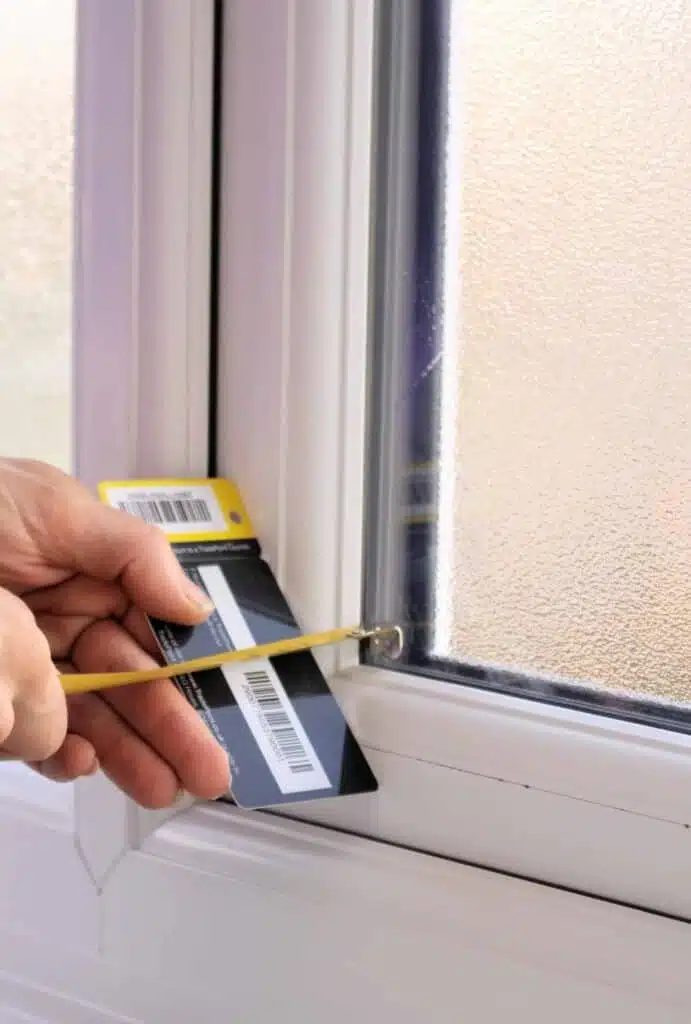
Bead depth is how far the face of the window frame sits back from the glass. This decides which size of bracket the blind needs, and on most uPVC windows it falls somewhere between about 18mm and 30mm. To check it, lay a credit card flat across the corner of the frame so it bridges the beading, then measure from the glass up to the underside of the card. Write the figure down to the nearest millimetre. Common depths are 18mm, 20mm and 24mm, but older or chunkier frames can sit outside that, which is exactly why it is worth measuring rather than guessing.
What makes a window incompatible
The following windows are generally not suitable for perfect fit blinds:
- Most timber frames, which use timber beads or putty rather than a rubber seal in the same position
- Many aluminium sliding doors, where the sliding panels pass too close to each other for a blind frame to sit proud of the glass
- Windows that are beaded on the outside, so the rubber seal faces outward rather than into the room
- Windows with Georgian bars or leading fixed to the inside face of the glass, which stop the blind sitting flat (bars sealed between the two panes are not a problem)
- Windows where the handle sits so close to the glass edge that the blind frame would hit it, and no spacer or slimline handle is practical
If your window passes the beading checks but you are unsure about any of these factors, take your measurements and ask us at HomeDecisions before ordering. A photo of the corner of the frame with a tape measure against it usually answers the question.
What you need before you start measuring
Good measurements come from good preparation. The tools are simple, but using the right ones matters.
You will need:
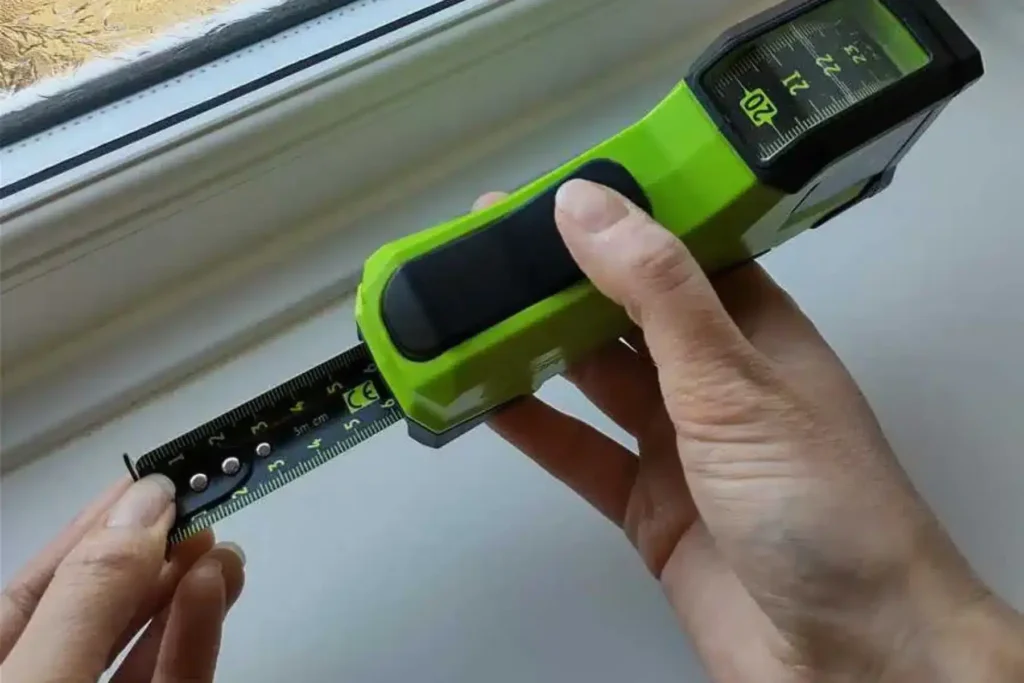
- A steel tape measure, not a fabric tape, which can sag and give inaccurate readings on wider windows
- A credit card, for the bead depth check
- A pencil and paper, to write down each measurement as you take it, labelled by window and by pane
- A second person, useful for windows wider than 1 metre, where holding the tape steady at both ends is difficult
Measure each pane individually. Even windows that look identical in the same room can differ by several millimetres, and on a typical uPVC casement the opening sash and the fixed pane next to it are often different sizes. Never copy measurements from one window to another.
How to measure the width for perfect fit blinds
Width measurement is where most ordering errors occur. The reason is almost always the same: the wrong reference point.
Where to measure from: the inner edge of the bead
You are measuring the visible glass, from the inner edge of the rubber seal on one side of the pane to the inner edge of the seal on the other. Do not include the beading itself, the recess or the face of the frame.
Place your tape measure at the point where the glass disappears under the seal on the left side of the window. Extend it to the same point on the right side. That distance is your width measurement, taken to the nearest millimetre.
Measuring onto the beading, or out to its outer edge, gives you a figure that is too large, and the blind will be made too wide to sit in its brackets. Measuring the recess gives you a figure that is far too large, because the recess has nothing to do with where a perfect fit blind sits.
Take three measurements: use the smallest
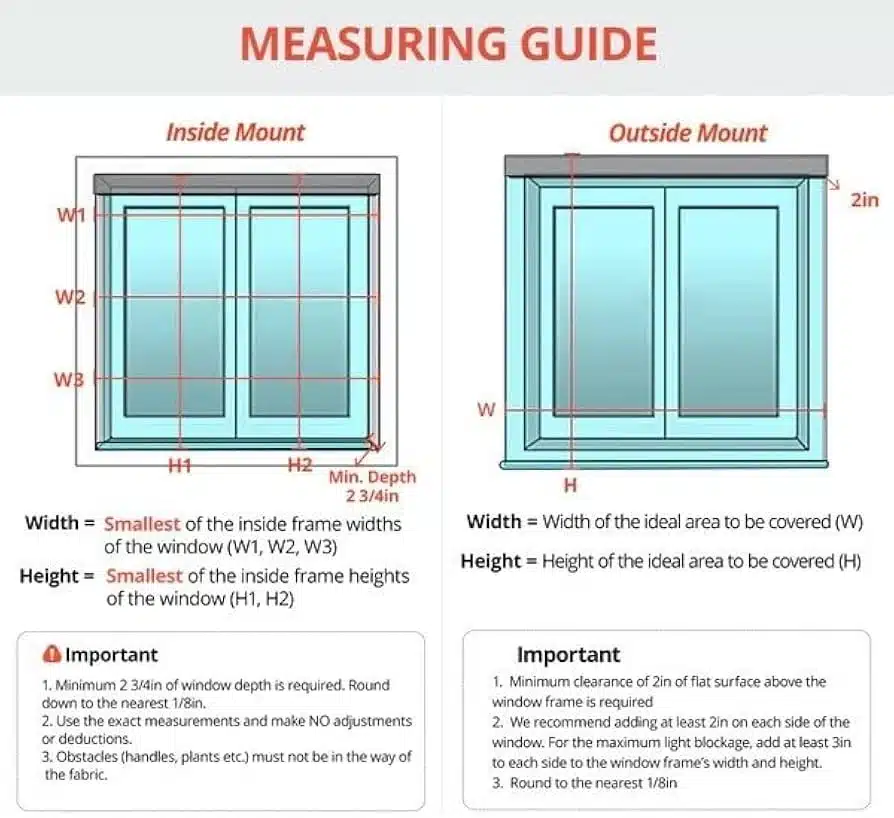
Measure the width at three heights: near the top of the window, across the middle, and near the bottom. Write down all three figures.
Windows are not always perfectly square, particularly in older properties and in replacement windows fitted into 1930s brickwork. The glass between the seals may be slightly narrower at one point than another. If you order based on the largest measurement, the blind will be too wide to fit at the narrower point.
Always use the smallest of your three width measurements.
Do not deduct anything from your measurement
Unlike recess blinds, you do not deduct anything from your measurement before ordering. Perfect fit blinds are ordered on the glass size, and the allowance for the frame and brackets is built in when the blind is made. We make ours in our Rainham workshop and apply that allowance there. Give your measured figure exactly as it is.
How to measure the drop for perfect fit blinds
The drop is measured using the same logic as the width, from the inner edge of the seal at the top of the glass to the inner edge of the seal at the bottom.
Measure the drop in three positions: on the left side of the window, down the centre, and on the right side. Use the smallest of the three figures, for the same reason as with width, because the opening may vary.
As with width, do not deduct anything from your drop measurement before ordering.
Tilt and turn windows
If your window is a tilt and turn type, the measuring process is the same. A perfect fit blind fitted to these windows is attached to the sash and moves with it, whether the window tilts in at the top or swings open like a door. The blind does not get in the way of the window, and you never have to raise it before opening up, which is why these windows suit perfect fit so well.
For tilt and turn windows, perfect fit roller blinds are among the most commonly used options because they move cleanly with the frame when tilted. Our guide to perfect fit roller blinds for tilt and turn windows covers handle positions and opening clearance in more detail.
Checking for out-of-square windows
If you want to confirm whether a window is significantly out of square, measure both diagonals of the glass, from the top-left corner of the seal to the bottom-right corner, then from the top-right to the bottom-left.
As a rule of thumb, if the two diagonal measurements differ by more than about 5mm, the window is noticeably out of square. Tell us before ordering so we can check whether a perfect fit blind will still sit evenly across the full width.
What to do about handles and obstructions
Window handles sit on the frame next to the glass, and the blind’s frame sits over the beading in the same area. If the handle is too close to the glass edge, the blind frame will hit the handle base and either not clip in flat or stop the handle turning.
Does your handle clearance pass the 25mm test?
With a steel rule, measure from the edge of the glass, where it meets the seal, across the frame to the nearest edge of the handle base. This is your clearance figure.
If the clearance is 25mm or more, the blind frame will normally sit clear of the handle. Each system sets its own minimum clearance between the edge of the glass and a handle, so measure it and tell us the figure.
If the clearance is less than that, there are usually two fixes. A handle spacer lifts the handle off the frame so the blind can pass behind it, or the handle can be swapped for a slimline style made to sit next to blinds. Measure the clearance exactly and tell us the figure along with the handle position, so we can confirm which option works before the blind is made.
Trickle vents and other obstructions
The same check applies to trickle vents, which sit in the top of many uPVC frames, and to restrictor catches or stickers on the frame. Measure the distance from the glass edge to the vent or fitting. If clearance is tight, note its position and size when you send your measurements, and we will advise on bracket options.
3 most common measuring mistakes and how to avoid them
These three errors are the most common reasons a perfect fit blind will not fit. All three are avoidable.
1. Including the beading in the measurement
Measuring onto the rubber seal, or out to the far edge of the glazing bead, gives a width and drop that are too large. The blind arrives and the frame will not sit in the brackets. Always measure the visible glass, from the inner edge of the seal on one side to the inner edge on the other.
2. Measuring the recess instead of the glass
Measuring the full internal recess, from wall to wall or frame edge to frame edge, gives a figure that is much larger than the glass. The blind is made too wide and physically will not fit on the window. The glass size is smaller than the recess. They are not the same measurement.
3. Taking one measurement and assuming the window is square
A single width or drop measurement tells you the dimension at one point only. If the window is even slightly out of square, the blind may fit at the point you measured but be too wide or too tall elsewhere. Three measurements per dimension, using the smallest, removes this risk.
What to do with your measurements
Once you have your final width and drop figures, smallest of three for each with nothing deducted, give them exactly as measured when you order, along with the bead depth and any handle clearance notes.
The same measurement method applies across all perfect fit blind types. Whether you are ordering roller blinds, perfect fit pleated blinds, Venetian blinds or day and night blinds, the glass size between the seals is always the correct starting point.
Bracket size is selected based on bead depth, the figure you checked with the credit card earlier. We confirm which bracket matches your bead depth when you order. If you are still choosing between fabrics and blind styles, our Perfect Fit buying guide walks through the options and what changes the price.
Free PDF guide: How to Measure for Made-to-Measure Blinds, with a printable measurement sheet. Read it online or download it to print.
Frequently asked questions
Do I measure the glass or the window frame for perfect fit blinds?
You measure the visible glass, from the inner edge of the rubber seal on one side to the inner edge on the other, at three points for each dimension. Do not include the beading, the frame or the recess, all of which give a figure that is too large.
What if my window doesn’t have rubber beading?
Without rubber beading, a perfect fit blind cannot be fitted, because the brackets have nothing to slot into. This is most common with timber frames and some older aluminium frames, where a standard recess or face-fix blind is the alternative.
Can I use the same measurements for roller, pleated and Venetian perfect fit blinds?
Yes. The method of measuring the glass between the seals three times per dimension and using the smallest is the same for all perfect fit blind types. The only variables are the bracket size, which depends on your bead depth, and the blind type you choose.
What happens if I measure incorrectly?
A blind made from incorrect measurements will either be too big to sit in its brackets or too small to cover the glass neatly, and it will need to be remade. Taking three measurements per dimension from the correct reference point prevents this on almost every window.
Do I need to allow for any deductions when ordering?
No. Unlike recess blinds, which need a deduction so the blind clears the walls of the recess, perfect fit blinds are ordered on the exact glass size and the allowance is built in when the blind is made. Deducting anything yourself will give you a blind that is too small.
Key takeaways
- Compatibility first. Confirm your window has rubber beading, a flat strip of frame around it, and measure the bead depth before you measure anything else.
- Measure from the right reference point. Width and drop are both taken across the visible glass, from the inner edge of the seal, not the beading and not the recess.
- Take three measurements, use the smallest, deduct nothing. This applies to both width and drop, for every perfect fit blind type.
Get your perfect fit blinds measured for free
If you are not confident about your measurements, or your window has an unusual handle, a tilt and turn mechanism or an out-of-square frame, we can measure for you. HomeDecisions offers free home measuring visits across East London and Essex from our Rainham workshop, and we send your written quote after the visit. You can book a free home visit or call us on 01708 505379, Monday to Friday, 9am to 5pm.