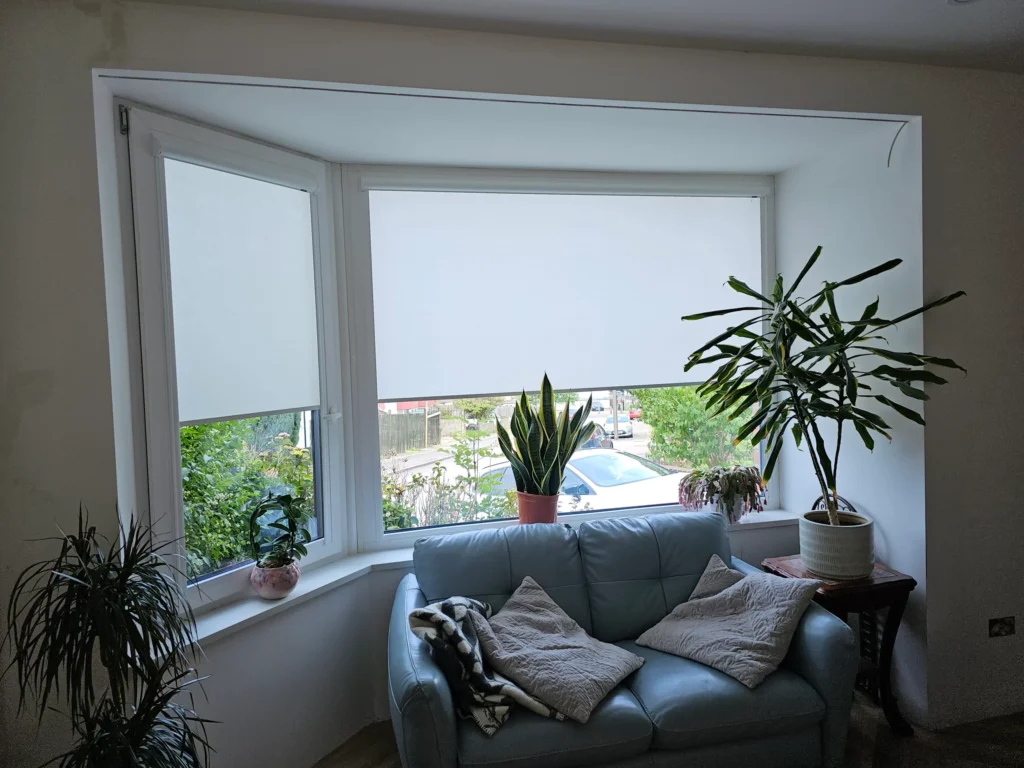
Perfect Fit blinds from HomeDecisions start at £60, and most fall between £60 to £75 per blind. That is the price of one blind for one pane of glass, so the cost of a window depends on how many panes it has, and the figure for your home depends on pane sizes, blind type, fabric and frame colour.
We make Perfect Fit blinds in our workshop in Rainham and measure and fit them across East London and Essex. This price guide explains what the range covers, how to work out a cost per window, what pushes a blind up or down the range, what happens with measuring and fitting, and where buying locally or online makes more sense. The figures in this post come straight from our live price list, so they stay current when prices change.
How much do Perfect Fit blinds cost per blind
A single Perfect Fit blind costs £60 to £75 per blind with us, with the lower end for small panes in a standard fabric and the upper end for large panes, premium fabrics or coloured frames. The price covers the made-to-measure blind in its aluminium frame and the brackets that clip it into your window.
Perfect Fit is priced per blind because each pane of glass gets its own framed blind. A small top-hung bathroom window is one blind. A bedroom window with one opening sash and one fixed pane is two. A front bay in a 1930s semi is often three, four or five. Counting panes is the first step to an honest budget, and it is the step most online price lists leave out.
Perfect Fit blind prices compared with other blinds
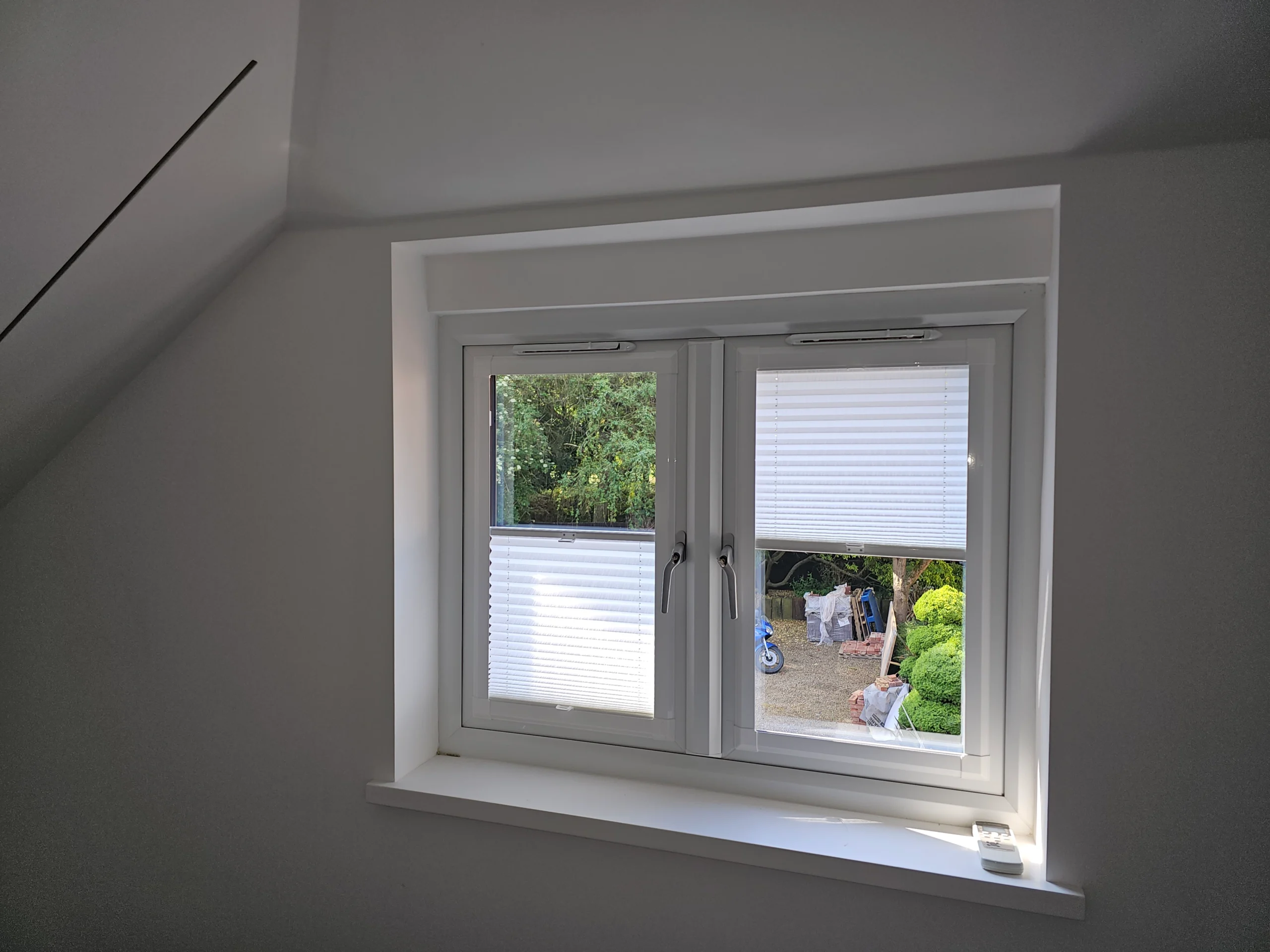
Perfect Fit blinds usually cost more per window than a single recess blind, because you buy one framed blind per pane instead of one blind across the whole opening. The table compares our starting prices so you can see the difference on the same price list.
| Blind | Starts at | Typical range | How it is priced |
|---|---|---|---|
| Perfect Fit blinds | £60 | £60 to £75 per blind | One blind per pane |
| Roller blinds | £65 | £65 to £290 per blind | One blind per recess |
| Blackout roller blinds | £95 | £95 to £450 per blind | One blind per recess |
| Pleated blinds | £120 | £120 to £490 per blind | Per blind |
| Venetian and faux wood blinds | £85 | £85 to £275 per blind | One blind per recess |
| Day and night blinds | £175 | £175 to £390 per blind | One blind per recess |
On a window with one large pane, a Perfect Fit blind and a recess roller can come out close. On a window with three or four panes, the recess roller is usually cheaper, but it hangs in front of the window, swings when the sash opens and needs drilling. That trade-off is what you are paying for. Our full prices page lists every product we make.
What changes the cost of a Perfect Fit blind
Five things move a Perfect Fit blind up or down the price range: the size of the glass, the type of blind, the fabric, the frame colour and how many blinds are in the order. Here is how each one works.
Size of the glass
Size is the biggest single factor. A tall French door panel needs a longer frame, more fabric and a stronger mechanism than a small fanlight, so it sits near the top of the range. Small bathroom and cloakroom panes sit near the bottom.
Type of blind
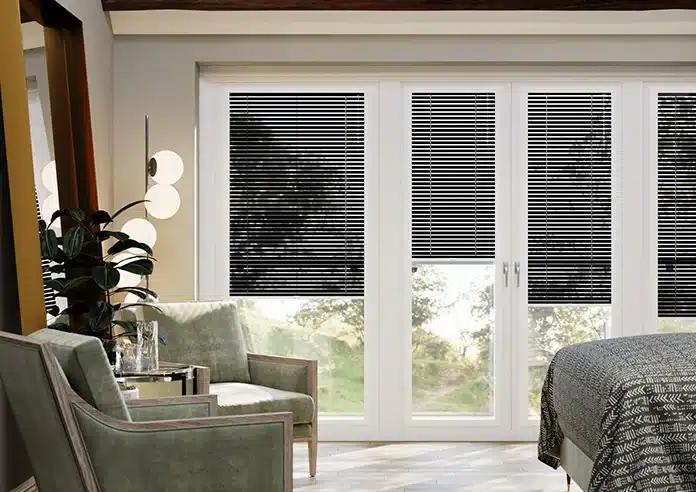
Perfect Fit roller blinds are usually the lowest-cost option in the system, because the mechanism is the simplest. Perfect Fit pleated blinds, including honeycomb pleats, Venetians with aluminium slats, and day and night blinds generally cost more, because there are more parts in the frame and more material in the blind.
Fabric
A plain light-filtering fabric is the starting point. Blackout, thermal honeycomb and wipeable PVC-coated fabrics generally cost more. In a bedroom the blackout upgrade is usually worth it. In a hallway or landing it often is not.
Frame colour
White frames are the standard. Anthracite grey and woodgrain effects to match coloured uPVC can add to the cost. If your windows are white on the inside, a white frame is the sensible choice even when the outside is grey.
Number of blinds
A whole house measured in one visit is quoted as one job. That tends to keep the cost per blind sensible compared with ordering a room at a time, because the measuring and fitting is done in one trip.
How to work out the cost per window
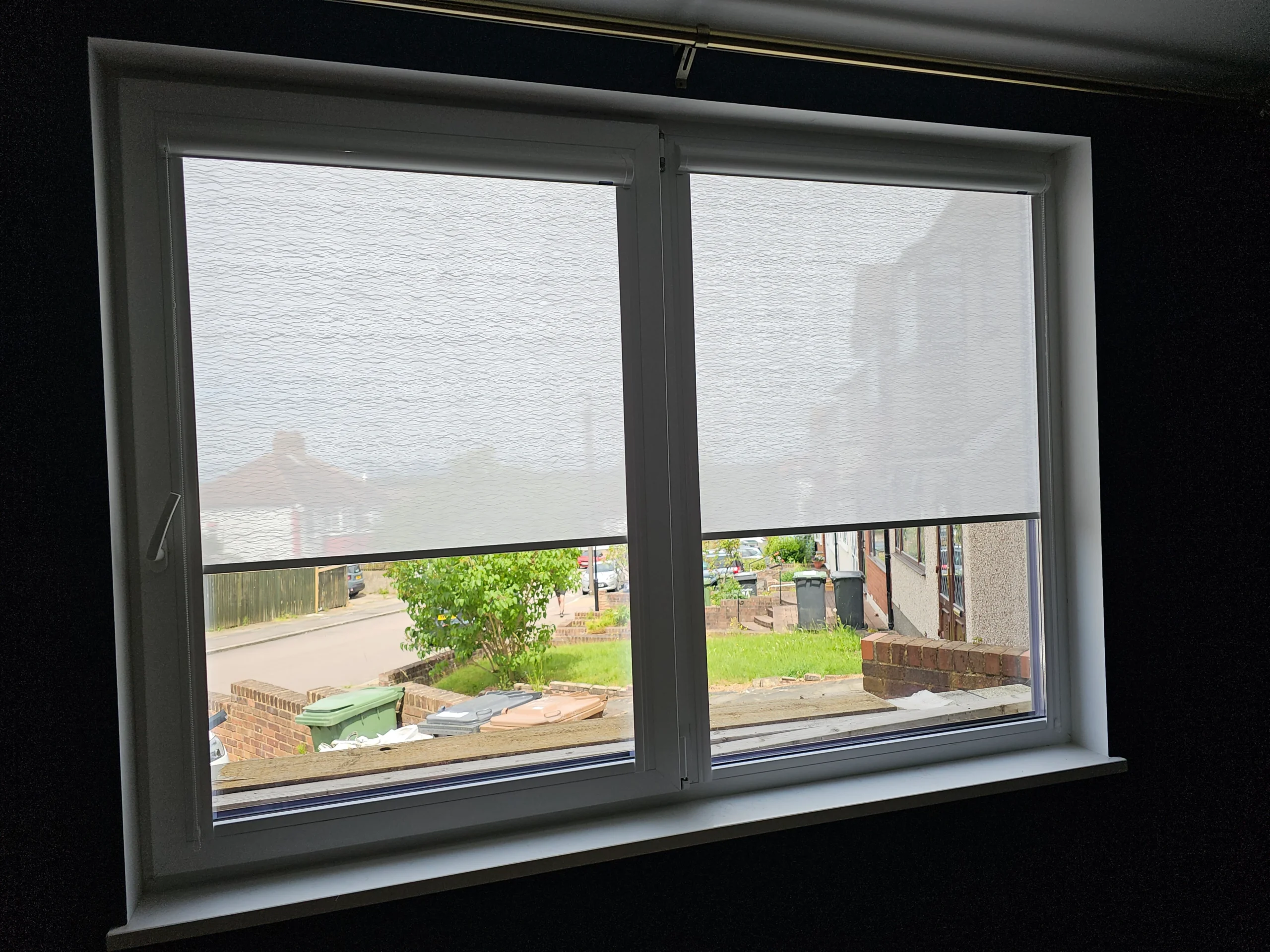
To work out the cost of a window, count its panes, note the size of each, and multiply by a per-blind figure from the range above. That gives a fair first budget before anyone measures.
- Count every pane. Include fixed panes as well as opening sashes. A window that looks like one unit is often two or three blinds.
- Group panes by size. Small top-hung windows, standard casement panes and full-height door panels each sit in a different part of the range.
- Decide the room’s job. Bedrooms usually need blackout. Kitchens and bathrooms need a wipeable fabric or Venetian slats. Living rooms often suit light-filtering or day and night blinds.
- Pick the frame colour. Stay with white unless your window frames are coloured on the inside.
- Use the lower end for small, plain blinds and the upper end for large or premium ones. Then add the panes together.
As a guide to pane counts: a three-bedroom semi in Hornchurch or Upminster with a front bay, three bedroom windows, a kitchen window and French doors can easily need twelve or more Perfect Fit blinds. A one-bedroom new build flat in Beam Park with tilt and turn windows might need four or five. That is why we give prices per blind and then confirm the full figure in writing.
Does the price include measuring and fitting
Measuring is free: we visit your home, measure every pane and check every glazing bead at no charge. After the visit we email or phone through a written quote that sets out each blind, its size, fabric and frame colour, and the fitting, so you can see exactly what you are paying before you agree to anything.
Measuring matters more with Perfect Fit than with most blinds. The blind is made to the glazing bead, not the recess, and it has to clip into brackets that sit in the bead. If the width or drop is a few millimetres out, or the bead is too shallow or rounded for the brackets, the blind will not sit right. When we measure, that risk is ours. When you measure for a supply-only order, it is yours. If you do want to measure yourself, our guide on how to measure for Perfect Fit blinds takes you through it step by step.
Are Perfect Fit blinds worth the money
Perfect Fit blinds are worth the extra cost on uPVC windows and doors that open often, in rentals or new homes where drilling is not wanted, and in children’s rooms where you want no loose cords. They are less worth it on large fixed windows that never open, where a single recess blind does the job for less.
- They move with the window. On tilt and turn windows, French doors and inward-opening sashes, the blind stays flat on the glass when the window opens. A recess blind has to be raised first or it swings into the room.
- No drilling. Nothing is screwed into the frame, plaster or tiles, and the blinds can be lifted out when you move.
- Fewer light gaps. The framed edges cut side light, which helps blackout fabrics in bedrooms.
- No long loose cords. GOV.UK product safety guidance warns that looped blind cords and chains can be dangerous for young children.[1] Perfect Fit blinds keep their workings inside the frame.
- A small insulation benefit. The Energy Saving Trust lists thermal curtains and sealed blinds among the low-cost ways to reduce heat lost through windows.[2] It does not put a figure on the saving, so neither do we, but a honeycomb blind held close to the glass will make a cold bedroom feel less draughty.
For a fuller look at the benefits, the windows they suit and a buying checklist, read our Perfect Fit blinds buying guide.
Ways to keep the cost of Perfect Fit blinds down
The simplest ways to keep the cost down are to mix blind types by room, stay with white frames, and save the premium fabrics for the rooms that need them.
- Use Perfect Fit where it earns its place. Put it on opening sashes, tilt and turn windows and doors. A large fixed picture window may be better with a recess blind.
- Choose rollers for most rooms. Keep pleated and honeycomb blinds for conservatory panes and cold rooms.
- Keep blackout for bedrooms. Landings, hallways and kitchens rarely need it.
- Measure the whole house in one visit. One visit and one fitting day tends to work out better than several small orders.
- Look after the blinds. A dry brush and an occasional wipe keeps most fabrics in good order, and a roller that starts to droop can often be retensioned rather than replaced.
Where to buy Perfect Fit blinds in Rainham and East London
You can buy Perfect Fit blinds from a local maker who measures and fits, or supply-only from an online seller. Which is better depends on your windows and how confident you are with a tape measure.
A local maker with a measuring visit
We are based at Unit C3 in Rainham and cover East London and Essex, including Hornchurch, Upminster, Romford, Elm Park, Dagenham, Barking, Ilford, Stratford, Grays and South Ockendon. We measure at your home for free, check each bead, make the blinds in our own workshop and fit them. This route suits bays, bifolds, French doors, conservatories, older replacement windows that are not quite square, and anyone ordering for a whole house. You can also call in to the workshop during opening hours.
Supply-only online
Supply-only can work for one or two standard uPVC casements if you are confident measuring bead to bead in millimetres and checking the bead profile. The catch is that a made-to-measure blind made to the wrong size is rarely returnable, and fitting is down to you.
Conservatories
Conservatory side panes are a common Perfect Fit job, usually with pleated or honeycomb fabrics. The roof needs a different kind of blind. Our guide to Perfect Fit conservatory blinds covers costs and choices for the whole room.
Frequently asked questions
How much do Perfect Fit blinds cost?
Perfect Fit blinds from HomeDecisions start at £60, and most fall between £60 to £75 per blind. That is per blind, and each pane of glass needs its own.
Are Perfect Fit blinds more expensive than normal blinds?
Per window, usually yes, because a multi-pane window needs one Perfect Fit blind per pane instead of one blind across the recess. On a single large pane the difference is much smaller, and you can compare our starting prices in the table above.
What is the cheapest Perfect Fit blind?
A Perfect Fit roller blind in a plain light-filtering fabric with a white frame, on a small pane, sits at the bottom of the range. Blackout, honeycomb, Venetian and coloured frames all add to the cost.
Is measuring included in the price?
Our measuring visit is free. After it, we email or phone through a written quote that shows each blind and the fitting, so there are no surprises on the final figure.
How many Perfect Fit blinds does a window need?
One per pane of glass, whether the pane opens or not. A window with an opening sash and a fixed pane beside it needs two, and a bay window needs one for every facet.
Can I get a price without a home visit?
You can budget from the range on this page by counting your panes. For an exact figure we need to measure every pane and check the beads, which we do for free at your home.
Get a written Perfect Fit quote in Rainham and East London
For an exact price on every pane in your home, book a free home visit or call us on 01708 505379, Monday to Friday, 9am to 5pm. We measure at your home, check every bead, and email or phone through a written quote after the visit. Blinds are made in our workshop at C3, Star Business Centre, Fair View Industrial Estate, Marsh Wy, Rainham RM13 8UP, and fitted across East London and Essex. More about the range is on our Perfect Fit blinds page.
References
- ^ Child safety: blind cords. GOV.UK (Office for Product Safety and Standards). Retrieved 25 October 2026.
- ^ Energy efficient windows and doors. Energy Saving Trust. Retrieved 25 October 2026.