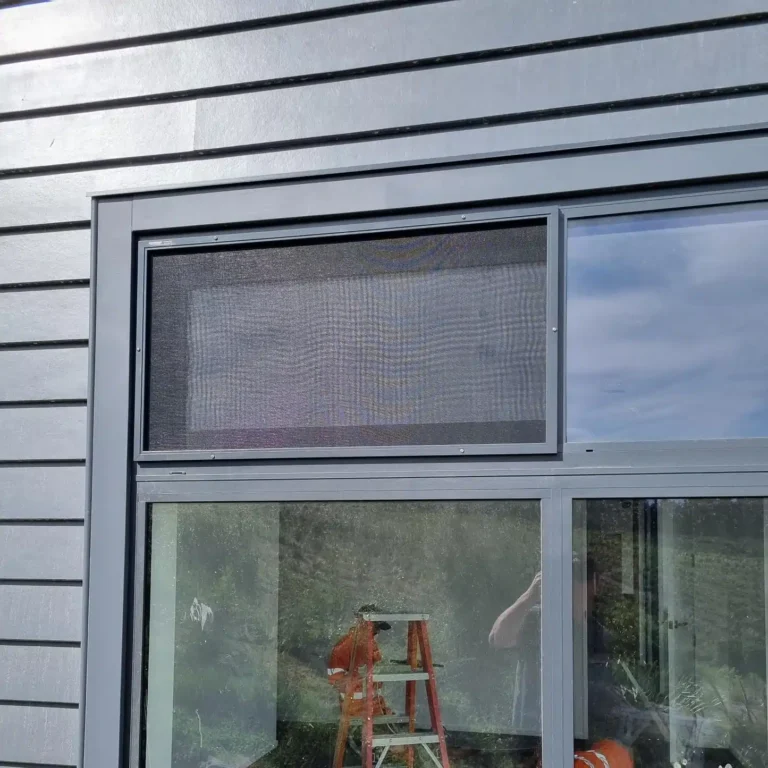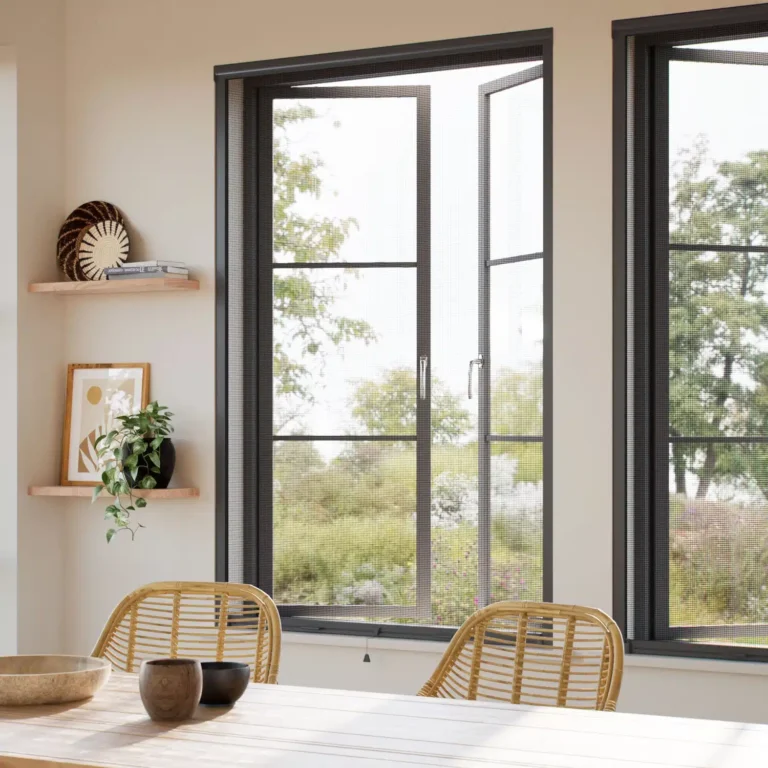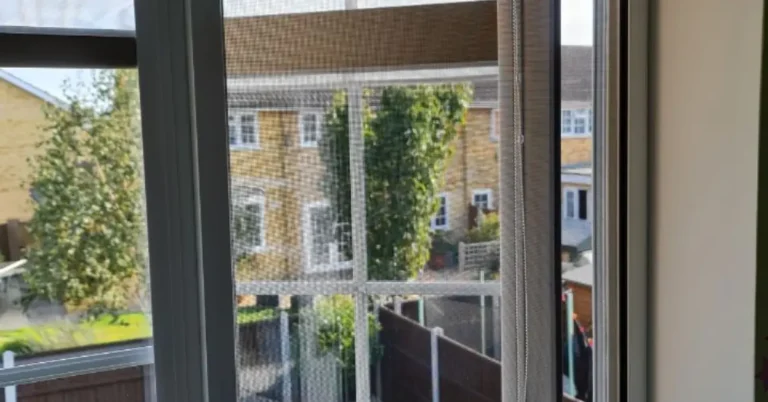
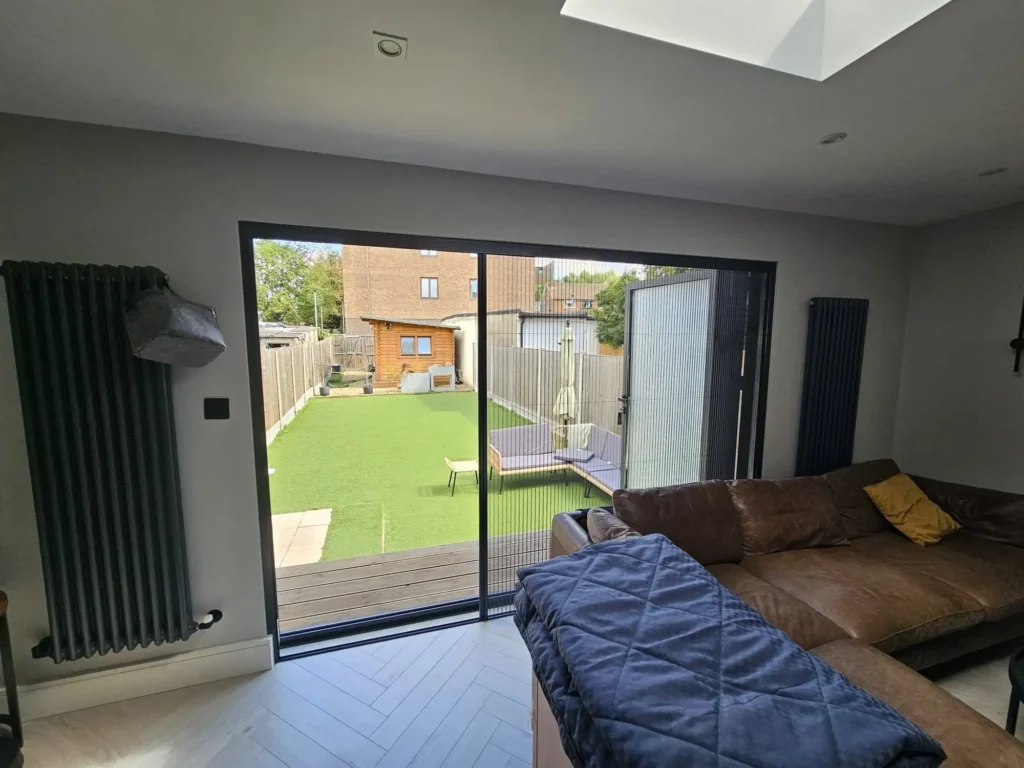
The right fly screens for patio doors depend on how the door opens: a pleated retracting screen suits bifold and wide sliding doors, a roller screen suits French doors and single sliders, and a fixed frame screen suits a door leaf you rarely walk through. All three are made to measure, so the mesh meets the frame with no gap for insects to find.
We make made to measure fly screens in our Rainham workshop and fit them on patio, sliding, bifold and French doors across East London and Essex. This guide explains which type suits which door, how each one works day to day, what moves the price, and what we find when we fit them in the extensions, terraces and flats around Rainham, Hornchurch and Romford. If you only want the short version, it is this: match the screen to the way the door opens, not to the way the screen looks in a catalogue.
Which fly screen suits which patio door
A patio door is screened by covering the opening you actually walk through, so the screen type follows the door type: sliding doors and bifolds need a screen that pulls across sideways, French doors can take a sideways pleated screen or a roller screen on each leaf, and a single hinged door can take a roller, a pleated or a fixed frame. The table below is the quick answer, with the detail in the sections that follow.
| Door type | Best screen | Also works | Avoid |
|---|---|---|---|
| Bifold doors, three leaves or more | Pleated retracting, single or double sided | Roller on a narrow opening leaf | Fixed frame across the run |
| Sliding patio doors | Pleated retracting on the sliding half | Side pull roller | Hinged frame |
| French doors | Double pleated meeting in the middle | Roller on each leaf | Nothing, all three work |
| Single back door | Side pull roller | Hinged fixed frame | Nothing, all three work |
| Balcony door in a flat | Pleated or roller, no drilling where needed | Clip-in fixed frame if the leaf stays shut | Anything that needs the frame drilled if the lease forbids it |
The reason the door type matters so much is the track at the bottom. A screen you walk through needs a low floor track or none at all, and it needs to park out of the way when you are carrying a tray of food out to the garden. A screen on a door you only open for air can sit in a fixed frame and nobody minds.
Pleated fly screens for bifold and sliding doors
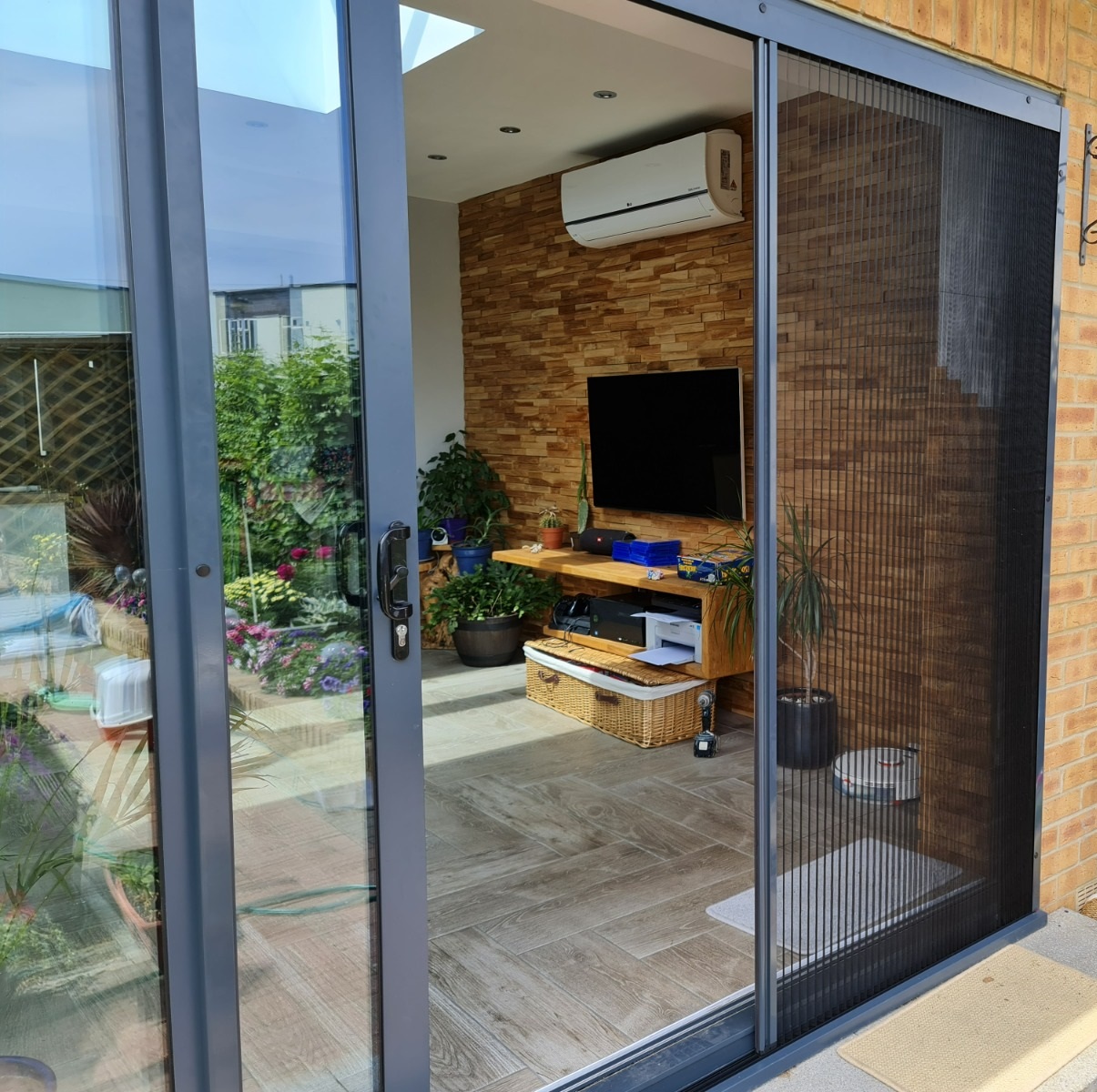
Pleated fly screens are the standard answer for bifold doors and wide sliding doors because the mesh concertinas sideways into a slim stack, runs on a floor track only a few millimetres high, and can be made as a pair that meets in the middle for openings far wider than a roller screen can span. The mesh is pleated like a paper fan and held by fine cords running through it, so it stays taut across the opening and stops where you leave it rather than springing back.
On a bifold run the screen fits inside the reveal, between the plaster returns, with the stack parked against the jamb where the doors fold back. Where the bifolds fold to one side, a single sided pleated screen pulls across from the opposite jamb. Where the doors split and fold both ways, we fit a double sided screen so the two halves meet with a magnetic strip in the centre and you can open either half. The same logic applies to sliding doors: the screen covers the half that slides, and parks against the fixed pane.
The floor track
The floor track on a pleated screen is low and flat, and that is the main reason people choose it for a door they walk through all summer. You can wheel a pushchair or a vacuum over it, a bare foot does not notice it, and it does not create a lip for a toddler to trip on. The trade off is that it collects grit, so it wants a wipe or a quick vacuum now and again, and in a kitchen extension that opens straight onto a lawn it will collect grass cuttings.
Widths and heights
Pleated screens handle the tall, wide openings of a modern extension better than any other type. A single sided screen covers a normal sliding door, a double sided pair covers a full run of bifolds, and the height suits standard door sets and the taller glazing in newer builds. Our pleated fly screens page lists the options we make, including colours to match white, anthracite grey and black door frames.
Roller fly screens for French doors and single doors
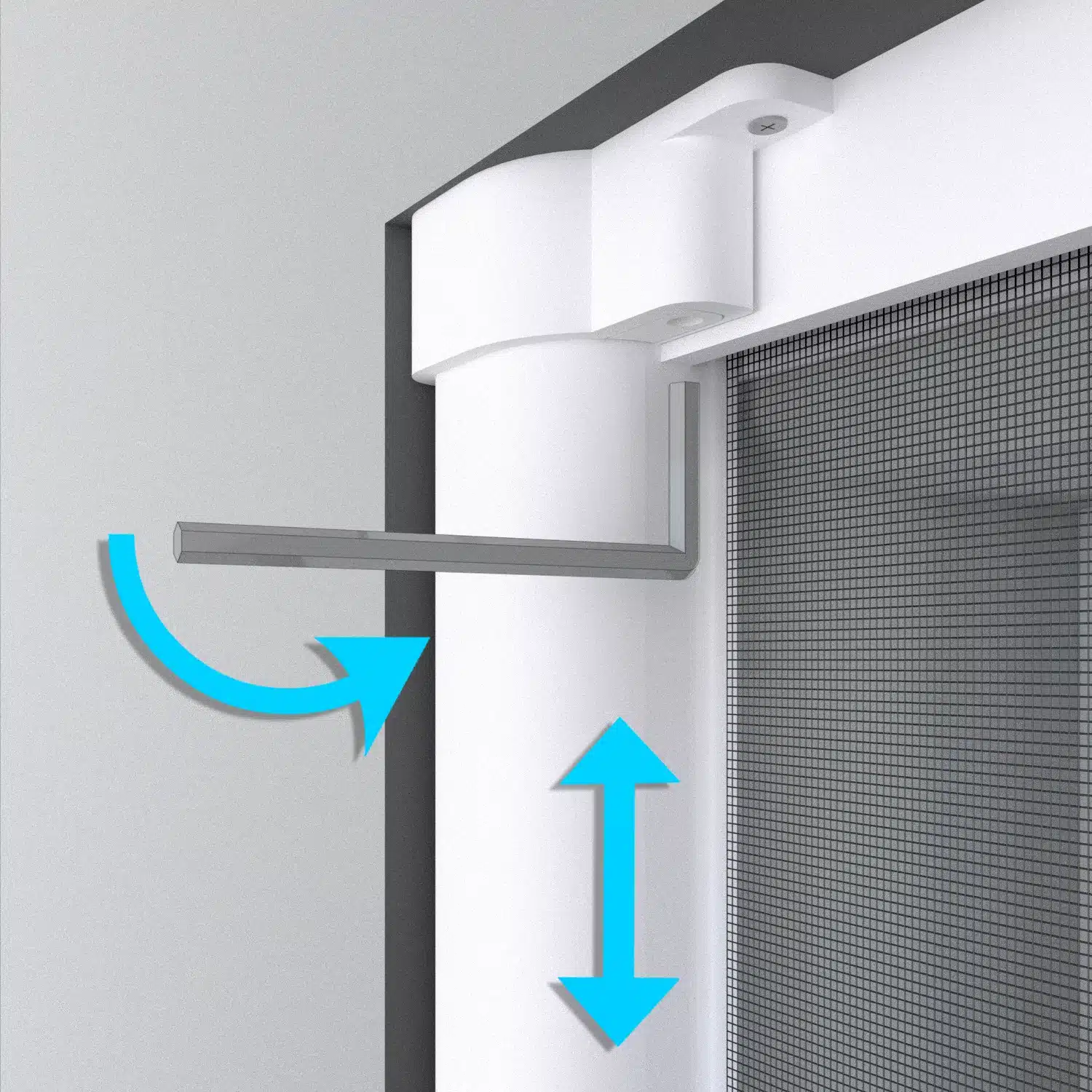
Roller fly screens suit French doors, single back doors and narrow sliding doors because the mesh rolls into a slim cassette fixed to one side of the frame, pulls across on a brush sealed track, and clicks into a catch on the opposite jamb. When you let it go it returns on a slowed spring, so it does not slam back and fray the mesh the way the cheap tension rod versions do.
For a pair of French doors we usually fit one roller to each leaf frame so the two screens meet in the middle, each one covering one door. That lets you open just one door with its screen and keep the other closed, which is how French doors get used anyway. On a single back door the cassette sits on the hinge side or the lock side, whichever gives the clearer walk through, and the catch sits at the height of a door handle so you find it without looking.
Top or side cassette
A door roller screen pulls sideways, so the cassette sits vertically at one jamb. A top mounted cassette that drops down is a window screen, not a door screen, because you would have to lift it every time you went out. If you are also thinking about the windows, our guide to roller fly screens for windows covers the drop down version in detail, and the two types share the same mesh and colours so a house can have both without them looking different.
Mesh options
Standard fibreglass mesh keeps out flies, wasps and mosquitoes and is almost invisible from a couple of metres away. Pet mesh is thicker and woven tighter, so it takes a cat climbing it or a dog nosing at it. Pollen mesh has a finer weave for hay fever sufferers but cuts the airflow a little, which matters on a warm evening when the door is open precisely for the breeze. We talk through which one suits the household at the home visit.
Fixed frame fly screens for door leaves
A fixed frame fly screen is a rigid aluminium frame with mesh stretched across it, and on a door it works as a hinged panel that swings open like a second door or as a clip-in panel on a leaf that stays shut for the season. It is the simplest screen and the toughest, because there is nothing to retract and no track to clog, which is why people choose it for a utility room door or a side door where airflow matters more than the view.
The hinged version has a magnetic or spring closer so it shuts behind you, and a small handle or a kick plate at the bottom. The clip-in version is held by turn buttons and lifts out in autumn for storage. Neither suits a bifold run or a sliding door, because the frame would have to be as wide as the opening and you would still need to get past it.
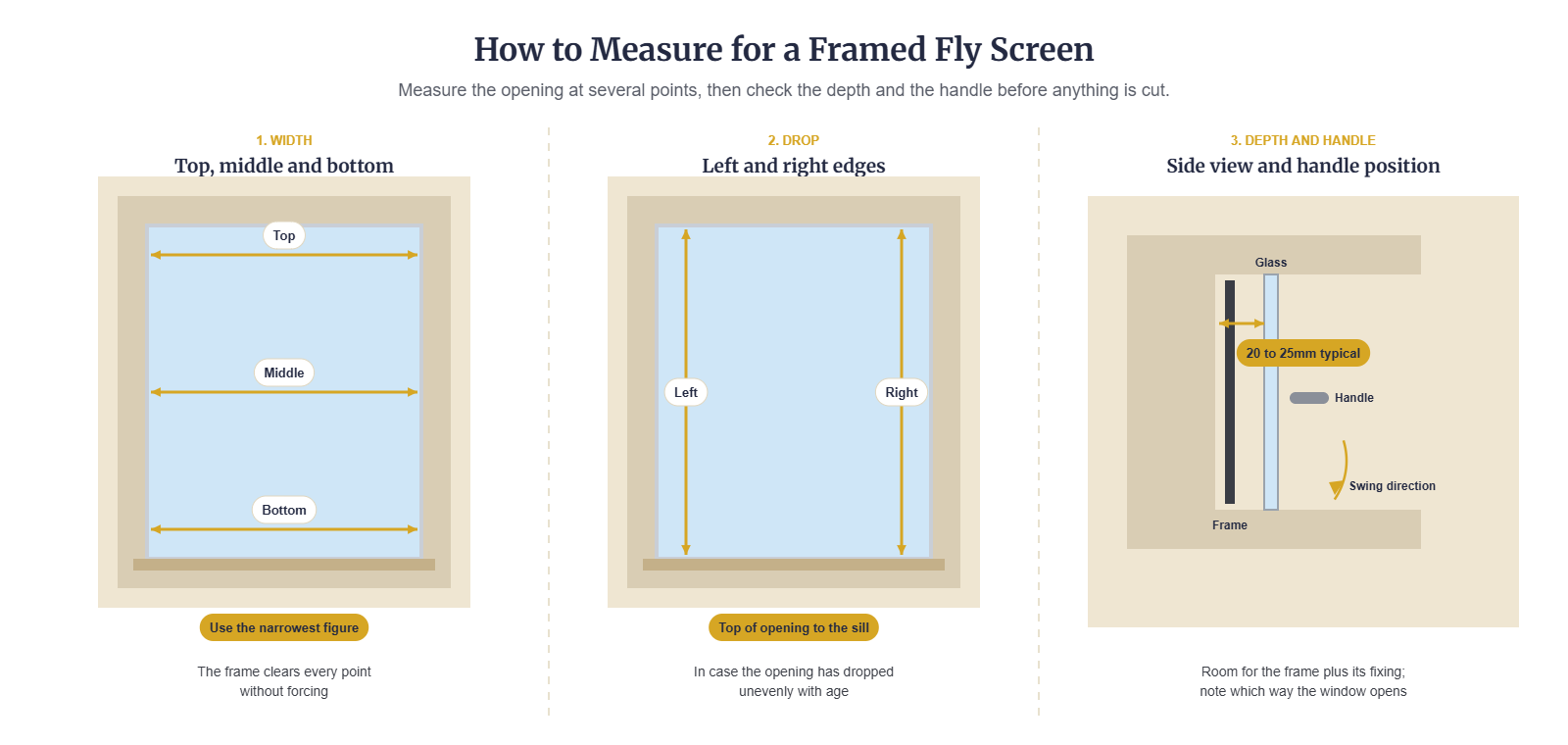
Measuring a framed screen for a door follows the same rules as a window: width at three points using the narrowest, drop at both edges, and a check on the depth of the reveal so the frame and its hinges have somewhere to sit. We cover the window version in our guide to framed fly screens, and the door version only adds a check on which way the door swings and where the handle sits so the two do not clash.
Walking through a fly screen every day
A patio door fly screen gets opened and closed far more often than a window screen, so the small details decide whether it still works well in its third summer: the height of the threshold, how the catch releases, whether a dog or a child can get past it, and whether it can be parked fully out of the way for a barbecue. These are the points we check at the measure, because they are the ones people only notice after fitting.
Thresholds and tracks
Pleated screens have the lowest track, roller screens have a slim bottom guide or a brush strip, and framed screens have a full frame edge at the bottom. On a level threshold bifold, where the inside floor and the patio slabs are flush, the pleated track is the only one that keeps the step free feel. On a French door with a raised sill the roller screen’s bottom guide sits on the sill and you step over the sill as you already do.
Catches and handles
Pleated screens stop wherever you leave them, so they have a simple handle bar and a magnetic meet in the middle. Roller screens need a catch to hold the spring, and the catch should release with one hand because the other hand is usually holding something. Framed hinged screens have a push plate so you can shoulder through them. We set the handle heights to suit the household rather than a fixed figure, which matters where a wheelchair user or a child uses the door.
Pets and children
Cats go through a standard mesh if they decide to, and a large dog will lean on a screen until it gives. Pet mesh on a roller or framed screen takes this sort of treatment well. A pleated screen is more delicate, because the pleats and cords do not like being pushed, so in a house with a boisterous dog we steer people towards a roller or a framed screen on the leaf the dog uses, and a pleated screen on the wider section. For children the main point is that none of these screens is a safety barrier; they keep insects out, not toddlers in.
Parking the screen away
For a summer party you want the whole opening clear. A pleated screen stacks into a slim bundle against the jamb, a roller screen disappears into its cassette, and a clip-in framed screen lifts out. A hinged framed screen stays on its hinges and swings against the wall, which is fine on a side door and a nuisance on a main garden door.
How much do fly screens for patio doors cost
Fly screens from HomeDecisions start at £65 and most fall between £65 to £390 per screen, with door screens sitting towards the upper part of that range because they are taller and wider than window screens and carry a floor track or a door catch. The written quote after the home visit gives the exact figure for your door, measured, made and fitted.
What moves the price within that range is the size of the opening, the screen type and the mesh. A double sided pleated screen across a full run of bifolds costs more than a single roller on a back door because it uses more mesh, more track and two handle bars. Pet mesh and pollen mesh add a little over standard fibreglass. Colour matching to an anthracite or black frame is usually included, while an unusual frame colour may add a surcharge for the powder coating. Fitting is included in our figures, and the quote itemises the screen so you can see what each one costs.
| Screen type | Typical door | Price position | What pushes it up |
|---|---|---|---|
| Side pull roller | Single door, one French door leaf | Lower end of the fly screen range | Pet mesh, non standard colour |
| Hinged framed | Side or utility door | Lower to middle | Heavy duty mesh, self closer |
| Single sided pleated | Sliding door, narrow bifold | Middle | Height over a standard door set |
| Double sided pleated | Wide bifold run, French doors | Upper end | Width of the run, pollen mesh |
Fitting fly screens on patio doors in Rainham and East London
Patio door fly screens across Rainham, Hornchurch, Romford, Upminster and the rest of East London mostly go onto three kinds of opening: the bifolds and sliders in a rear kitchen extension, the uPVC French doors on a 1930s or post war semi, and the balcony doors in newer flats around Barking Riverside, Stratford and Canary Wharf. Each one has its own quirks, and the screen type usually follows from the door.
Extensions with bifolds and sliders
The kitchen extensions that have gone onto the back of terraces in Elm Park, Dagenham and Ilford usually have a run of aluminium bifolds or a large sliding door opening onto a patio at the same level as the kitchen floor. A pleated screen is the natural fit: the track sits on the flush threshold, the stack parks where the doors fold, and the grey or black screen frame matches the door colour. Where the bifold reveal has been plastered out of square, we measure at several points and the screen frame packs out so the mesh still runs true.
French doors on semis and terraces
The uPVC French doors on the back of a Hornchurch or Romford semi have a raised sill and a central mullion free opening, and either a pair of roller screens or a double pleated screen works. People with a dog tend to choose the rollers with pet mesh. People who open both doors wide in summer tend to choose the pleated pair for the clear threshold. The older timber French doors on Victorian terraces in Barking and East Ham have a deeper frame, which is enough for a framed hinged screen if that is what the owner prefers.
Balcony doors in flats
Balcony doors in the newer flats in Stratford, Canning Town and Canary Wharf are often tall aluminium sliders, sometimes tilt and turn, and the lease may forbid drilling the frame. Pleated and roller screens can be fixed to the reveal rather than the door frame, and where even that is a concern we look at fixings that clamp rather than screw. Where the balcony itself needs screening from wind and sun as well as insects, our zip screens are the heavier duty option; one of our fitted jobs is a zip screen on a balcony in Romford, and for the door itself a fly screen sits behind it. For a broader look at screening a whole house, our post on custom fly screens in Rainham covers windows and doors together.
Blinds, awnings and external screens are all covered by the British Blind and Shutter Association, the UK trade body for the industry, which is a useful place to check what good practice looks like.[1]
Frequently asked questions
Can you fit a fly screen to bifold doors?
Yes, a pleated retracting fly screen is made for bifold doors: it fits inside the reveal on a low floor track, stacks against the jamb where the doors fold, and can be made double sided to cover a full run with a magnetic meet in the middle.
Can dogs push through a fly screen?
A determined dog can push through standard mesh, so for a door a dog uses we fit pet mesh on a roller or framed screen, which is thicker and woven tighter. A pleated screen is best kept for the section of the opening the dog does not use.
Do fly screens for sliding doors stop the door locking?
No, the screen sits on the inside of the reveal in its own track, so the sliding door still closes and locks behind it. The screen is only pulled across when the door is open.
Can a fly screen be fitted without drilling the door frame?
Yes, pleated and roller screens can be fixed to the plaster reveal or the sill rather than the door frame, and clamp fixings are available where the lease on a flat forbids any screws at all. We check the fixing method at the home visit.
Do pleated fly screens work on uneven floors?
Yes, within reason. The floor track is packed level during fitting and the mesh runs true as long as the opening is measured at several points. A badly out of level threshold may need a roller screen instead, which only touches the floor with a brush strip.
How long does it take to fit a fly screen door?
A roller or framed screen on a single door is usually fitted within an hour, and a double sided pleated screen across a bifold run takes a little longer because the track is levelled and the two halves are aligned to meet cleanly.
Get a free home visit in Rainham and East London
If you are still deciding on fly screens for patio doors, we measure patio, sliding, bifold and French doors at your home for free, make the screens in Rainham and fit them ourselves across East London and Essex, with a written quote after the visit. To arrange a visit, book a free home visit online or call 01708 505379, Monday to Friday, 9am to 5pm.
References
- ^ British Blind and Shutter Association. BBSA. Retrieved 25 October 2026.