You prop open the bedroom window at dusk, and by morning there are three mosquitoes on the ceiling and something small and angry buzzing inside the lampshade. If you live anywhere near the Rainham marshes, Beam Valley Country Park, or the creeks around Dagenham, you already know how fast the midges find an open window once the weather warms up.
A framed fly screen stops that. Not with chemicals, not with one of those plug-in blue-light traps that hum all night, but with a simple mesh panel fitted tight to the window opening. The frame sits flush, the mesh does its job, and you get the airflow without the wildlife.
This guide covers what a framed screen actually is, how it compares to a roller system, which fixing and mesh type suits your window, and what to expect from a professional fit versus a DIY kit. It is written from our fitting team’s experience across Rainham, Barking, Dagenham, Hornchurch, and the wider RM and IG postcode area, not from a product catalogue.
If you’re still weighing up which type of screen fits your home best, our fly screens overview runs through every option side by side before you get into the specifics below.
What Is a Framed Fly Screen and How Does It Work?
A framed fly screen is a rigid aluminium frame with tensioned mesh stretched across it, sized to fit inside or over a window opening. Unlike roller or pleated fly screens, which retract into a housing, a framed screen is a fixed panel. You fit it, leave it in place for the season, and remove it entirely when you no longer need it.
The frame itself is typically powder-coated aluminium, cut to the exact dimensions of your window reveal or outer frame. The mesh is held under tension by a rubber spline pressed into a channel around the frame edge. That tension is what keeps the mesh flat and gap-free. No sagging, no ripples, no corners lifting away from the frame.
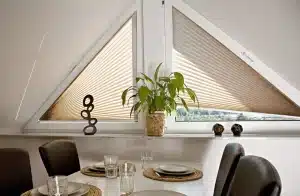
Because the screen is a single rigid panel, it handles irregular openings well. Older wooden casements that have settled slightly out of square, small toplights, and even arched or angled windows can all take a framed screen, because the frame is built to the opening rather than needing a straight track to run in. That matters in the RM postcode area, where a lot of the housing stock dates from the 1930s through the 1960s and the window frames have had decades to shift.
For a side-by-side look at how roller systems differ, our roller fly screens guide covers the retracting mechanism and cassette housing in full.
Framed vs Roller Fly Screens: Which One Actually Suits Your Window?
Framed fly screens suit windows that stay open for long stretches, such as a kitchen window left ajar from May to September. Roller fly screens suit windows opened and closed several times a day, because the mesh retracts into a cassette rather than needing to be removed. The deciding factor is how often you need the window fully clear, not which system costs more.
The question we get asked most on a home visit is not “does this work” but “which one.” And the honest answer depends on how often that window actually gets opened, not on which system looks smarter in a brochure.
A framed screen is a rigid mesh panel held by hinges, a magnetic strip, or turn buttons. To open the window fully, the whole panel comes off. That is not a flaw. It is the trade-off. For a bedroom window that only gets a night-time crack of air, or a kitchen window in a Rainham terrace that stays open all summer, removing the frame once a season is a non-issue.
For a window someone opens and closes several times a day, though, it becomes the thing that gets left off, propped against the wall, and eventually lost behind the sofa.
A roller screen solves that by staying in place. Pull it down when you want the mesh, roll it back into the cassette when you do not. It costs more and needs a flat top edge to house the cassette. Our roller fly screens page has the full detail if a retracting screen is what you actually need.
There is a third factor that catalogue sites tend to skip: window shape. Framed screens handle irregular or angled openings better than roller systems, because the frame can be built to the exact shape rather than needing a straight channel to run in. If you are not sure whether your opening is standard enough for a retracting system, that is usually the deciding factor.

Fixing Types Compared: Hinged, Magnetic, and Turn-Button
Framed fly screens attach to windows using one of three main fixing methods: hinged brackets, magnetic strips, or turn buttons. Each suits different window types, households, and tenancy situations. The right choice depends on how often you remove the screen, whether you can drill into the frame, and how exposed the window is to wind.
Here is how they compare in practice:
| Factor | Hinged | Magnetic | Turn-Button |
| How it attaches | Brackets screwed to the frame; screen swings open on hinges | Magnetic strip on screen and frame; screen lifts on and off | Metal turn clips screwed into the reveal; screen presses in and clips hold it |
| Removal | Swings open without removing; stays attached | Lifts off instantly, no tools | Quarter-turn of each clip to release |
| Best for | Windows you want to open regularly without removing the screen | Rented properties, children’s rooms, any window needing frequent removal | Semi-permanent installs on windows left screened all season |
| Drilling required? | Yes | No (adhesive magnetic strip) | Yes (small screws into reveal) |
| Wind resistance | Strong, hinges hold firm | Weakest, magnets can pull away in gusts | Strong, mechanical clips grip |
| Watch out for | Hinge side blocks part of the reveal when open | Not ideal for exposed, windy positions | Clips can mark painted reveals when tightened |
A note on magnetic screens and honesty. They are a practical choice for households with children and for tenants who cannot drill, and we fit a lot of them. But we will not pretend they hold up to a strong crosswind the same way a hinged or clipped screen does. If the window faces an exposed direction or sits high up on a first floor, a mechanical fixing is the safer bet.
Mesh Types Compared: Standard, Midge, Pollen, and Pet-Resistant
Standard fibreglass mesh with an 18×16 thread count suits most UK homes, stopping flies, wasps, and mosquitoes while maintaining good airflow and visibility. Finer midge mesh, pollen-grade mesh, and reinforced pet mesh exist for specific needs, each trading some airflow or visibility for tighter protection.
This is the second real decision, after fixing type. Here is what each mesh does and where it makes sense:
| Mesh Type | Thread Count | Stops | Airflow | Best For |
| Standard fibreglass | 18×16 | Flies, wasps, mosquitoes, moths | Excellent | Most UK homes |
| Midge mesh | 20×20 or finer | All of the above plus midges, gnats, no-see-ums | Good (slight reduction) | Near marshes, rivers, standing water |
| Pollen mesh | Very fine weave | Pollen particles plus all insects | Reduced, noticeable on still days | Hay fever sufferers, ground-floor bedrooms |
| Pet-resistant | Vinyl-coated polyester or stainless steel | Same as standard | Excellent | Cats and dogs that paw, scratch, or lean on screens |
If you live near Rainham Marshes, along the Beam Valley, or close to any of the creeks and standing water around Dagenham and Barking, midge mesh is worth the small airflow trade-off. We have had customers in those areas tell us they were getting bitten at night even with standard mesh in place, because the midges were small enough to pass through the wider weave. Switching to a 20×20 mesh solved it. For more on how we approach these Rainham homes specifically, see our custom fly screens in Rainham guide.
Pollen mesh is genuinely useful for hay fever, but be realistic about airflow. On a still, warm evening, you will notice the difference. It works best on windows where you also have another ventilation source in the room.
Pet mesh is tougher than standard fibreglass and will not tear if a cat hooks a claw through it. It does look slightly different up close, the weave is heavier, but from a normal viewing distance inside the room, the difference is minimal.

Which Rooms and Window Types Suit Framed Fly Screens?
Framed fly screens work on most window types found in UK homes, including top-hung casements, side-hung casements, sliding sash windows, and fixed panes. They suit kitchens, bedrooms, and ground-floor rooms especially well, and they are one of the few screen types that fit cleanly onto older or non-standard frames without modification.
Kitchens
The most common room we fit screens in. Kitchen windows tend to stay open while cooking, and the combination of food smells, warmth, and light pulls flies straight in. A framed screen on a kitchen casement, left in place from late spring to early autumn, handles that without getting in the way. If you open and close the window constantly while cooking, consider a hinged fixing so the screen swings open rather than needing to be lifted off.
Bedrooms
Night-time ventilation without mosquitoes. A framed screen with standard or midge mesh on a bedroom window means you can sleep with the window cracked open and not wake up bitten. Magnetic fixing works well here because the screen is not exposed to much wind at night and removal is easy when you want to clean the glass.

Conservatories and extensions
Conservatories with opening roof vents or side windows are fly magnets in summer. Framed screens fit the odd shapes and small openings you often find in conservatory glazing better than roller systems, which need a full-width top rail.
Rented properties
Magnetic framed screens are the go-to for tenants. No drilling, no screws, no marks on the frame. The screen lifts off and presses back on, and when you move out, the adhesive magnetic strip peels away cleanly. We fit these regularly for renters across Barking and Dagenham who need landlord-friendly solutions. It is the same landlord-friendly thinking behind our guide to blinds for rental properties in East London, if window dressings are next on your list once the screens are sorted.
Listed buildings and conservation areas
If your property is in a conservation area or is a listed building, external alterations need care. A framed screen fitted inside the reveal, with magnetic or turn-button fixing, is invisible from outside and does not alter the external appearance of the window. Worth checking with your local planning authority, but in most cases an internal screen is not a controlled alteration.
Sash windows
Framed screens suit sash windows well. The screen sits over the lower sash opening, held by turn buttons or magnets on the outer frame. Because the frame is custom-built to the opening, it handles the slight irregularities that old sash windows always have. Roller systems struggle with sash windows because there is no clean top rail to mount the cassette.
DIY Kit vs Professional Measure-and-Fit: An Honest Comparison
DIY framed fly screen kits suit newer windows with square, true-to-size openings and cost less upfront. Professional measure-and-fit suits older or irregular frames, removes the risk of gaps and mis-sizing, and typically delivers a tighter, longer-lasting seal. The right choice depends on your window stock and your confidence with a tape measure.
DIY kits are widely available online. You measure the opening, order a kit to size, and assemble the frame and mesh yourself. If your windows are modern uPVC with factory-square openings, a decent kit will do a good job.
The problem is that older UK windows are rarely perfectly square. A millimetre or two out, and you get a gap at one corner. That gap is where the flies get in, and it defeats the purpose of the screen. We see this regularly on jobs where someone has tried a kit first. The frame looks fine at a glance, but hold a torch behind it at night and you can see light through the corner.
A professional measure-and-fit means someone turns up with a tape measure, checks the opening for square, notes any bowing or settlement in the frame, and builds the screen to the actual shape of the window. It costs more. But it fits once, stays put, and does not need shimming or re-doing a month later.
Our own fitting service covers the full process: free home measure, made-to-measure frame, professional installation, and no callbacks. We cover Rainham, Dagenham, Barking, Hornchurch, Romford, and the wider RM and IG postcode area.
Maintenance and Lifespan: What to Realistically Expect
A well-made aluminium-framed fly screen typically lasts five to ten years with normal domestic use. The mesh itself may need replacing sooner if it is damaged or stretched, but the aluminium frame is reusable. Maintenance is minimal: an occasional wipe-down with soapy water and a check for gaps or loose fixings once a season.
The frame will not corrode, warp, or fade. Powder-coated aluminium handles UK weather without complaint, even if you leave it in place year-round. The mesh is the part that ages. Fibreglass mesh can become brittle after several years of direct sun exposure, and pet mesh may stretch if regularly pawed. Either can be re-stretched or replaced without buying a new frame.
Fixings are the other thing to check. Magnetic strips lose grip over time, especially in heat or direct sun. Turn buttons and hinge screws can loosen with repeated use. A quick check at the start of each season catches these before they turn into a gap.
If you do need a replacement mesh or a fixing refresh, that is a straightforward job for any fly screen fitter. You do not need to replace the whole unit.
How Much Do Framed Fly Screens Cost?
Framed fly screen pricing depends on the frame size, mesh type, fixing method, and whether you choose a DIY kit or professional fitting. As a general guide, a professionally fitted framed screen for a standard casement window costs less than a roller system for the same opening, because there is no retractable cassette mechanism involved.
DIY kits are cheaper upfront, but factor in the risk of a poor fit on older windows. A screen that does not seal properly is a screen you will end up replacing or having professionally re-done.
Midge mesh and pet mesh cost slightly more than standard fibreglass. Pollen mesh tends to carry the highest mesh surcharge because of the finer weave.
We quote per window after a free home measure, so you know the exact cost before any work starts. No hidden charges, no call-out fees across the RM and IG postcode area.
Frequently Asked Questions
What is the difference between a framed fly screen and a roller fly screen?
A framed fly screen is a fixed mesh panel you remove entirely to open the window. A roller fly screen retracts into a cassette so the window stays usable with the screen in place. Framed suits windows left open all season. Roller suits windows opened and closed often throughout the day.
Do framed fly screens block airflow or light?
No. A correctly fitted framed screen uses an open-weave mesh, usually 18×16 fibreglass, that lets air and daylight pass through with only a slight reduction in visibility. Airflow loss becomes noticeable only with finer meshes like midge or pollen mesh, which trade some ventilation for tighter insect or pollen protection.
Can I fit a framed fly screen myself?
Yes, DIY framed screen kits exist and work on square, true-to-size openings. Older UK window frames are rarely perfectly square, though, so a gap at one corner is common with self-measured kits. A professional measure-and-fit removes that risk and typically gives a tighter, longer-lasting seal.
What mesh should I choose for a framed fly screen?
Standard fibreglass mesh suits most UK homes and stops flies, wasps, and mosquitoes while keeping good airflow. Choose midge mesh near marshland or standing water, pollen mesh for hay fever sufferers, and pet-resistant mesh for households with cats or dogs that paw at the screen.
Are framed fly screens suitable for rented properties?
Yes, when fitted with a magnetic strip rather than screws. The frame lifts off cleanly to remove and presses back into place to refit, leaving no permanent marks on the window or reveal. That is a common requirement for tenants who need landlord approval before altering fixtures.
How long do framed fly screens last?
A well-made aluminium-framed screen typically lasts five to ten years with normal use, and the mesh can usually be re-stretched or replaced without buying a new frame. Lifespan depends on fixing type and exposure. Magnetic screens in windy, exposed positions wear faster than hinged or turn-button screens.
Ready to See for Yourself?
If you are in Rainham, Dagenham, Barking, Hornchurch, Romford, or anywhere in the RM and IG postcode area, we will come to you for a free home measure. No sales pitch, no pressure. Just a tape measure, honest advice on which screen and fixing type suits your windows, and a quote you can take or leave.
Book a free home measure or call the team to talk through your windows. We fit framed fly screens, roller fly screens, pleated fly screens, and zip screens across East London and Essex, and we have been doing it since 2015.