It’s early evening on one of the newer riverside blocks near Rainham, and a couple are standing on their balcony trying to work out why the wind picks up so sharply once the sun starts going down. Their flat faces open water, and there’s nothing between them and it for a long way.
A zip screen would sort the wind out in seconds. The harder question, the one that actually stops people at this stage, is whether a motor is worth the extra cost over a hand crank, and whether they’re even allowed to fix one to a rail their lease says isn’t fully theirs.
Both questions come up constantly across East London’s riverside developments, and most content written about motorised zip screens for balconies skips straight past them into fabric colours and motor specs.
This article works through the whole decision properly: what motorised actually means, how it differs from simply automatic, what it costs to run, and the leasehold and safety questions that decide whether you can fit one at all before you get anywhere near choosing a fabric.
What a motorised zip screen actually is
A zip screen is a retractable outdoor fabric screen that runs inside a zip guide track fixed to either side of the opening, which keeps the fabric taut and stops it flapping loose in wind the way an unguided awning would. We’ve covered the mechanism itself in full on our zip screens page, so this article won’t repeat that. What matters here is the part that changes when you motorise one.
A manual zip screen uses a crank handle at the base. A motorised zip screen replaces that crank with an electric motor built into the roller tube at the top, so there’s nothing extra bolted on to look at. The motor does the winding, you just tell it when.
How the motor and controls actually work
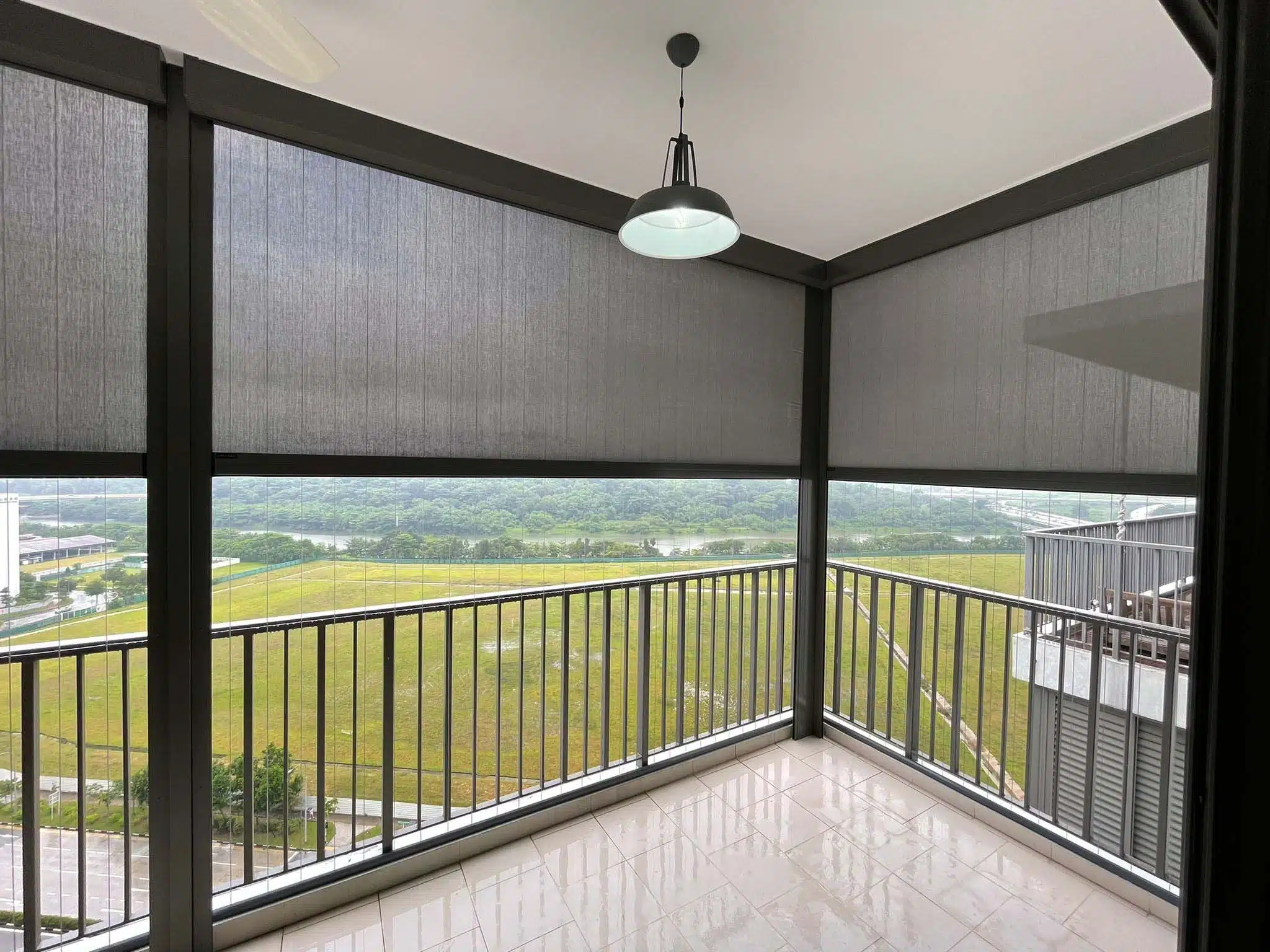
The motor itself sits hidden inside the tube the fabric winds onto, the same principle used on the motorised roller blinds and electric curtains we fit indoors. Two power options cover most balcony installations. A hardwired motor runs off mains power stepped down through a small transformer, wired in permanently by an electrician. A battery-powered motor runs on a rechargeable battery, often topped up by a small integrated solar panel, and needs no new wiring at all.
Control is where motorised screens have moved on fastest in the last few years. A remote handset still comes as standard, but most people end up using a wall-mounted switch instead, wired or battery-powered, fitted next to the balcony door the way a light switch would be. Smartphone apps let you operate the screen from inside the flat or, more usefully, on the way home if it’s set up on a shared home network. Voice control through Alexa or Google Home is increasingly requested too, and it’s worth knowing this isn’t a balcony-specific gimmick. We wrote about the same shift happening indoors, where motorised blinds have moved from a novelty to a standard request across East London homes, and a balcony zip screen typically joins the same app or hub rather than needing a separate system.
Motorised versus manual: when each earns its cost
A hand crank is fine for a single balcony door you open once a day. A motor earns its keep once you’re operating the screen several times a shift, or it’s mounted somewhere a stepladder shouldn’t be going, or the opening is wide enough that winding a crank back and forth every time the wind shifts starts to feel like a chore rather than a five-second job.
We’ll tell you plainly if manual is the better call for your opening. Motorising a screen you’ll use once a day is money that could go on a better fabric instead. Small balconies with a single opening and no real wind exposure rarely need anything beyond a manual crank, and there’s no reason to talk anyone out of that if it genuinely suits the space.
Motorised with sensors: the automatic upgrade
“Automatic” gets used loosely, so it’s worth being precise. A motorised screen still needs someone to press a button, a switch, or open an app. An automatic screen adds a wind sensor, sometimes a rain sensor too, that retracts the screen on its own once conditions cross a set threshold, with no one needing to be home or to check the forecast first.
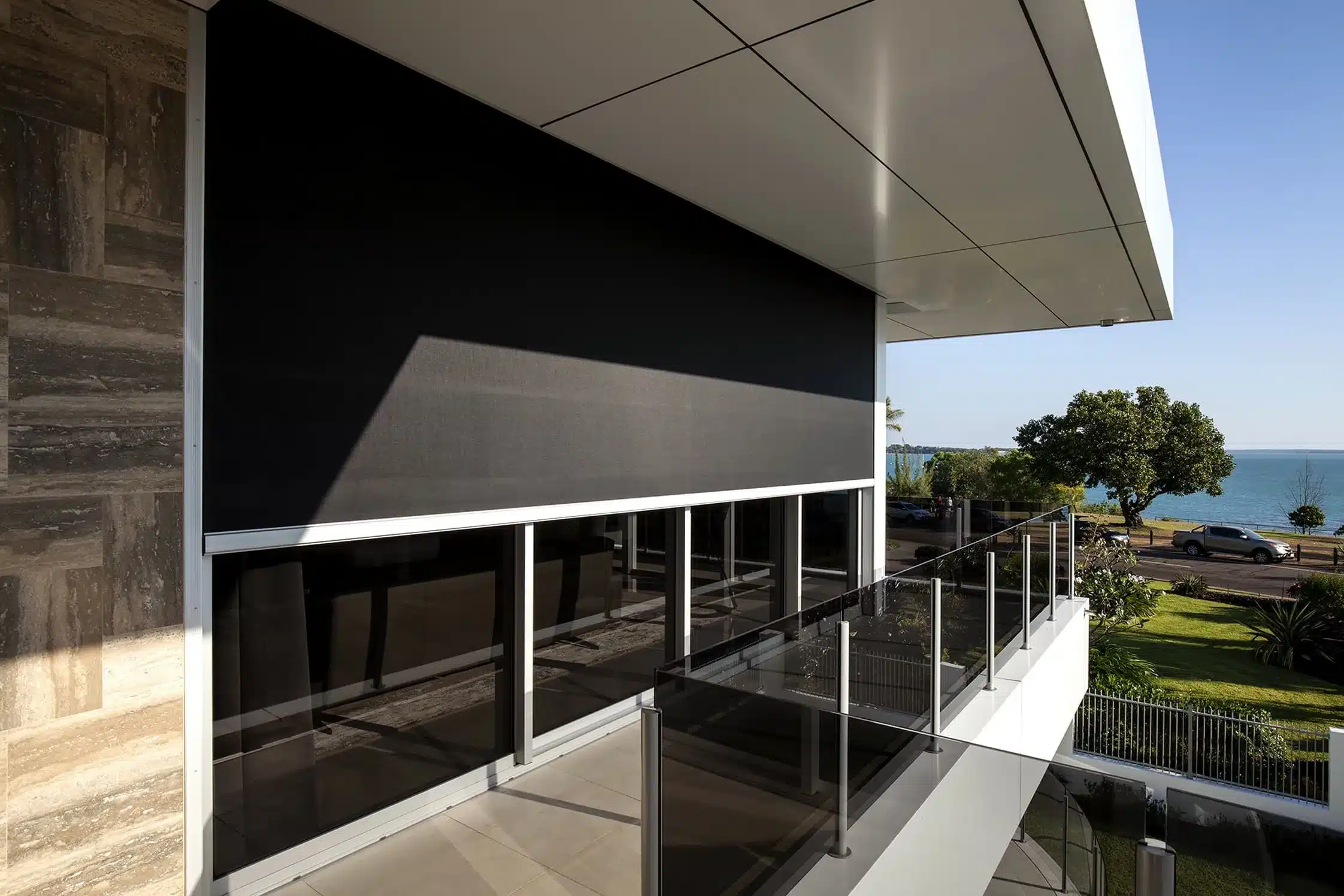
That distinction matters most on exposed elevations. A balcony facing open river frontage with nothing breaking the wind is a genuinely different case to a sheltered balcony tucked between two buildings. On the first, a wind sensor protects the fabric and the mechanism from a gust nobody was there to see coming. On the second, that same sensor is solving a problem the balcony probably doesn’t have, and the extra cost is harder to justify.
Before you choose a motor, check who owns the wall
If your balcony sits on one of the newer developments around Rainham, Beam Park or Barking Riverside, there’s a question that matters more than manual versus motorised, and it’s one that almost nothing else written about balcony zip screens bothers to raise. Does your lease actually let you fix anything to that rail or soffit?
Most flats in managed developments are leasehold, and balconies are typically demised to the leaseholder for use, but the external fabric of the building, including the rail, the soffit above it, and often the balcony floor itself, usually remains outside what you’re free to alter without asking first. That’s not a technicality. A managing agent can reasonably ask for a completed alteration to be removed at your cost if it was fitted without consent, even something as low-impact as a bracket-mounted screen. Guidance written for leaseholders fitting balcony solar panels sets out the same principle that applies here: it’s touching parts of the building outside your own demise that triggers the need for consent, not the size or permanence of what you’re fitting.
For anything above roughly four storeys, there’s a second layer worth knowing about. Since the Building Safety Act 2022 and the post-Grenfell revisions to Approved Document B, external wall build-ups on taller residential blocks are held to stricter non-combustibility standards. A retractable fabric screen isn’t part of the wall build-up in the way cladding or fixed decking is, but if your building already has an open fire safety remediation case, it’s worth a two-minute email to the managing agent before you book anything, rather than finding out after the screen’s been fitted. We’ll always ask which floor you’re on and flag this early rather than assume it’s fine.
None of this should put you off. In practice, most managing agents will approve a retractable, removable screen once they’ve seen it doesn’t touch structural elements and can come down cleanly if needed. It just needs asking first, not after.
Manual, motorised, or fully automatic: an honest comparison
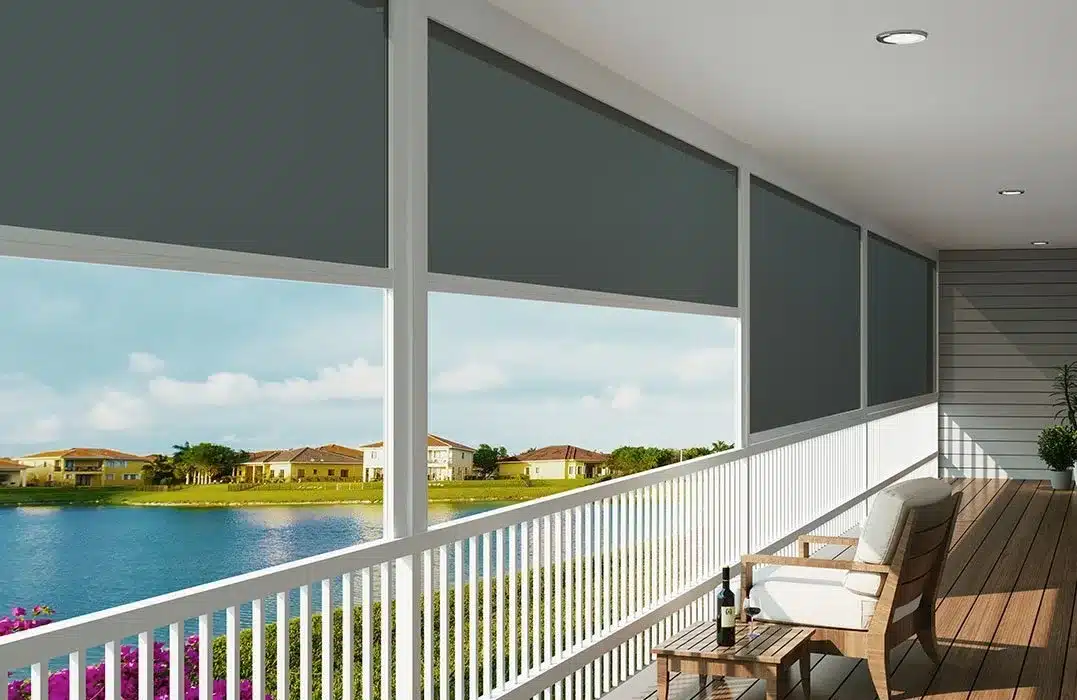
A hand crank is fine for a single balcony door you open once a day. A motor earns its keep once you’re operating it several times a shift, or it’s mounted somewhere a stepladder shouldn’t be going. On a wide opening across a full-width balcony, winding a crank back and forth every time the wind picks up gets old fast, and that’s where motorised control genuinely pays for itself.
Fully automatic, with a wind or rain sensor added, makes most sense on exposed elevations. If your balcony faces open river frontage with nothing breaking the wind, an automatic system protects the fabric and the mechanism whether you’re home or not. On a sheltered balcony tucked between two buildings, that same sensor is spending money on a problem you probably don’t have.
We’ll tell you plainly if manual is the better call for your opening. Motorising a door you barely use is money that could go on a better fabric instead. Budget matters here too. Small balconies with a single opening and no real wind exposure rarely need anything beyond a manual crank, and there’s no reason to talk anyone out of that if it’s the right fit.
Power without a socket
A common snag on balconies, particularly in flats, is that there’s no easy way to get mains power to an external motor without new wiring, and running new wiring across a demised balcony brings you straight back to the consent question above.
Battery-powered motors solve this for a lot of installations. Many are paired with a small integrated solar panel that keeps the battery topped up, which works well on a balcony that gets reasonable daylight, even without direct sun for most of the day. It’s a genuinely practical option for riverside flats where an electrician isn’t going to be running a new spur out to a balcony rail, and it sidesteps the mains-power question entirely rather than trying to argue around it.
Wind, rain and riverside exposure
This is where automation earns its place over simply motorised control. A screen left down on a manual system during an unexpected gust can strain against the guide rails or, in a worst case, tear. A motorised screen still needs someone to press the button. An automatic screen with a wind sensor retracts itself the moment conditions cross the threshold it’s set to, which matters on a balcony that catches wind off open water more than it would on a garden patio with a fence and a hedge doing some of the work already.
Rain sensors work the same way, retracting the screen before a downpour rather than after. Neither sensor replaces good fabric choice or proper tensioning at install, but they add a layer of protection that manual control simply can’t offer when nobody’s around to react to a weather change.
What this costs to add
Motorising a zip screen adds to the base cost of a manual crank system, and adding sensors or smart-home integration on top of that adds further again. The exact figure depends on the size of the opening, the motor type, and whether it’s battery or mains-powered. Rather than guess at a number here, our zip screen for balcony cost page breaks down what drives price for East London installations specifically, and a free home visit will give you an accurate figure for your actual balcony rather than a generic range.
If you’re already considering motorised control elsewhere in the home, it’s worth looking at our electric curtains and electric blinds pages too. The same smart-home app or wall switch can often control zip screens alongside indoor blinds and curtains, which is worth planning for at the same time rather than adding piecemeal later.
Where we fit these
We’re Home Decisions, a family-run team based in Rainham, and motorised zip screens for balconies are something we fit regularly across the riverside apartment blocks close to home, from the newer streets toward Beam Park and the wider Rainham area through to the floor-to-ceiling glazing common across Barking Riverside and the rest of East London. If you want to check we cover your specific postcode before going any further, our zip screen near me page covers that directly.
What to do next
If you’re on a riverside development around Rainham, Beam Park or Barking, start with your lease and a quick message to the managing agent, before you get as far as choosing a fabric or a motor brand. Once that’s clear, a free home visit lets us measure the opening, talk through manual versus motorised versus fully automatic for your specific balcony, and give you a straight answer on whether the extra cost is worth it for how you’ll actually use the space. Book a free home visit and we’ll take it from there.
Frequently Asked Questions
What is an automatic zip screen for a balcony?
An automatic zip screen is a motorised outdoor screen that lowers and raises using an electric motor rather than a hand crank, often paired with a remote, wall switch or app. Some systems add wind or rain sensors that retract the screen automatically in poor weather, which is what distinguishes “automatic” from simply “motorised.”
Do I need my freeholder’s permission to fit a zip screen on a leasehold balcony?
In most managed developments, yes. Balconies are usually leased for your use, but the rail, soffit and external wall typically remain outside your control under the lease. Fixing a bracket-mounted screen to these counts as an alteration, so it’s worth checking your lease and contacting the managing agent before ordering.
Is a motorised zip screen worth it over a manual one for a balcony?
It depends on how often you’ll use it and how accessible the crank would be. Motorised control is generally worth the extra cost on wide openings, screens mounted above head height, or ones you’ll operate several times a day. A single, easily reached balcony door often doesn’t need it.
Can motorised zip screens run without mains power?
Yes. Battery-powered motors, often recharged by a small integrated solar panel, are available for balconies without easy access to a mains socket. They’re a common solution on riverside apartments where running new wiring to an external balcony isn’t practical or permitted by the building.
Are there fire safety rules affecting screens on high-rise balconies?
Since the Building Safety Act 2022 and updates to Approved Document B, external wall materials on taller residential buildings face stricter non-combustibility requirements. A retractable fabric screen is generally treated differently to fixed cladding or decking, but leaseholders on taller blocks should confirm with their managing agent, particularly if remediation work is already underway.
Can a motorised zip screen retract automatically in wind or rain?
Yes, when fitted with an optional wind or rain sensor linked to the motor. The screen retracts on its own once a set wind speed or rainfall level is detected, which protects the fabric and mechanism without you needing to be home to bring it in manually.
How much more does a motorised zip screen cost than a manual one?
Motorised control typically adds to the base cost of a manual crank system, with the exact difference depending on screen size, motor type, and whether sensors or smart-home integration are included. A free home visit gives an accurate figure for your specific balcony rather than a generic estimate.