Summer in Rainham, East London and Essex brings one reliable problem. You open a window to get air moving through the house and within twenty minutes there are flies circling the kitchen, a wasp investigating the fruit bowl, and moths finding their way to every light in the room. Close the window and the air stops. Leave it open and the insects come in.
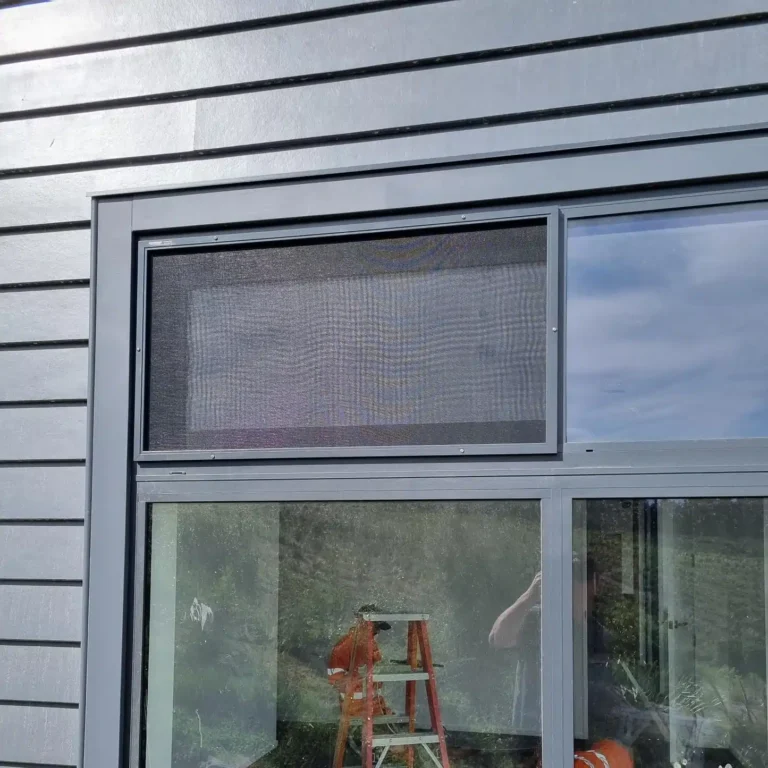
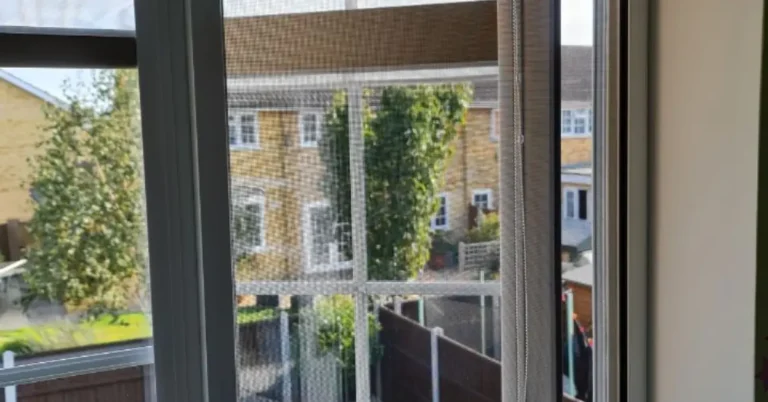
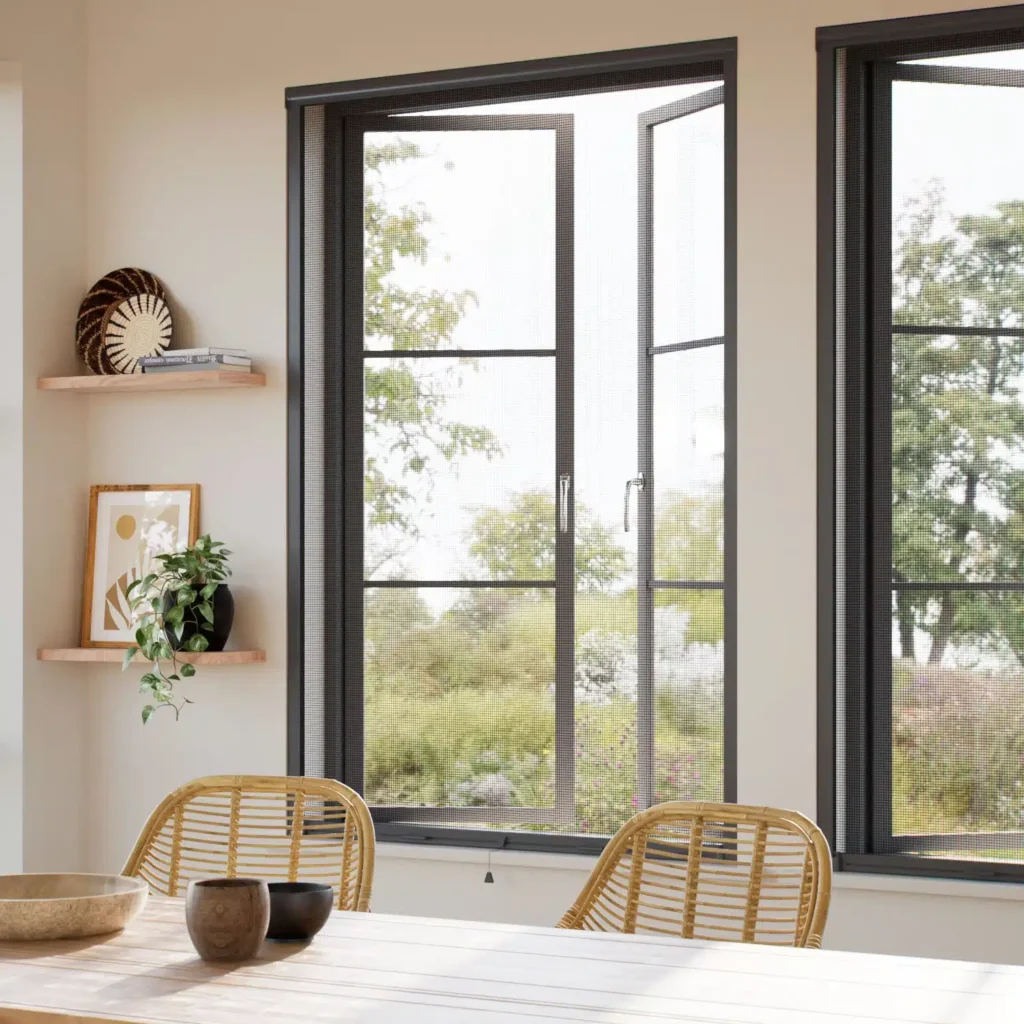
A roller fly screen is a spring-loaded insect mesh, housed in a slim aluminium cassette, that pulls down over a window opening to keep insects out while letting air and light pass through freely. When you do not need it, it retracts into the cassette and almost disappears. It is one of the neatest and most popular insect-screen options for UK windows.
At HomeDecisions, we supply and fit roller fly screens across Rainham, Essex and East London alongside our fly screens range and our blinds and curtains. This guide covers how they work, which window types they suit, what the mesh options mean in practice, what they cost, and how they work alongside blinds you may already have fitted.
How a roller fly screen works
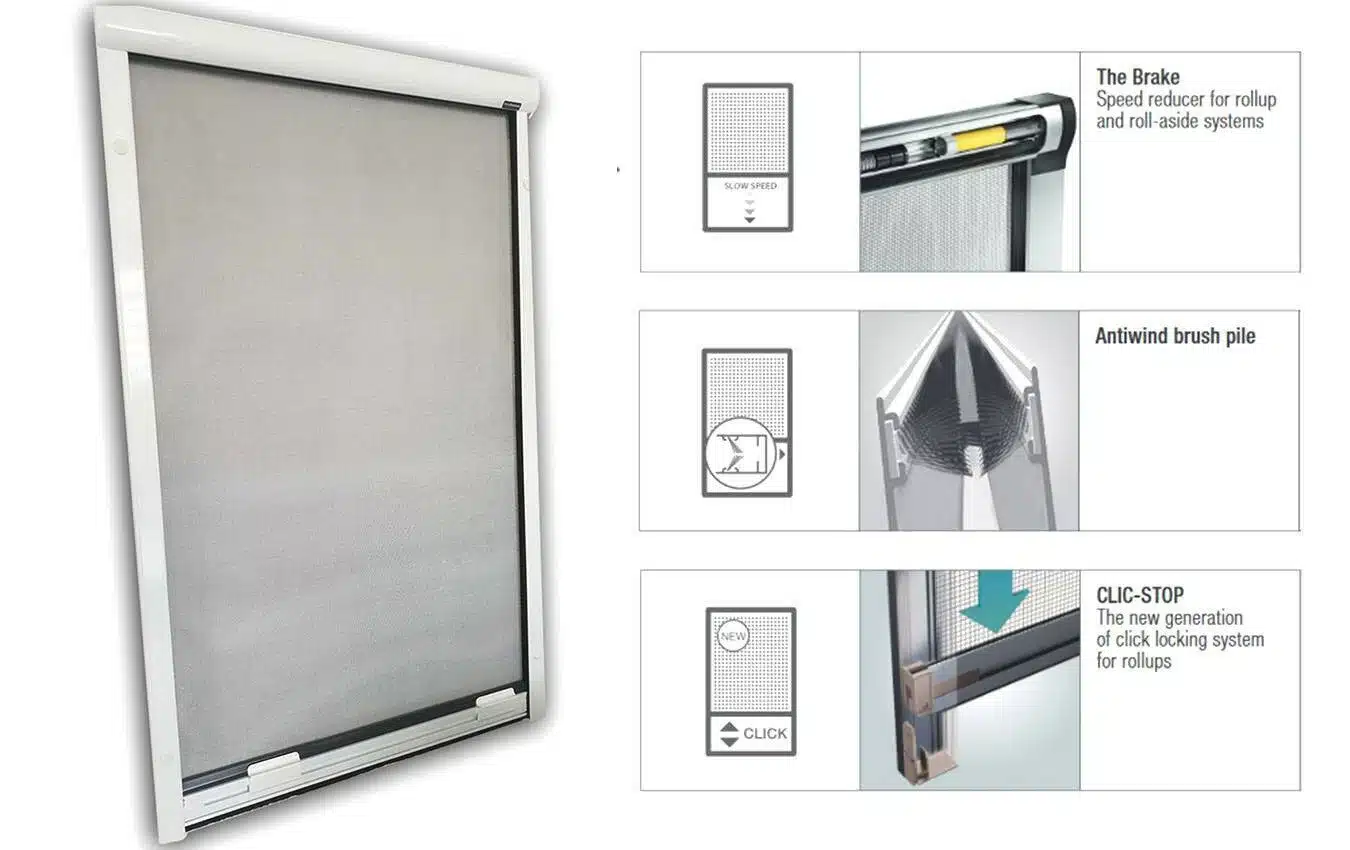
A roller fly screen works like a roller blind, but for insect control rather than light or privacy. The mesh is fixed to a spring-loaded tube inside a slim aluminium cassette. You pull the handle bar down and the mesh extends across the opening, held taut by a guide rail on each side; release it and the spring draws the mesh back into the cassette.
Two components determine whether the screen actually does its job.
The guide rail seal. Inside the rails are brush seals that close the gap between the mesh edge and the frame on both sides. This is what makes a screen insect-proof rather than just insect-resistant. A screen with worn or absent brush seals lets small insects through the edges even when the mesh itself is fine enough to stop them. Ask specifically about rail seal quality before buying.
The braking mechanism. Wider screens benefit from an internal brake in the cassette spring. Without one, the spring can retract the mesh with a hard snap that wears the mesh over time and is startling to use. A braked screen retracts smoothly and quietly. Some makers fit this as standard on wider screens; others treat it as an optional upgrade. Confirm before ordering.
Roller screens vs other fly screen types
Roller fly screens are one of the most popular options for windows, but they are not the only type. Understanding where each one fits helps you choose the right solution for your situation.
Roller fly screens retract into a cassette when not needed. They are discreet, durable, and designed to stay fitted year-round. They suit casement, tilt-and-turn and sash windows well. The moving parts (spring, guide rails) require correct fitting to work reliably over time.
Framed fly screens are fixed panel screens that sit in a frame over the window opening. There are no moving parts. They are a very durable option and suit windows that are open most of the day, but they are always visible and cannot be retracted. Our guide to framed fly screens for windows covers them in detail.
Pleated fly screens fold back in a concertina pattern rather than rolling into a cassette. They work well on windows where the opening direction makes a roller cassette difficult to position, and they give a softer visual appearance than a roller. They are slightly less compact when retracted than a roller screen. See our pleated fly screens page for the options.
Magnetic fly screens attach to the frame with magnets rather than guide rails. They are the simplest and cheapest option. They are also the least reliable in windy conditions, as they can pull away from the frame. They suit low-traffic windows where a temporary or seasonal solution is acceptable.
| Screen type | How it works | Best for | Trade-off |
|---|---|---|---|
| Roller | Retracts into a slim cassette | Most casement, tilt-and-turn and sash windows; year-round use | Moving parts need correct fitting |
| Framed or fixed | Fixed mesh panel in a frame | Windows open most of the day; maximum durability | Always visible; cannot retract |
| Pleated | Folds back concertina-style | Awkward opening directions; softer look | Less compact retracted than a roller |
| Magnetic | Held on by magnets | Low-traffic windows; temporary use | Least reliable in wind; cheapest |
For most domestic windows in UK homes, a roller fly screen is a sensible default choice. It is neat, reliable, and well suited to the casement and tilt-and-turn windows that make up most of the housing stock across East London and the RM postcodes.
Window compatibility
Roller fly screens fit most common window types, but the approach changes slightly depending on how the window opens.
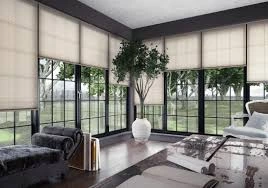
Casement windows are the most straightforward. The screen fits inside the recess or on the face of the frame, covering the full opening. The window opens and closes normally behind the screen.
Tilt-and-turn windows, which are common in newer builds and flat conversions across Rainham and Dagenham, need the screen fitted inside the recess only. Fitting it to the opening portion of the frame would prevent the tilt function from working. Inside the recess, the screen covers the window when it is ajar in tilt mode, which is the position most people hold tilt-and-turn windows for ventilation.
Sash windows, which are found throughout Victorian and Edwardian terraces in Ilford and Barking, are a workable but more specific fit.[1] The screen is typically fitted to cover the lower sash opening. The upper sash is not screened. Side guides fix to the fixed frame, not to the sash itself, so the sash can still be raised and lowered. The screen covers the gap created when the lower sash is open.
Bay windows common across Hornchurch and Romford work well, as each casement within the bay is screened individually. Each screen is measured and made separately for its specific opening.
uPVC frames are straightforward to fit to. Timber frames work too, but confirm the wood condition before ordering, as fixing into soft or damaged timber may need remedial work first.
Mesh types: what each one does
The mesh choice matters more than most buyers realise at the point of purchase. Getting it wrong means either over-specifying (and paying more than necessary) or under-specifying (and finding the screen does not stop what you needed it to).
| Mesh type | What it stops | Best for |
|---|---|---|
| Standard fibreglass | Flies, wasps, bees, spiders, most insects | Most UK homes |
| Midge mesh | All of the above plus most midges and gnats | Near parks, water, marshland |
| Pollen mesh | Insects plus some airborne pollen | People who want to keep pollen down with the window open |
| Pet mesh | Same as standard but reinforced | Homes with cats or dogs |
For most homes in East London and Essex, standard fibreglass mesh is the right choice. It stops the insects that typically enter through open windows in this region without reducing airflow noticeably.
Pollen mesh can be worth the extra cost for people who notice their hay fever more with the windows open in spring and summer. The finer weave reduces airflow slightly and keeps some pollen out, but it is not a medical treatment. The NHS advice for hay fever is still to keep windows and doors shut as much as possible, so treat pollen mesh as a way to open the window a little more comfortably, not as a cure.[2]
Pet mesh is the practical choice if cats or dogs are in the rooms being screened. Standard mesh is not built to handle regular contact from an animal pressing against it or pawing at it. Pet mesh uses a heavier-duty weave that holds up to that kind of use.
Fitting options
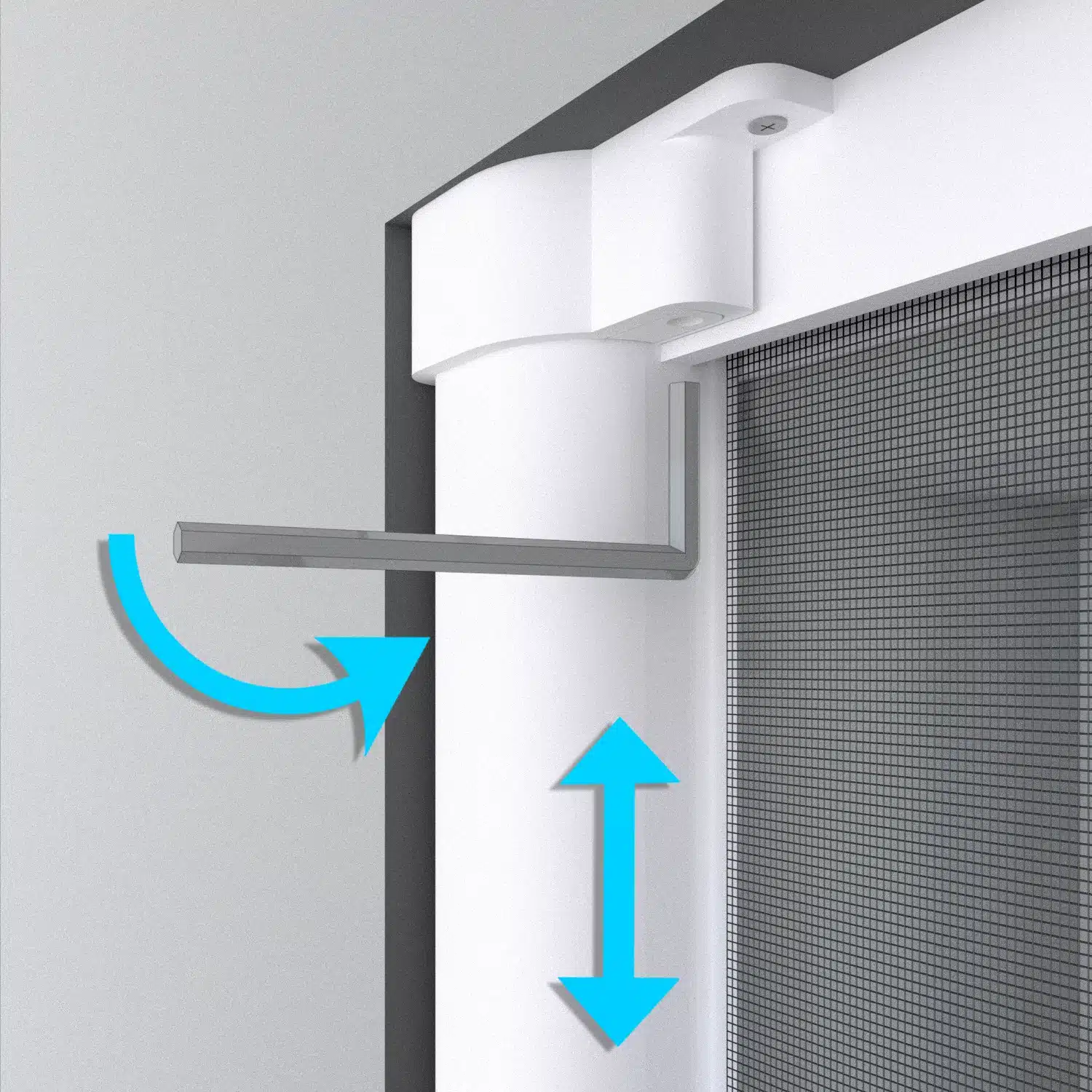
Roller fly screens can be fitted inside the recess or on the face of the window frame. Recess fitting is generally the neater result. The cassette and rails sit within the opening and are less visible from inside the room.
There are three standard methods for attaching the side guide rails to the frame.
Screw fixing is the most secure. Small fixings go through the guide rail into the frame, with cover caps supplied to hide the fixing points. This is the right choice for permanent installations.
Adhesive hook and loop tape attaches the rails without drilling. It suits rental properties, frames where drilling is not preferred, or anyone who wants the screen to be removable. The adhesion is adequate for most domestic windows but is not as permanent as screw fixing.
Adhesive tape fixes the rail directly to the frame surface. It is simple and suits lightweight screens on smaller windows.
For windows without a sill at the base, the screen needs something to close against at the bottom. An L-shaped closing profile fixes to the frame base and gives the mesh a surface to seal against at the bottom edge.
DIY installation is practical for many standard windows. The tools needed are a drill and screwdriver. Taking accurate measurements before ordering is the critical step, and most suppliers provide a measuring guide specific to their product. Professional fitting is the better choice for sash windows, bay windows, or any configuration that involves multiple screens or non-standard frames, because a screen that is a few millimetres out will leave a gap at the rails.
Can you use roller fly screens with existing blinds?
Yes, and this is one of the most common questions we hear from people who already have window coverings in place.
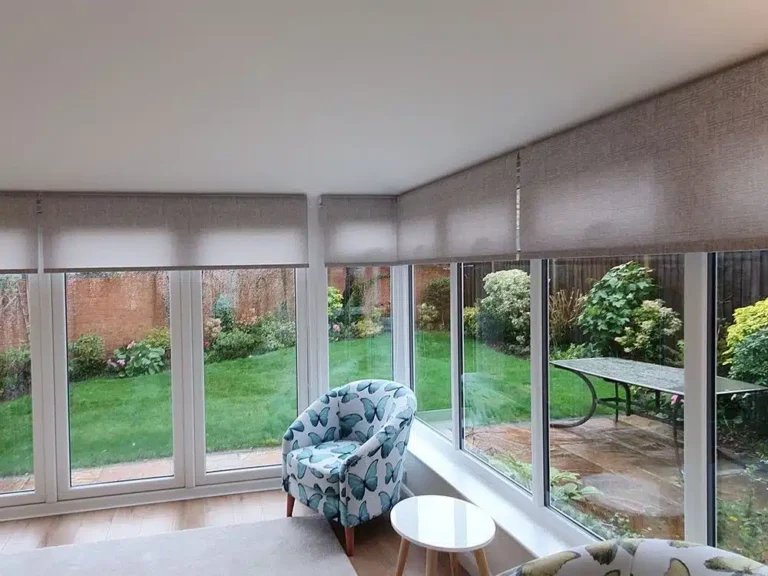
A roller fly screen fits on the window frame itself, either inside the recess or on the face of the frame. A blind fits above the window, either to the ceiling, wall or top of the frame. The two operate independently and at different depths, so they do not conflict in normal use.
The practical consideration is depth. If a roller blind is already fitted inside the recess, a roller fly screen may need to be face-fitted to the outer frame rather than fitted inside the same recess, depending on how much depth is available. If both are to sit inside the recess, the combined depth of the blind cassette and the fly screen cassette must fit within the available frame depth.
Perfect Fit blinds, which clip directly into the uPVC bead rather than using brackets, leave the recess largely clear and work well alongside a face-fitted fly screen.
If you are ordering both at the same time, measuring the frame depth first and confirming that both systems will fit is the right approach. When we measure for both at one visit, we check this for you.
How much do roller fly screens cost?
Fly screens from HomeDecisions start at £65, and most fall between £65 to £390 per screen. Pricing depends on window size, mesh type, frame colour, and whether you are buying DIY or supplied and fitted.
DIY, ordered online: Made-to-measure roller fly screens bought online to fit yourself usually cost less per window than a fitted screen, because you do the measuring and fitting. Prices vary by supplier and size, smaller windows sit at the lower end and larger windows at the higher end, and premium mesh options such as pet or pollen mesh add to the cost. The risk is a mis-measured screen that leaves a gap at the rails.
Supplied and professionally fitted: Our supplied and fitted roller screens sit within the range above, depending on the size of each opening and the mesh. For a typical three-bedroom home in the East London and Essex area with five or six windows, the total depends on how many windows you screen, their sizes and the mesh chosen. We measure every window at a free home visit, then email or phone through a written quote that lists each screen separately.
The cassette, guide rails and hardware are included in both cases. The main cost variables are the mesh type and the size of each opening.
Cleaning and maintenance
Roller fly screens need minimal upkeep to stay functional.
The mesh can be wiped with a damp cloth while extended. A soft brush along the guide rails removes dust and debris that builds up in the brush seals over time. Blocked seals reduce the effectiveness of the insect barrier, so clearing them occasionally is worth doing.
The cassette itself does not need regular maintenance. The spring sits inside the housing and is not exposed to much dirt or moisture in normal use. A light wipe of the external cassette surface is all it needs.
Screens fitted year-round through UK winters generally hold up well, as the fibreglass mesh and aluminium components are made for exposure to the weather. Leaving the screen retracted during periods when it is not needed protects the mesh inside the cassette rather than leaving it extended and exposed.
Frequently asked questions
Do roller fly screens reduce light or airflow?
Only slightly. Standard fibreglass mesh has an open weave that lets natural light and air through with little reduction, while pollen mesh has a finer weave that reduces airflow a little more but still allows practical ventilation.
How do I measure for a roller fly screen?
Measure the width and drop of the window opening at three points across and three points down, and use the smallest figure in each direction. For a recess fit measure inside the recess, and for a face fit measure the area of the frame face where the screen will sit, following your supplier’s own measuring guide.
Can roller fly screens be fitted to sash windows?
Yes. The screen covers the lower sash opening, with side guides fixed to the fixed outer frame rather than the sash, so the sash can still be raised and lowered.
Can I use a roller fly screen with my existing roller blind?
Yes. The fly screen fits on the window frame and the roller blind fits above it, and if both are going inside the recess, check there is enough frame depth for both cassettes or face-fit the fly screen to the outer frame.
How long do roller fly screens last?
A good screen that is fitted and looked after correctly should last for many seasons. The mesh and guide rail brushes show wear first, and these parts can often be replaced without replacing the whole screen and cassette.
Do I need planning permission to fit roller fly screens?
For most homes, a fly screen fitted inside a window is not something people seek planning permission for. Listed buildings are different, because listed building consent can be needed for alterations inside as well as outside, so check with your local planning authority first if your home is listed or in a conservation area.
Before you order
The key measurements are the width and drop of the window opening you want to screen. Take measurements at three points across the width and three points down the drop, and use the smallest figure in each direction to ensure the screen fits within the opening. Most suppliers include a measuring guide with their screens or make it available to download before ordering.
Confirm the window type and frame material, decide on the fitting method, and choose the mesh type for your situation before placing an order. Getting those decisions right means the screen fits correctly and does the job from the first day it is fitted.
At HomeDecisions, we supply and fit roller fly screens across Rainham, Essex and East London as part of our window treatment range. If you have an unusual window configuration or want advice on which screen suits your specific windows, we measure for free at your home and send a written quote after the visit. To get started, book a free home visit or call 01708 505379.
References
- ^ Listed buildings. Lewisham Council. Retrieved 25 October 2026.
- ^ Hay fever. NHS. Retrieved 25 October 2026.