The best made-to-measure kitchen blinds for UK homes are the ones that cope with steam, grease and daily cleaning: faux wood or aluminium Venetians, roller blinds in a wipe-clean PVC-coated fabric, and Perfect Fit blinds on uPVC windows and doors. Fabric Roman blinds and natural wood can work in a kitchen, but only away from the hob and the sink.
We measure kitchen windows across Rainham, East London and Essex and make the blinds in our own Rainham workshop, so this guide is written from the practical side: which materials survive a working kitchen, how to deal with the window over the sink, what 2026 kitchens are choosing in colour and control, and what affects the price.
What are made-to-measure kitchen blinds?
Made-to-measure kitchen blinds are blinds built to the exact width and drop of your kitchen window after it has been measured, rather than cut down from a standard shop size. That matters more in a kitchen than in most rooms, because kitchen windows are rarely a standard size and they often sit in awkward places.
A typical UK kitchen window sits over the sink, behind a tap, next to a wall cupboard or close to the hob. A ready-made blind that is a few centimetres too wide catches on the tiles. One that is too narrow leaves a strip of glare across the worktop. A made-to-measure blind is sized to clear the tap, the handles and the cupboard doors, and to sit inside the recess or over the frame exactly where it needs to.
Made-to-measure also lets you pick the right fabric or slat for the room. In a kitchen that is the bigger decision, because the wrong material marks, sags or grows mould long before the mechanism wears out.
Which blinds are best for kitchens?
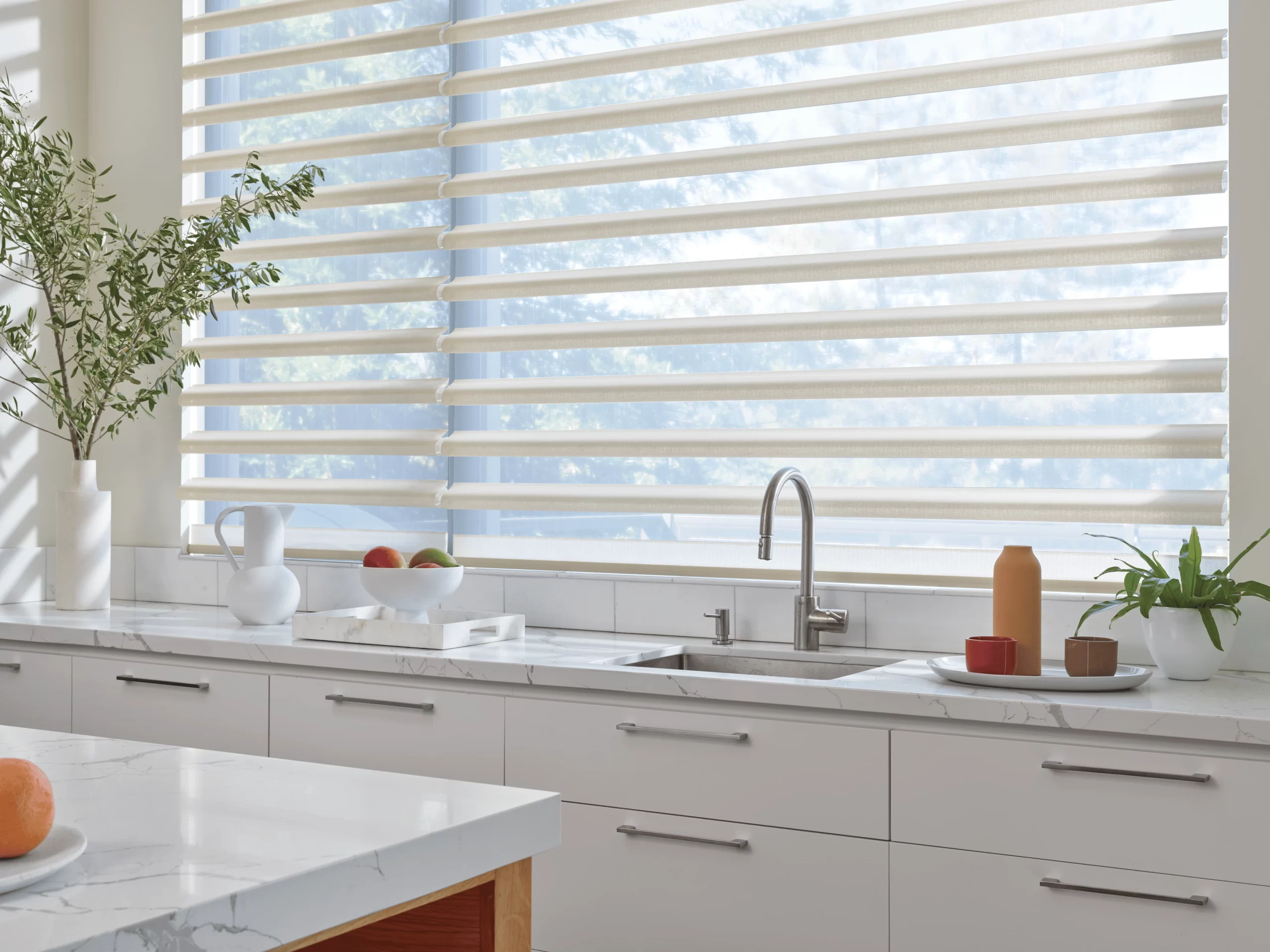
The best kitchen blinds are moisture resistant, easy to wipe clean, and simple to operate when your hands are wet or busy. Here is how the main types compare in a working kitchen.
Faux wood Venetian blinds
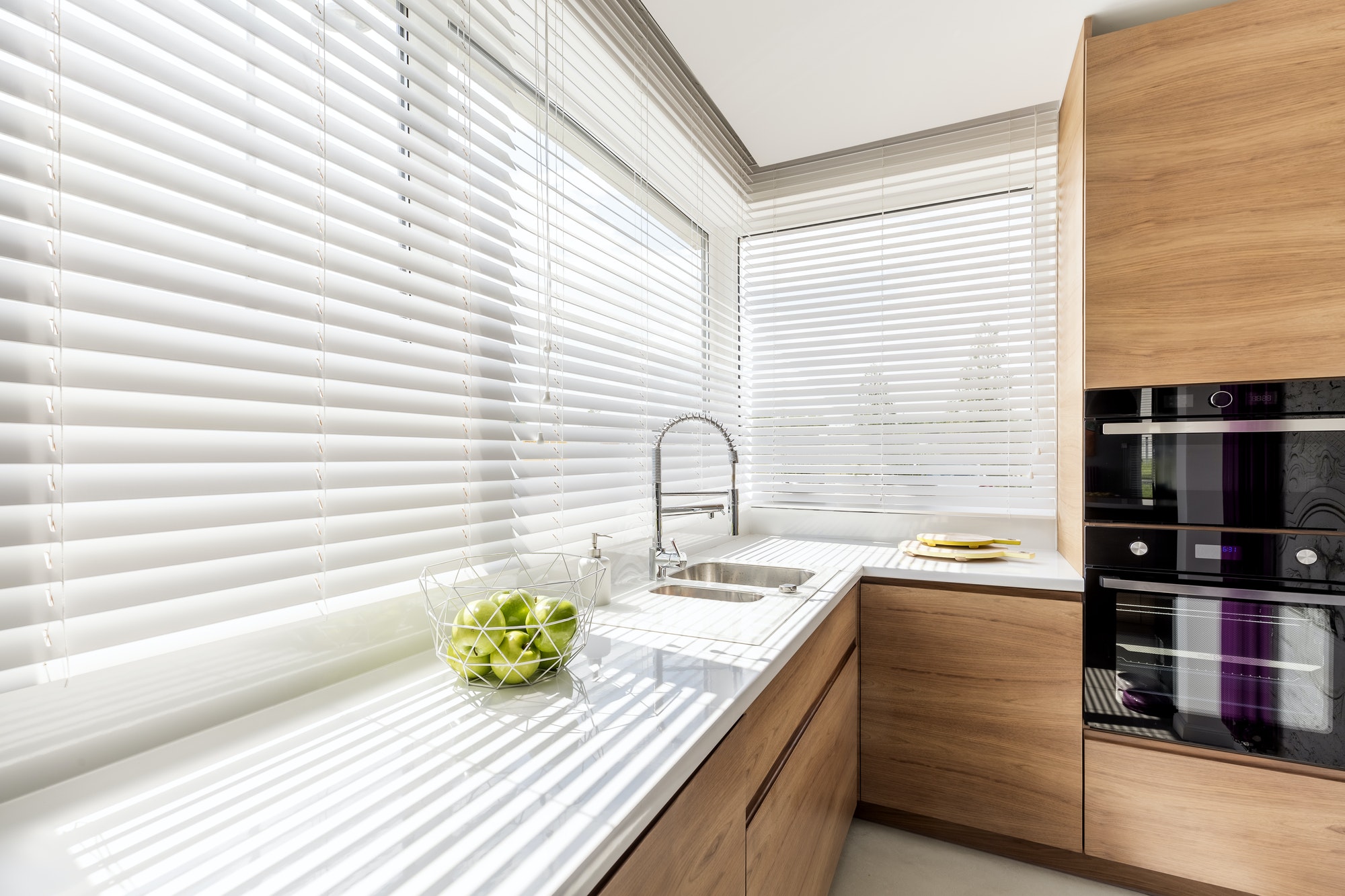
Faux wood Venetians are the strongest all-round choice for most kitchens. The slats are PVC or a composite, so they do not swell, warp or crack in steam the way real timber can. They wipe clean slat by slat, and tilting them lets light in while keeping the room private from the garden or the street.
They are heavier than aluminium, so very wide windows may be better split into two blinds. They also take a little longer to clean than a flat roller.
Aluminium Venetian blinds
Aluminium Venetians are light, slim and very tolerant of steam. They suit small kitchen windows, windows close to the hob, and kitchens where you want the blind to almost disappear when it is open. The slats can kink if they get knocked, so they are less suited to a window that the kids lean on or a cat jumps through.
Roller blinds in wipe-clean fabric
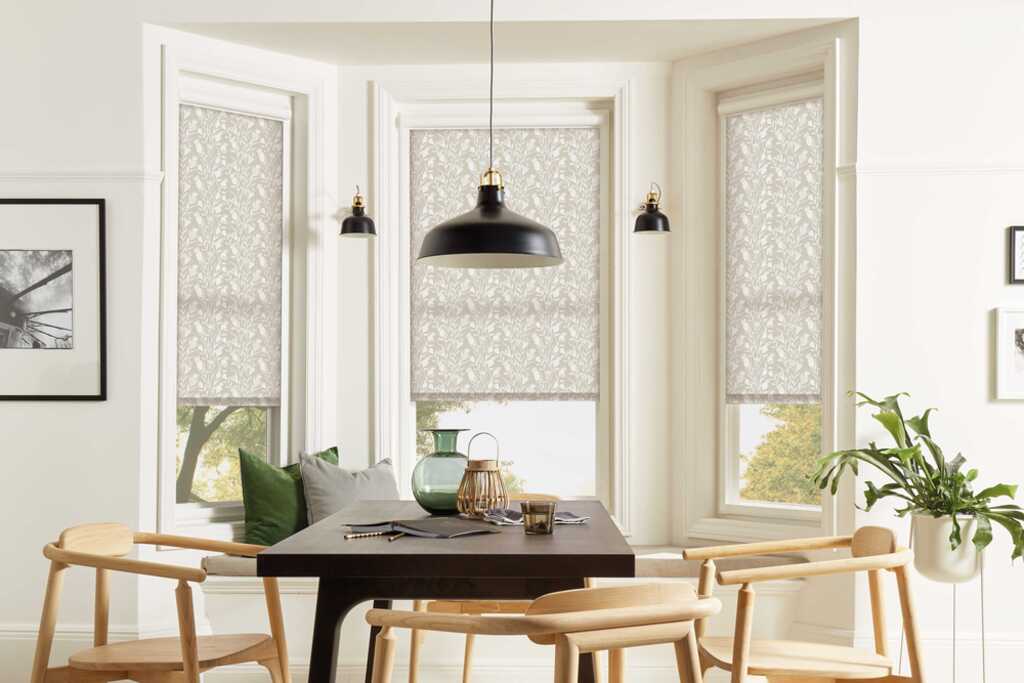
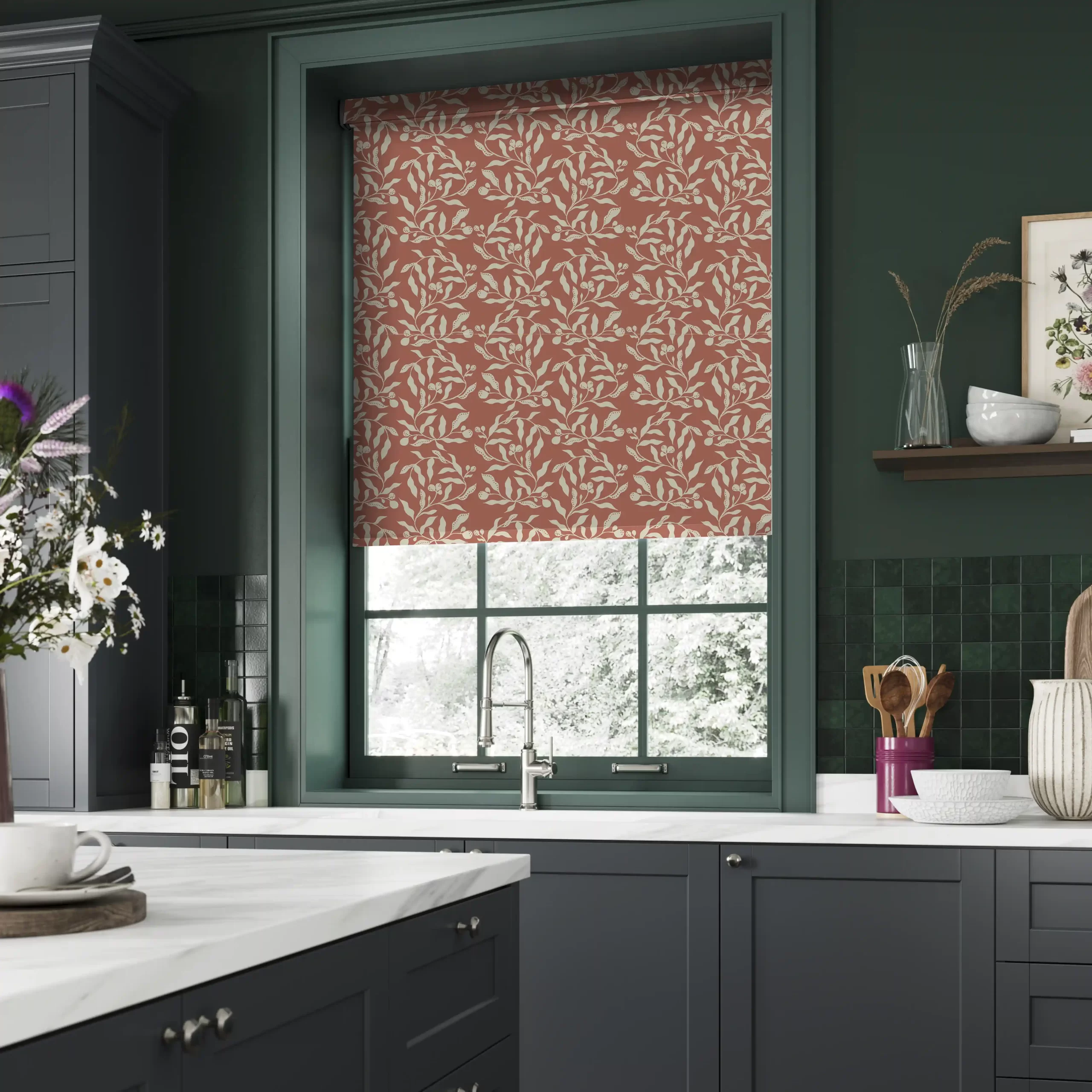
Roller blinds are the simplest kitchen blind and the easiest to keep clean, as long as the fabric is right. Choose a PVC-coated or moisture resistant fabric that you can sponge down. A standard woven fabric over a sink will mark with splashes and can grow mould in a damp kitchen.
Roller blinds suit almost any window size, take up very little space when rolled up, and come in plain, textured and patterned fabrics. A spring or chain mechanism with a fixed tensioner keeps the controls tidy.
Perfect Fit blinds on uPVC windows and doors
Perfect Fit blinds sit in a slim frame that clips into the glazing bead of a uPVC window or door, with no drilling. In a kitchen they are useful on tilt and turn windows and on back doors to the garden, because the blind moves with the sash or door and does not swing or rattle when it opens. There is no cord or chain, which helps over a sink.
They need a uPVC or aluminium frame with a suitable bead, so they will not fit timber windows. We check the bead depth at the visit.
Vertical blinds for patio and bifold doors
Vertical blinds are a practical way to cover wide kitchen patio doors, because they stack to one side and the louvres can be replaced one at a time. A PVC or wipe-clean louvre suits a kitchen better than a soft fabric. For bifold doors that fold right back, a blind on each pane or a blind fixed above the opening is usually the better plan, which we work out at the measuring visit.
Roman blinds and natural wood
Roman blinds and real wood Venetians look warm and suit traditional kitchens, but they are the wrong choice next to the hob or directly over the sink. Fabric absorbs grease and steam, and real wood can warp in a steamy room. If you want the look, use them on a window in the dining end of a kitchen diner, away from the cooking.
How do you choose blinds for a steamy, greasy kitchen?
Choose kitchen blinds by starting with where the window sits, then picking a material that copes with what happens next to it.
- Over the sink: a wipe-clean roller, a faux wood or aluminium Venetian, or a Perfect Fit blind. Plan the controls so you do not have to lean over a wet sink to reach them.
- Near the hob: aluminium or faux wood slats, or a PVC-coated roller. Keep fabric well away from the cooker.
- Kitchen diner or dining end: almost any blind works, including Roman blinds and softer fabrics.
- Patio, French and bifold doors: verticals, Perfect Fit on uPVC doors, or rollers fixed above the opening.
- Roof windows and lantern roofs: pleated or roller blinds made for the window, often motorised.
Moisture is the biggest enemy. GOV.UK guidance on damp and mould names cooking as one of the normal activities that put moisture into the air, and says that where possible kitchens should have an extractor fan linked to the outside or to a central unit.[1] A blind will not fix a damp kitchen. If you see condensation running down the glass every time you cook, use the extractor and open the trickle vents, or the blind will be the first thing to grow mould.
Grease is the second. Any fabric close to a hob will collect a sticky film over time. Slats and coated fabrics can be wiped back. Untreated fabric cannot, and it ends up looking tired within a year or two.
Which blind is safest over a kitchen sink?
The safest blind over a sink is one with no loose cord or chain, or one where the controls have been planned so that you do not need to reach across the sink to use them. Make It Safe, the BBSA’s child safety campaign, specifically suggests raising blinds over kitchen sinks with your installer before fitting, because cords and chains there are hard to reach.[2]
Good options include Perfect Fit blinds, spring roller blinds, and motorised blinds with a remote or wall switch. If you choose a corded Venetian, the cord must be held on a cleat or tensioner, and the installer should fit it and show you how it works.[2] Where children use the kitchen, cordless is the simpler answer.
Perfect Fit blinds vs roller blinds for kitchens
Perfect Fit blinds are the better choice for uPVC tilt and turn windows and back doors, while roller blinds are better for wide windows, timber frames and kitchens where you want the widest choice of fabric.
| Point | Perfect Fit blinds | Roller blinds |
|---|---|---|
| Fixing | Clips into the uPVC bead, no drilling | Screwed into the recess or above the window |
| Over the sink | No cord or chain | Spring, chain with tensioner, or motorised |
| Tilt and turn windows | Moves with the sash | Can get in the way of the opening sash |
| Window types | uPVC and aluminium only | Almost any window, including timber |
| Fabric choice | Good range, including wipe-clean | Widest range, including PVC-coated |
| Price from | £60 | £65 |
Both can be made in blackout, dimout or light filtering fabrics, and both can be made in wipe-clean fabrics. Many kitchens end up with both: a Perfect Fit blind on the back door and a roller or Venetian on the window over the sink.
What kitchen blind trends are UK homes choosing in 2026?
The main 2026 kitchen blind trends are practical rather than flashy: warm neutral colours, textured wipe-clean fabrics, cordless and motorised control, and blinds that match across an open-plan kitchen diner.
Warm neutrals and soft natural colours
Kitchens are moving away from stark white towards warmer neutrals such as stone, oatmeal, putty and warm grey, with some sage and olive greens. These shades hide small marks better than bright white and sit well with wood-effect worktops and painted cabinets. In a small kitchen, a lighter shade still keeps the room bright.
Texture without the fuss
Linen-look and woven-look fabrics are popular, but in a kitchen it pays to choose a textured fabric that is still coated or wipe-clean. You get the softer look of a natural fabric without the grease problem.
Cordless and motorised blinds
Cordless and motorised blinds keep the window over the sink clear and remove the child safety worry. Motorised blinds also make sense on a kitchen roof lantern or a high window above units, where reaching up by hand every day is not realistic. Electric blinds can be run from a remote, a wall switch or an app.
Matching blinds across a kitchen diner
In open-plan kitchen diners, people are choosing one colour and style across the whole space, often a wipe-clean roller or faux wood Venetian at the kitchen end and the same colour in a softer fabric at the dining end. It keeps the room looking like one space.
How much do made-to-measure kitchen blinds cost?
Made-to-measure kitchen blinds from HomeDecisions start at £65 for a roller blind, and most roller blinds fall between £65 to £290 per blind. The price depends on the blind type, the size of the window, the fabric or slat, and any motorisation.
| Blind type | Price from | Best kitchen use |
|---|---|---|
| Roller blinds | £65 | Over the sink in a wipe-clean fabric, most window sizes |
| Venetian and faux wood blinds | £85 | Near the hob and sink, privacy with light |
| Perfect Fit blinds | £60 | uPVC tilt and turn windows and back doors |
| Vertical blinds | £75 | Wide patio doors |
| Day and night blinds | £175 | Street facing kitchens that need privacy and light |
| Electric and motorised blinds | £250 | Roof lanterns and high windows |
What changes the price of a kitchen blind
- Size: a wide window or patio door costs more than a small sink window.
- Material: coated and moisture resistant fabrics, and faux wood slats, cost more than basic options.
- System: a cassette headbox, side channels or a Perfect Fit frame adds to a plain roller.
- Control: motorisation adds to the cost. The motorised upgrade starts at £80 on most blinds.
- The number of windows: several blinds measured and fitted in one visit is more efficient than one at a time.
The written quote we email or phone through after the free measuring visit shows the exact figure for your kitchen. Our prices page lists every blind type.
How do you clean and look after kitchen blinds?
Clean kitchen blinds little and often, because a light film of grease wipes off easily in week one and sets hard by month six.
- Roller blinds in a wipe-clean fabric: lower the blind fully, then sponge it with warm water and a drop of washing-up liquid. Work from top to bottom, rinse with a clean damp cloth and leave it down until it is completely dry before rolling it up.
- Faux wood and aluminium Venetians: close the slats flat, wipe one side with a damp cloth, then tilt them the other way and do the other side. A microfibre cloth picks up grease better than a duster.
- Vertical blinds: wipe PVC louvres in place. Fabric louvres can be vacuumed with a brush attachment.
- Perfect Fit blinds: sponge the fabric and wipe the frame. Do not soak the fabric or pull it out of the side frames.
- Avoid harsh solvents, bleach and abrasive pads, which can strip coatings and dull the slats.
Look at the controls at the same time. Check that any tensioner or cleat is still firmly fixed, that the chain runs freely, and that the blind still clears the tap when it comes down. Roll a roller blind up and down fully every few days, even if you keep it at one height, so the fabric does not set in a crease. If mould keeps coming back on a blind, the kitchen needs better ventilation, and wiping alone will not solve it.
What are the common mistakes with kitchen blinds?
The most common kitchen blind mistakes come from choosing a blind for how it looks in a showroom rather than how it will live next to a sink and a hob.
- Choosing a fabric that cannot be wiped. It marks with the first splashes and holds grease.
- Putting a fabric Roman blind next to the hob. It looks lovely for a few months.
- Ignoring the tap and the window handles. An inside recess blind that hits the tap every time it comes down will not last.
- Leaving a loose cord or chain over the sink. It is a child safety risk and awkward to use with wet hands.
- Expecting a blind to fix condensation. If the window streams with water when you cook, sort the ventilation first.
- Measuring once. Kitchen recesses are often out of square, so measure the width at the top, middle and bottom, and the drop at both sides.
Which kitchen blinds suit different East London and Essex homes?
The right kitchen blind depends a lot on the type of house, because kitchen windows vary from one street to the next across East London and Essex.
Victorian and Edwardian terraces
In terraces in Ilford, Barking, East Ham and Leyton, kitchens are often in the back addition, with a narrow sash or casement window over the sink and a door to the garden. Faux wood Venetians or a wipe-clean roller inside the recess suit the window. If the windows are timber sashes, Perfect Fit will not fit, so an inside recess blind that clears the sash catches is the usual answer.
1930s semis
In 1930s semis around Hornchurch, Elm Park, Upminster and Romford, many kitchens have been extended at the back, with uPVC windows and French or patio doors. Perfect Fit blinds on the windows and doors give a tidy, cordless finish. A roof lantern on a rear extension usually needs a pleated or roller system made for the lantern, often motorised.
New build flats and houses
In new builds around Beam Park, Rainham, Stratford and Canning Town, kitchens are often open plan with large uPVC or aluminium windows and balcony doors. Roller blinds or Perfect Fit blinds keep the look clean. Check your lease or management company rules before drilling into the frames or walls of a flat.
Kitchen diners and extensions
In kitchen diners, plan the blinds as one scheme. Practical, wipe-clean blinds at the cooking end and the same colour in a softer fabric at the dining end look deliberate and suit the way the room is used. Bifold doors need their own plan, which we sort out when we measure.
How do we measure and fit kitchen blinds?
We measure every kitchen window at your home for free, because the details that decide whether a kitchen blind works are things you only see in the room.
At the visit we measure the recess width at the top, middle and bottom and the drop at both sides, and check the depth of the recess. We look at the tap height, the window handles, any wall cupboards close to the window, and the tiles or splashback in the reveal. On uPVC windows we check the glazing bead for Perfect Fit. We talk through which way the window faces, how steamy the kitchen gets, and whether children use the room, then suggest the blind and fabric that suits.
We bring samples so you can see wipe-clean fabrics and slats against your cabinets in your own light. After the visit we email or phone through a written quote. The blinds are made in our Rainham workshop and we come back to fit them.
You can also see fabrics and slat colours at our workshop at C3, Star Business Centre, Fair View Industrial Estate, Marsh Wy, Rainham RM13 8UP, Monday to Friday 9am to 5pm. For more help with other rooms, our guides to Roman blinds vs roller blinds and blinds vs curtains cover the main choices, and our Rainham page lists the areas we cover.
Frequently asked questions
Which blinds are best for a humid kitchen?
Faux wood or aluminium Venetian blinds and roller blinds in a PVC-coated or moisture resistant fabric cope best with steam. Use the extractor fan when cooking, because no blind will stop condensation on its own.
What type of blind is easiest to clean in a kitchen?
A roller blind in a wipe-clean fabric is the quickest to clean, because you sponge one flat surface. Faux wood and aluminium Venetians wipe clean too, but take longer slat by slat.
Are Roman blinds suitable for kitchens?
Roman blinds are fine at the dining end of a kitchen diner, but not next to the hob or over the sink. Fabric absorbs grease and steam, so it marks and can grow mould in a busy kitchen.
What is the best blind for a kitchen window over the sink?
A blind with no loose cord or chain, such as a Perfect Fit blind, a spring roller or a motorised blind, in a wipe-clean material. Plan the controls so you do not have to reach across the sink.
Can you get Perfect Fit blinds for a kitchen back door?
Yes, on most uPVC and aluminium doors with a suitable glazing bead. The blind clips into the bead, moves with the door and has no cord, which suits busy back doors to the garden.
How much do made-to-measure kitchen blinds cost?
Roller blinds start at £65 and Venetian and faux wood blinds start at £85. The size, material and system change the figure, and the written quote after the measuring visit confirms it.
Book a free kitchen blind measuring visit
If you are choosing made-to-measure kitchen blinds in Rainham, Hornchurch, Romford, Ilford, Barking or anywhere across East London and Essex, we will measure your windows, bring wipe-clean fabrics and slats to see in your kitchen, and recommend the right blind for each window. Book a free home visit or call 01708 505379, and we will send your written quote after the visit.
References
- ^ Understanding and addressing the health risks of damp and mould in the home. GOV.UK. Retrieved 25 October 2026.
- ^ a b New Blinds. Make it Safe (British Blind and Shutter Association). Retrieved 25 October 2026.