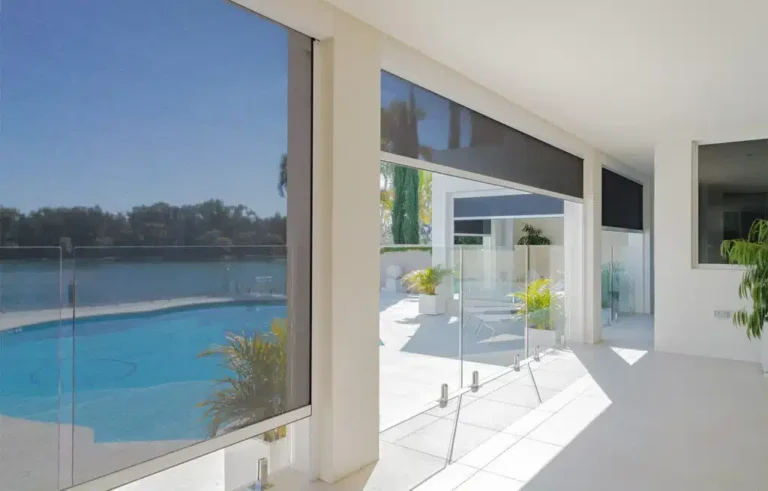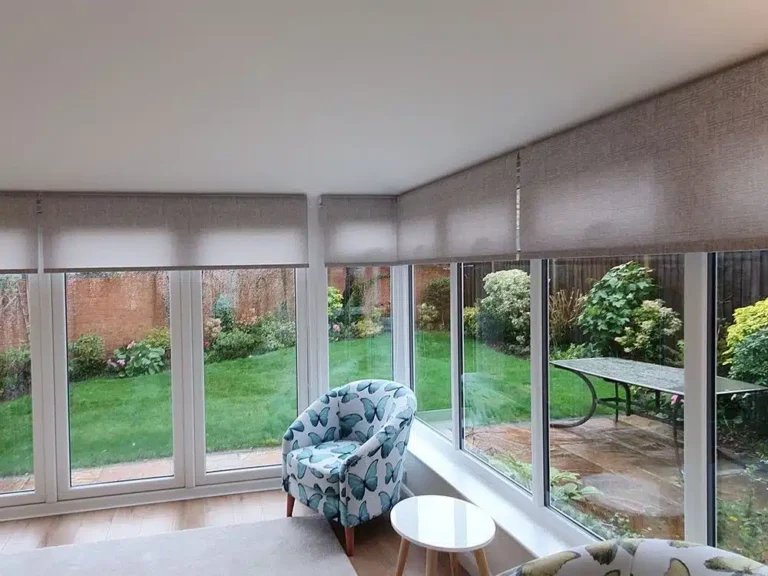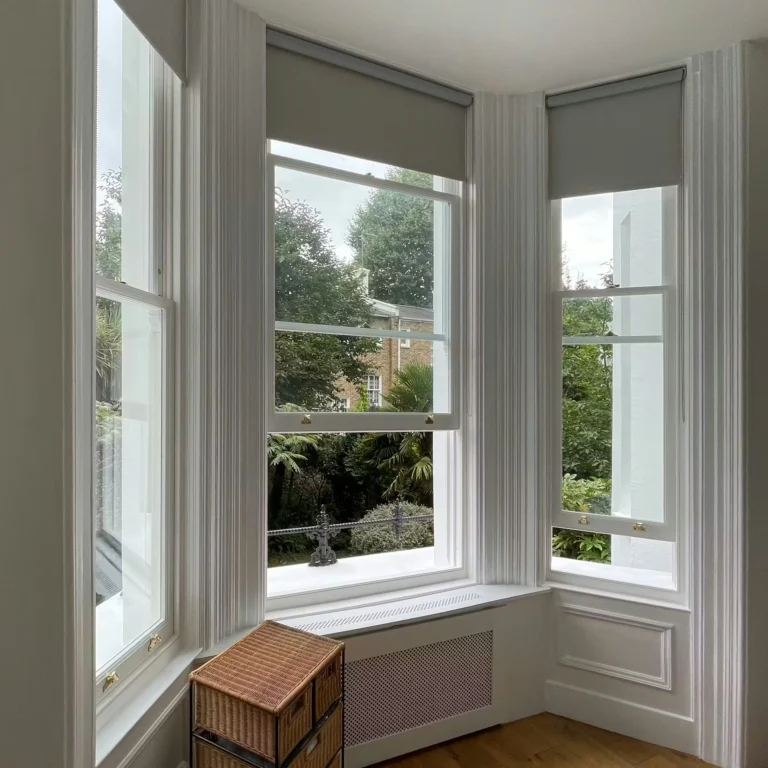
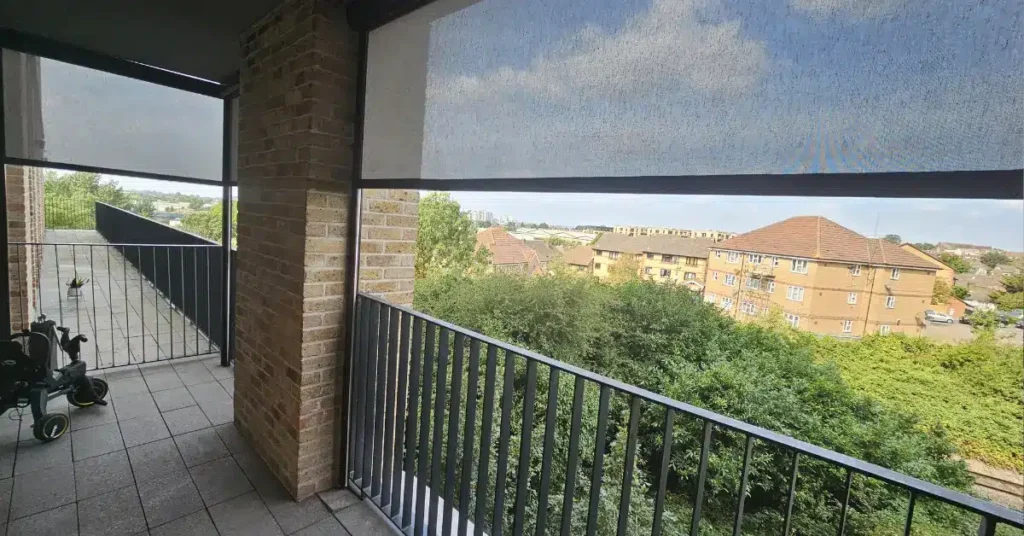
A zip screen for a balcony from HomeDecisions starts from £280, and most fall between £280 to £950 per screen, depending on the width and drop of the opening, the fabric, whether it is manual or motorised and how it is fixed. The written quote we send after a free measuring visit gives the exact figure for your balcony.
This guide is for homeowners and leaseholders in Rainham, Romford, Barking and across East London and Essex who want to know what a balcony zip screen really costs and what pushes the price up or down. It also covers the checks that matter before you spend anything, because on many East London flats your lease decides whether a screen can go up at all. We make blinds in our own workshop in Rainham, and we measure and fit zip screens across East London and Essex.
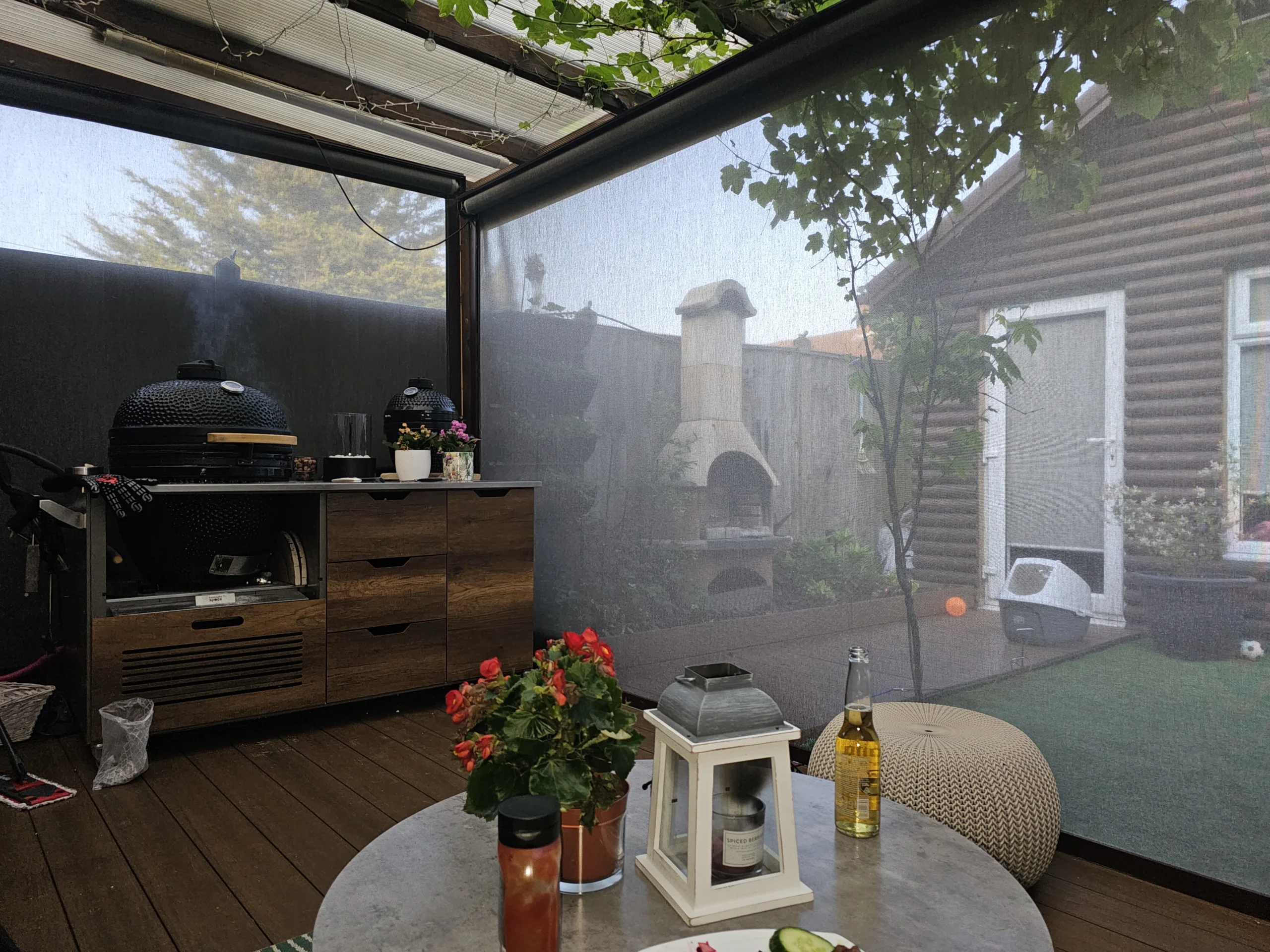
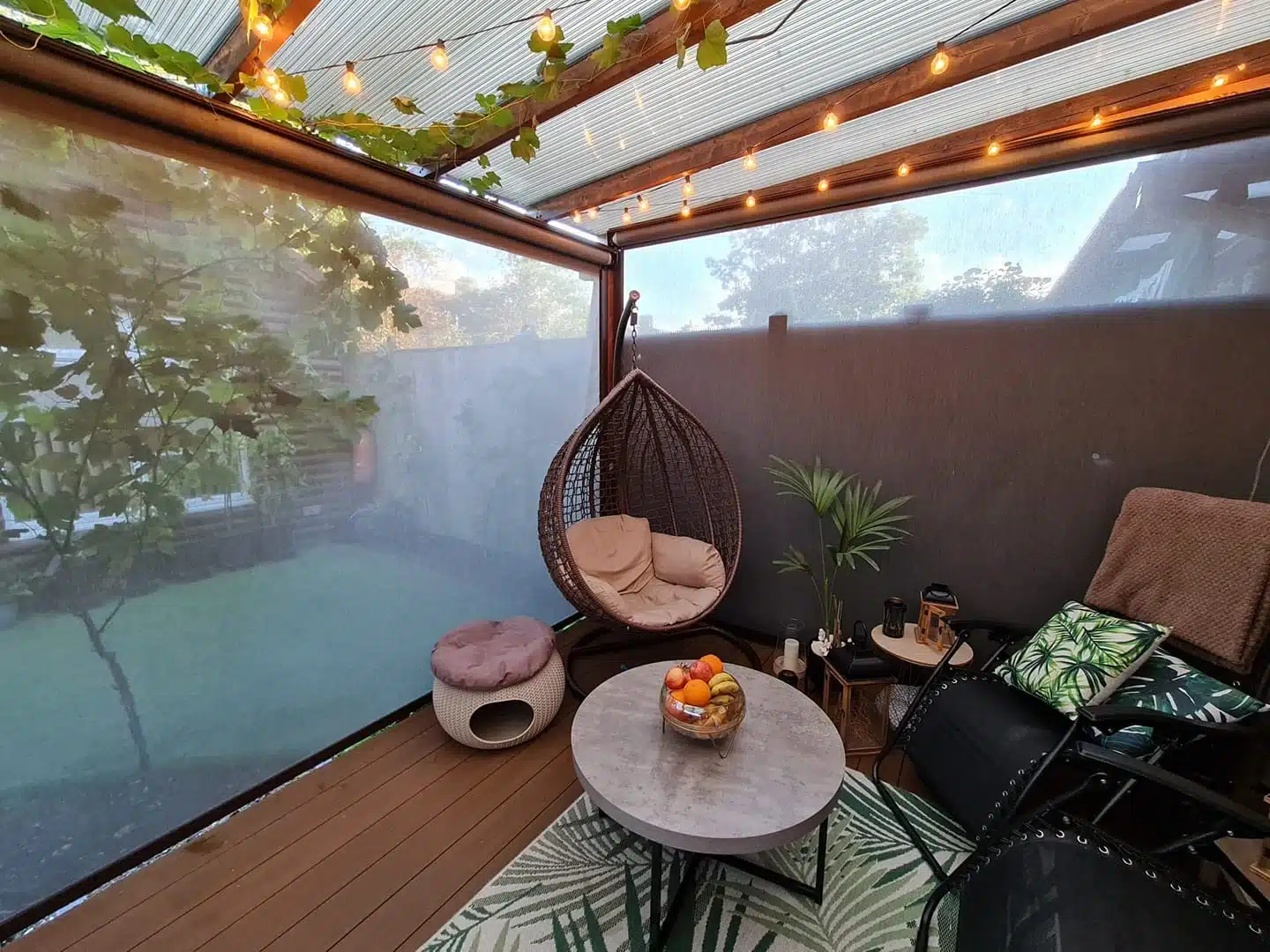
If you are new to them, a zip screen is a retractable outdoor blind. The edges of the fabric carry a zip-like strip that runs inside an aluminium track on each side, so the fabric stays taut and does not flap or blow out of the frame. It rolls away into a slim headbox at the top when you do not need it. On a balcony it gives shade, privacy from neighbouring flats and shelter from wind, and a mesh fabric keeps many flying insects off the balcony while still letting air through.
How much does a zip screen for a balcony cost?
Our balcony zip screens fall between £280 to £950 per screen. A small, manual screen on a straightforward opening sits towards the lower end. A wide, motorised screen fixed to a tricky soffit or rail sits towards the upper end.
The prices come from our live price list, so they stay current, and they are the same figures you will see on our prices page. What the price list cannot know is the shape of your balcony. Two balconies in the same block can need very different screens if one faces the river and the other is tucked into a corner, which is why we measure before we quote.
| Balcony set-up | Where it usually sits in the range | Why |
|---|---|---|
| Single narrow opening, manual crank | Lower end, from £280 | Less fabric, shorter tracks, simple fixing |
| Standard flat balcony, one wide opening | Middle of £280 to £950 per screen | More fabric and a stronger tube to keep it taut |
| Wide or corner balcony, motorised | Upper end, often more than one screen | Motor, controls and two or three screens meeting at posts |
| Exposed riverside balcony with a wind sensor | Upper end | Motor plus sensor, and fixings checked for wind load |
The table is a guide, not a quote. Each screen is made to measure, so the written quote lists every screen on your balcony separately.
What affects the cost of a balcony zip screen?
Six things move the price more than anything else: size, fabric, operation, fixing, sensors and access. Here is what each one means for your balcony.
Size of the opening
Size is the biggest single factor. A wider screen needs more fabric, a larger roller tube so the fabric does not sag in the middle, and longer side tracks. A tall drop adds fabric and track length too. Very wide balconies are often better split into two or three screens that meet at a post or a fixed upright, which can cost a little more than one screen but runs more reliably and is easier to live with.
Fabric type
Zip screen fabrics range from open screen mesh, which lets air through and keeps much of the view, to denser fabrics that give more privacy and shade, and solid fabrics that block light and keep rain off. Mesh is usually the most affordable and the most popular on balconies, because it cuts glare and wind without making the balcony feel boxed in. Denser and solid fabrics cost more and change how the balcony feels, so we bring samples to the measuring visit and hold them up in your own light.
Fabric colour
Colour rarely changes the price much, but it changes how the screen works. Darker mesh tends to be easier to see out through, because it cuts glare, while lighter colours reflect more of the sun and look softer against pale render. Most people pick a colour that matches the window frames or the balcony rail, so the screen looks like part of the building when it is down. We bring colour samples to the visit so you can judge them against your own walls.
Manual or motorised
A manual zip screen uses a crank handle and is the cheapest way to run one. A motorised screen has a motor inside the roller tube, worked by remote, wall switch or app, and costs more. On a small balcony used once or twice a day, manual is often the sensible choice. On a wide balcony, or a screen fixed high up, a motor earns its cost. Our motorised zip screen guide goes through that decision in detail.
How it is fixed
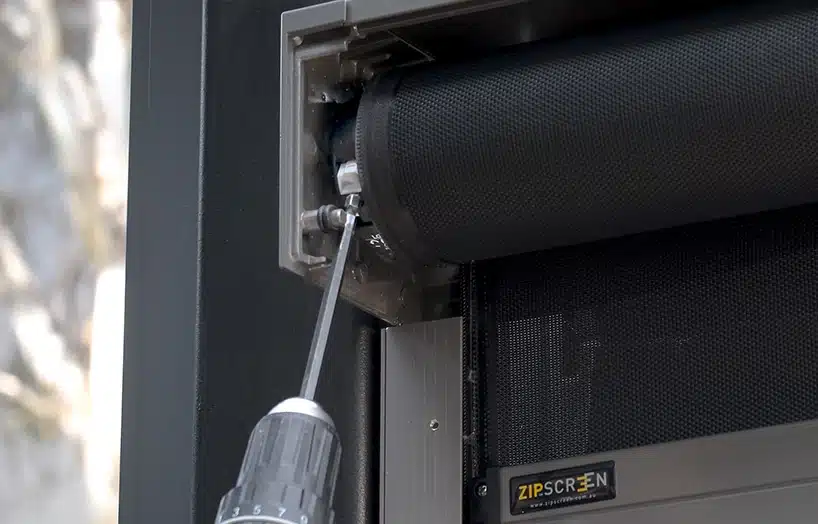
Zip screens are fixed with a headbox at the top and a track down each side. The headbox can go on the soffit above the balcony, on the face of the wall or onto the balcony structure. Concrete soffits, steel or glass balustrades, rendered walls and cladding all need different fixings and more or less time, and a balcony with no solid fixing point may need an upright post. We check all of this at the measuring visit.
Sensors and smart control
A wind sensor, which raises a motorised screen automatically in strong wind, adds to the cost. So does a hub for app or voice control. They are worth it on exposed riverside balconies and less so on a sheltered one.
Access
Most balconies can be fitted from the balcony itself. If a fixing point can only be reached from outside, or the balcony is very high and awkward, the fitting takes longer. We tell you at the visit if access will affect the quote.
Why balcony zip screens in East London cost what they do
Balcony zip screens are made to measure for each opening, so there is no standard size to buy off the shelf. The price covers the made-to-measure fabric, the aluminium headbox and tracks, the fixings and the fitting.
East London’s housing mix also matters. Many of the balconies we see are on newer blocks around Rainham, Beam Park, Barking Riverside and Stratford, where balconies face open water or wide streets and catch a lot of wind. Those need tighter fabric tension and solid fixings. Older homes in Romford, Hornchurch and Dagenham are more likely to have a ground floor patio or a small first floor balcony over a bay, where a smaller manual screen is often all that is needed.
Zip screens compared with other balcony options
A zip screen usually costs more than a basic outdoor roller blind but gives better protection from wind, because the fabric edges are held in the side tracks.
- Outdoor roller blinds: Usually cheaper and simpler. Without side tracks, the fabric can flap and lift in wind, so they suit sheltered balconies best.
- Fixed screens and panels: Often cheaper, but they do not move, so you lose the view and the open feeling when you do not need shelter. They are also more likely to count as a permanent alteration under a lease.
- Retractable awnings: Good for overhead shade, but they give little protection from side wind and can be harder to fix on a flat balcony.
- Zip screens: Retract fully into the headbox when not needed, hold steady in wind and can be manual or motorised.
If you also want to keep insects out of the flat itself, a fly screen on the balcony door is a separate and much smaller job, and many people do both at once.
Check your lease and the building rules before you buy
If you live in a flat, check your lease before you order a zip screen. GOV.UK’s guide for leaseholders explains that leases often require the freeholder’s permission before alterations, and that a permission or consent fee may be charged.[1] On most managed developments, the balcony rail, the soffit above it and the external walls are not yours to alter, so fixing a zip screen to them usually needs consent.
In practice, that means a short email to your managing agent with a description of the screen, where it would be fixed and a photo of a similar installation. A retractable screen that rolls away into a slim headbox, and can be taken down cleanly, is usually an easier request than anything permanent. Ask first, not after. A managing agent can ask for an alteration fitted without consent to be removed.
Fire safety on taller blocks
Fire safety is the second check on taller buildings. A GOV.UK research report on balcony fire safety, published in December 2025, notes that the balcony provisions in the building regulations fire guidance (Approved Document B) focus on residential buildings with a storey 11 metres or more in height.[2] It also notes that combustible materials and items on balconies can help fire spread, and that guidance from London Fire Brigade treats an empty balcony as the ideal.[2]
A retractable fabric screen is not part of the wall build-up in the way cladding or decking is, but the building owner may still have rules about what can be fixed to balconies, especially on blocks with fire safety work underway. If your flat is above about four storeys, ask your managing agent about this when you ask for consent. We always ask which floor you are on before we quote, and we can provide the fabric details for the managing agent.
How to measure a balcony for a zip screen
You do not need to measure for us, because we measure every balcony for free, but rough sizes help you budget. Here is how to take them.
- Width: Measure the opening at the top, middle and bottom, wall to wall or post to post, and note the smallest figure.
- Drop: Measure from the soffit or the underside of any fixing point down to the balcony floor at both ends. Floors on balconies often slope for drainage, so the two figures can differ.
- Fixing points: Note what is above the opening (concrete, render, cladding or nothing solid) and what is at each side.
- Obstacles: Note lights, drainpipes, balustrade posts, door handles and anything the screen or its tracks would hit.
- Photos: A photo of the whole balcony and one of the soffit help us when you get in touch.
Some people ask whether they can fit a zip screen themselves. Kits exist, but the side tracks have to be fixed dead straight and parallel, the headbox has to be fixed securely into the soffit or wall, and on a flat you are often working at height on a building you do not own. For most balconies that is a job for a fitter, which is why we measure and fit the zip screens we supply.
At the visit we check the walls and soffit for level and square. Balcony openings are rarely perfectly square, and the side tracks have to be set true or the screen will not run smoothly.
Looking after a balcony zip screen
A zip screen needs very little care, and good habits keep repair costs down. Brush loose dirt off the fabric with a soft brush and wipe it with mild soapy water. Avoid harsh cleaners that can damage the fabric or its coating. Keep the side tracks clear of leaves and grit, because debris in the track is the most common reason a screen starts to snag. Let a wet screen dry before rolling it away for long periods, and on a manual screen, wind it steadily rather than forcing it if it catches. If a motorised screen stops at the wrong place, the limits usually just need resetting rather than a new motor.
Ways to keep the cost of a balcony zip screen down
There are a few sensible ways to keep the cost of a balcony zip screen under control without cutting corners.
- Choose manual where it suits: On a small, sheltered balcony, a crank screen does the job at a lower price.
- Pick a standard mesh: Our standard screen mesh fabrics give shade and shelter at the lower end of the range.
- Do the whole balcony at once: Measuring and fitting several screens in one visit is better value than adding them one by one, and they will match.
- Plan power early: If you want a motorised screen, a battery or solar motor avoids paying an electrician to bring power out to the balcony.
- Sort consent first: Getting the managing agent’s approval before you order avoids the cost of moving or removing a screen later.
Zip screens across Rainham, Romford and East London
We fit balcony zip screens across East London and Essex, from the newer blocks around Beam Park and Rainham to flats in Barking, Dagenham, Stratford and Canary Wharf, and homes in Romford, Hornchurch and Upminster. You can see fitted examples on our gallery page, and you can visit our workshop at C3, Star Business Centre, Fair View Industrial Estate, Marsh Wy, Rainham RM13 8UP, Monday to Friday, 9am to 5pm, to see the fabrics in person.
Frequently asked questions
How much does a zip screen for a balcony cost?
Our balcony zip screens fall between £280 to £950 per screen, depending on size, fabric, manual or motorised operation and fixing. The written quote after your free measuring visit confirms the exact figure.
Is a motorised zip screen much more expensive than a manual one?
A motor adds to the price, and a wind sensor or smart hub adds more. On a wide or high balcony the convenience is usually worth it, while a small balcony often only needs a crank.
Do I need permission to fit a zip screen on my balcony?
If you own a leasehold flat, usually yes. GOV.UK notes that many leases require the freeholder’s permission for alterations, so check your lease and ask the managing agent before ordering.
Can a zip screen go on any balcony?
Most balconies can take one, as long as there is a solid fixing point above and at the sides, or room for an upright post. We check the soffit, walls and balustrade at the measuring visit.
Does a zip screen keep out wind and rain?
A zip screen holds its fabric in side tracks, so it stays steady in wind far better than an unguided blind. Mesh fabrics cut wind and glare, while solid fabrics also keep most rain off the balcony.
Can I have a zip screen on a high-rise balcony?
Often, yes, but on taller blocks check with your managing agent first. A GOV.UK research report notes that the balcony fire safety provisions in Approved Document B apply to residential buildings with a storey 11 metres or more in height.
Book a free balcony zip screen visit in East London
We measure your balcony for free, bring fabric samples, check the fixing points and talk through manual and motorised options. After the visit we email or phone through a written quote for each screen. To get started, book a free home visit or call 01708 505379.
References
- ^ Buying or owning a leasehold home. GOV.UK. Retrieved 25 October 2026.
- ^ a b Fire safety: Balconies, spandrels and laminated glass report (excluding appendices). GOV.UK (Building Safety Regulator). Retrieved 25 October 2026.