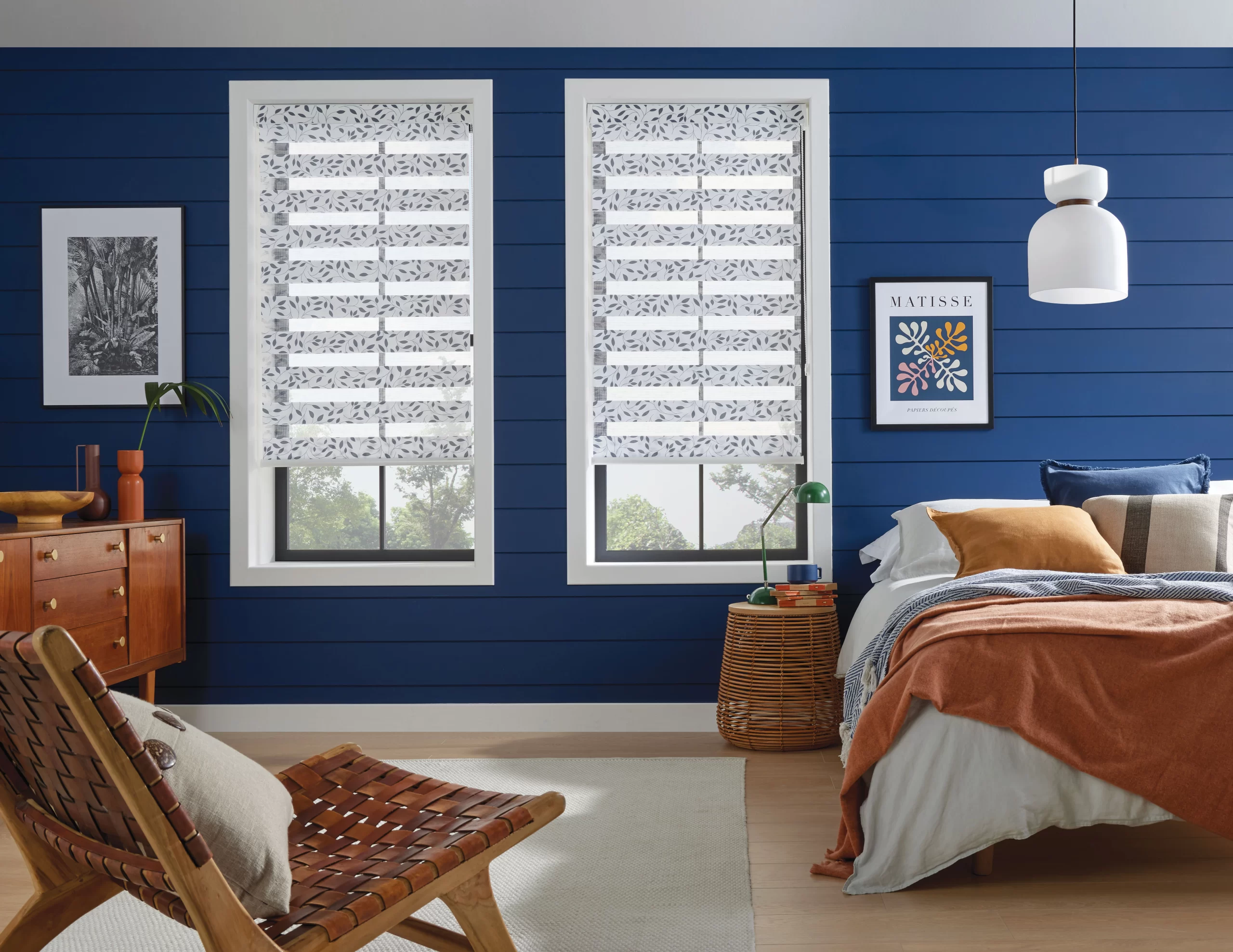
Illusion roller blinds in Rainham are a good choice when you want daylight and daytime privacy from the same blind, without nets or heavy curtains. They are a dual-layer roller blind with alternating sheer and solid stripes, and a small turn of the chain or wand moves those stripes from open to closed.
We measure, make and fit made-to-measure illusion blinds from our workshop in Rainham, and fit them across East London and Essex. This guide explains how they work, which rooms and windows they suit, where they fall short, how to measure, what affects the price and what to check before you order.
What are illusion roller blinds
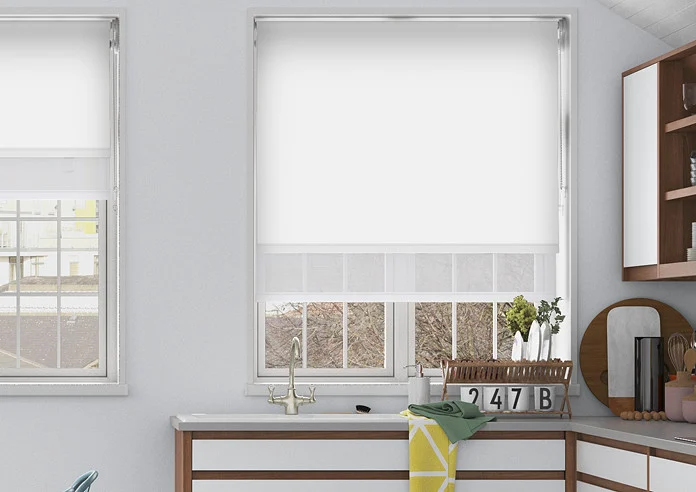
An illusion roller blind is a roller blind with one long piece of fabric that runs down the front of the roller, round a bottom bar and back up behind it. The fabric is woven in horizontal bands, a sheer band then a solid band, all the way down. Because the fabric passes the window twice, there are two layers of stripes, one in front of the other.
When the sheer bands on the front layer line up with the sheer bands behind, you get soft striped light and a hazy view out. Turn the roller a little and the solid bands slide over the sheer ones, so the blind looks like a single closed panel. Pull it fully up and the window is clear, the same as any roller blind.
Illusion, day and night, zebra and vision blinds
These names describe the same family of blinds. Illusion is the name we use. Day and night describes what the blind does. Zebra refers to the stripes, and vision is the name some fabric makers use. If you have seen day and night blinds on our site or read about Perfect Fit zebra blinds, the working principle is the same. The real differences are in the fabric, the width of the stripes, the headrail and how the blind is fixed.
How the stripe width changes the look
Narrow stripes give a finer, more textured look and let light through in thin lines. Wide stripes are bolder and show the open and closed effect more clearly. In a small bedroom or a box room, a narrow stripe tends to look calmer. In a large living room window or a set of patio doors, a wider stripe holds its own against the size of the glass.

How illusion blinds control light and privacy
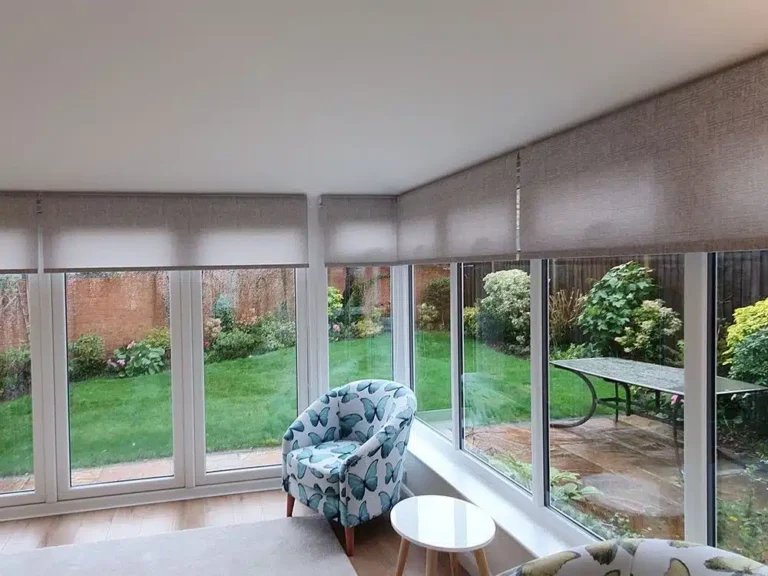
Illusion blinds control light by changing how the two layers of stripes overlap, rather than by lifting the blind up and down. That is what makes them useful on street-facing windows. You can keep the blind at full drop all day, set the stripes partly open, and still have a bright room.
Daytime privacy
In daylight the room is darker than the street, so people outside see the stripes rather than the room. With the bands partly offset you get good privacy and a softened view out. This is the main reason people in terraces and semis with front rooms close to the pavement pick them over a plain roller.
Privacy at night
After dark, with the lights on inside, the effect reverses. Through the sheer bands a passer-by can see movement and shapes. So at night you close the stripes fully, which gives a solid panel of fabric. It is worth knowing this before you order, because some people expect the open setting to be private at all hours, and it is not.
Glare on screens
Partly closed stripes cut down direct sun on a TV or a desk monitor while keeping the room light. In a home office or a south or west facing lounge, being able to fine tune the bands is often more useful than a blind that is either up or down.
Are illusion blinds blackout
Illusion blinds are not true blackout blinds, even with the stripes fully closed. Light gets through at the edges of the blind, at the top around the roller, and along the lines where the solid bands overlap. Some illusion fabrics have a dimout or blackout solid band, which makes the room much darker, but you will still see some light around the edges.
For a bedroom where you want the room properly dark, for shift work or for a young child, we usually suggest one of three things. A blackout roller blind on its own, a blackout roller behind a curtain, or a double roller blind with a sheer layer at the front and a blackout layer behind. Our guide to blackout blinds explains the options in more detail.
Which rooms suit illusion roller blinds
Illusion blinds suit rooms where privacy matters in the day and you still want light. They are less suited to rooms that need full darkness or that get a lot of steam.
Living rooms and front rooms
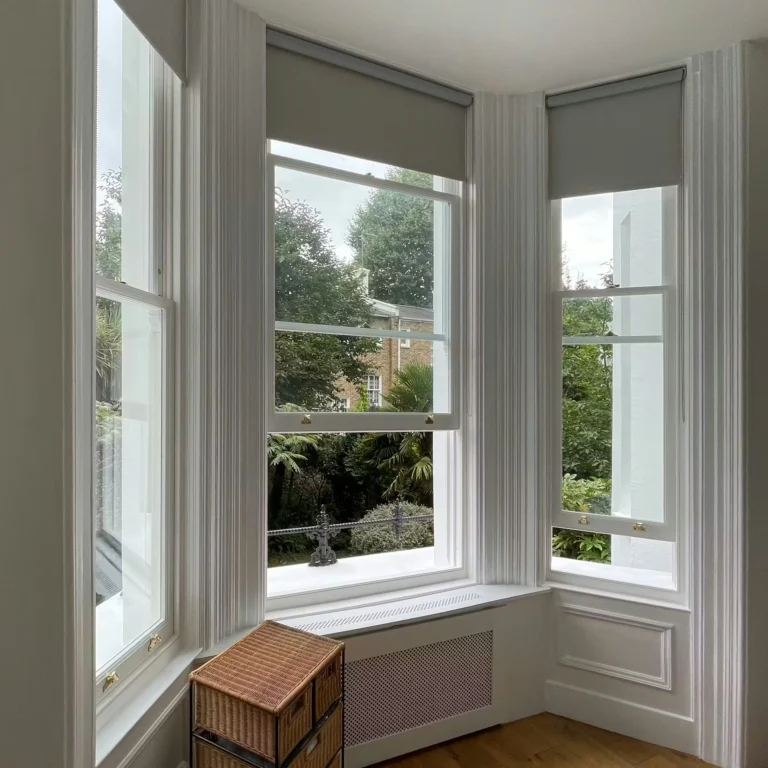
This is where they work best. A bay window in a 1930s semi in Hornchurch or Elm Park, or a front room on a Rainham terrace, can have a blind on each pane, all set to the same stripe position, so the bay looks tidy from inside and out. They also replace net curtains, which many people want to get rid of.
Home offices
With the stripes part closed you keep daylight on the desk and cut the glare on the screen. A wand control or a motor makes small adjustments easy without getting up.
Bedrooms
They suit bedrooms where you want privacy in the day and a dim room at night, rather than total darkness. If you are a light sleeper, pair the illusion blind with a curtain, or choose a different blind.
Kitchens and bathrooms
Illusion fabrics are mostly polyester and cope with normal kitchen use, but grease and steam build up in the sheer bands over time. Over a sink or hob, or in a bathroom with poor ventilation, a wipeable roller fabric or a faux wood venetian is usually the easier choice to live with.
Illusion blinds for uPVC, tilt and turn and patio doors
Illusion blinds can be fitted inside the recess, on the wall above the window, or in some cases onto the window frame itself. The right choice depends on the window type and how it opens.
- Standard uPVC casements: a recess fit is neat, but we check that the handle clears the bottom bar and the fabric when the window opens. If it does not, we fit outside the recess or onto the frame.
- Tilt and turn windows: a blind fixed to the wall stops the sash opening inwards. A frame-fitted system that moves with the sash keeps the window usable, and our Perfect Fit blinds range covers this kind of fitting.
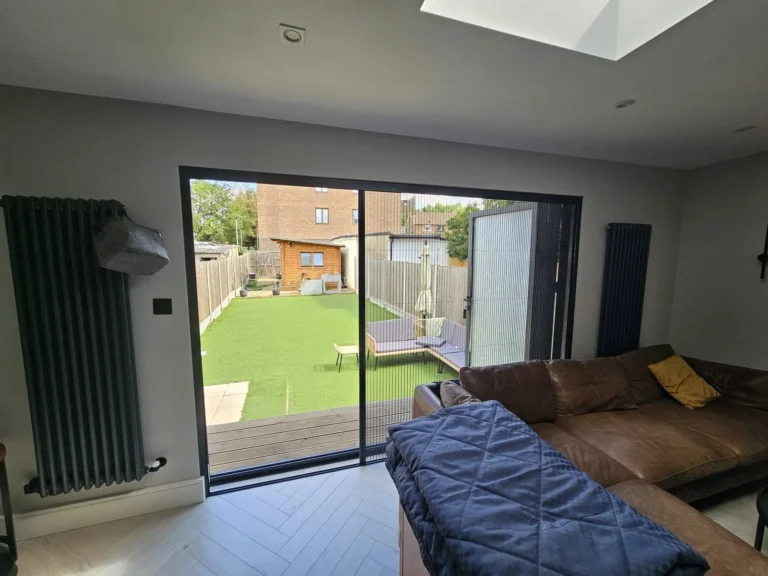
- Patio and French doors: a blind on each door leaf lets you open one door while the other stays covered.
- Bifold doors: the door panels fold back on themselves, so a blind on each panel has to be shallow enough to fold with it. We check the stacking space at the survey before we suggest a fixing.
- Bay windows: each pane has its own blind, and we set the stripes so they line up from one blind to the next.
Manual, wand and motorised controls
Most illusion blinds work on a continuous chain at one side. Some systems use a wand, and many can be motorised. For a high window, a wide blind or several blinds in a bay, a motor lets you move them together and saves a lot of fiddly chain work. Our page on electric day and night blinds covers the motor options.
Child safety with chains
Any blind with a looped chain has to be fitted with a child safety device. GOV.UK guidance says looped cords must come with safety devices fitted at the factory or supplied with the blind, and that a cleat should be fixed out of reach, at least 1.5 metres from the floor.[1] The Make It Safe campaign run by the British Blind and Shutter Association adds that professional installers must fit the safety device and explain how to use it, and that cordless and motorised options exist for every blind style.[2] On every chain blind we fit, the chain is held tight with a tensioner fixed to the wall or frame. In a child’s room we often suggest a motor or a wand instead, and we keep cots and beds away from the window where we can.
How to measure for illusion roller blinds
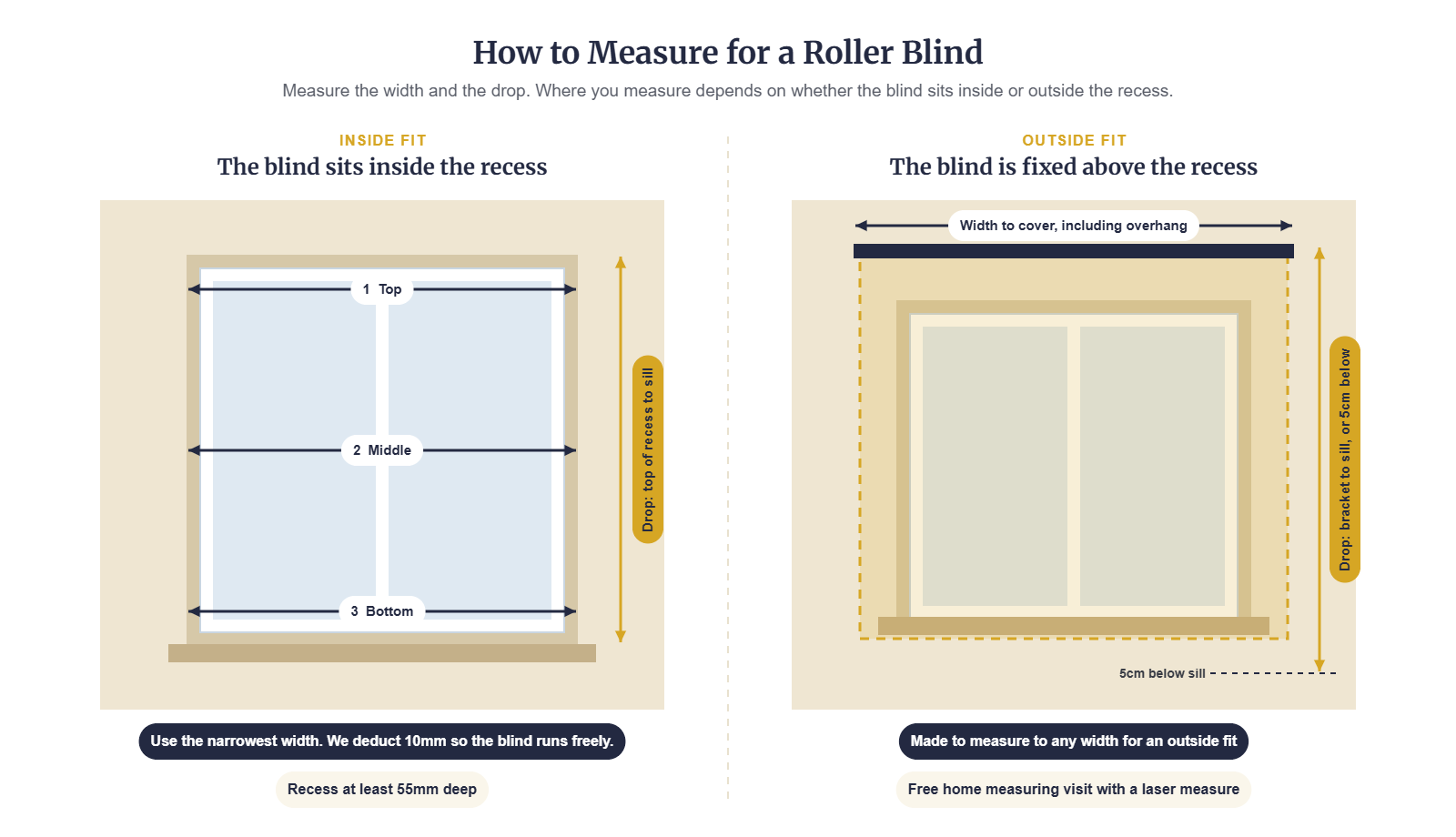
You measure for an illusion blind the same way as for a standard roller blind. We do the final measure at the free home visit, but your own figures help you get a rough idea of size and cost first.
- Decide on a recess fit or an outside fit. A recess fit sits inside the window reveal. An outside fit sits on the wall above and overlaps the opening.
- For a recess fit, measure the width at the top, middle and bottom with a steel tape, and use the smallest figure. Older brick reveals are rarely square.
- Measure the drop from the top of the recess to the sill on the left and right.
- Check the recess depth. An illusion blind has a deeper roll than a single roller because the fabric passes round twice, so it needs a little more room.
- Note anything in the way: handles, trickle vents, tiles, curtain poles or a radiator under the window.
- For an outside fit, add overlap on each side and above the opening so light does not spill round the edges.
How much do illusion roller blinds cost
Illusion blinds from HomeDecisions start at £175, and most fall between £175 to £480 per blind. The final price depends on a few things.
- Size: wider and taller windows need more fabric and a stronger roller.
- Fabric: plain stripes cost less than textured, metallic or dimout weaves.
- Headrail: an open roller is the base option, and a cassette that covers the roll adds to the price.
- Fixing: frame-fitted systems for tilt and turn windows cost more than a simple bracket fix.
- Control: a motor adds to each blind. The motorised upgrade starts at £80.
For comparison, plain roller blinds start at £65. The written quote we send after the measuring visit shows the exact price for each window.
Illusion blinds compared with other options
Illusion blinds sit between a plain roller and a venetian in how much control they give. The table below sets out the main trade-offs.
| Blind | Daytime privacy with light | Darkness | Cleaning |
|---|---|---|---|
| Illusion blind | Good, adjustable | Dim, not blackout | Dust and spot clean |
| Plain roller blind | Only with a sheer fabric | Blackout fabric available | Wipeable fabrics available |
| Venetian or faux wood | Good, slats tilt | Some light between slats | Slat by slat |
| Vertical blind | Good, vanes turn | Some light between vanes | Vane by vane |
| Double roller | Sheer layer by day | Blackout layer at night | Dust and spot clean |
Illusion blinds in Rainham and East London homes
Homes around our Rainham workshop cover most of the window types we see. Older terraces in Rainham village and Dagenham often have shallow brick reveals that are out of square, so we check widths at three points and sometimes suggest an outside fit. The 1930s semis in Hornchurch, Elm Park and Upminster tend to have bay windows, where a matched set of illusion blinds keeps the stripes level across every pane.
New build flats at Beam Park and along the river in Barking and Stratford often have large tilt and turn windows and Juliet balcony doors. Here a frame-fitted system or a blind on each door leaf works better than a wall-fitted roller. If you are in a leasehold flat, check your lease before drilling into the window frame. You can read more about the area we cover on our Rainham page.
Cleaning and care
Illusion blinds are easy to look after if you keep on top of dust. Run a soft brush or a vacuum on low with a brush head across the fabric every few weeks, with the stripes closed so you clean both layers. For a small mark, dab it with a damp cloth and a little mild soap, then let the blind dry fully before rolling it up. Do not scrub the sheer bands, as they can pull. If the stripes start to sit unevenly, the fabric has usually tracked to one side of the roller, which is a simple adjustment for us to make.
Free PDF guide: Blind Care and Child Safety Guide, with a home safety checklist. Read it online or download it to print.
Frequently asked questions
Can illusion blinds be motorised?
Yes, most illusion blinds can be motorised with a remote, a wall switch or a smart home hub. A motor is useful on high windows, wide blinds and bay windows where you want all the blinds to move together.
Do illusion blinds block all light?
No. Even with the stripes closed, some light comes in at the edges and along the overlaps. For a fully dark room, a blackout roller or a double roller is the better choice.
Can people see in through illusion blinds at night?
They can see shapes through the sheer bands when your lights are on. Close the stripes fully in the evening for privacy.
Are illusion blinds and day and night blinds the same?
Yes, they work in the same way. Illusion, day and night, zebra and vision are all names for a dual-layer striped roller blind.
Can I fit illusion blinds to tilt and turn windows?
Yes, with a frame-fitted system that moves with the sash, so the window still opens both ways. A wall-fitted blind would block the sash from turning inwards.
Book a free home visit in Rainham and East London
If you would like to see illusion fabrics against your own windows, book a free home visit or call us on 01708 505379, Monday to Friday, 9am to 5pm. We measure every window, talk you through the stripe and fabric options for each room, and send your written quote after the visit. You are also welcome to visit us at C3, Star Business Centre, Fair View Industrial Estate, Marsh Wy, Rainham RM13 8UP during opening hours.
References
- ^ Child safety: blind cords. GOV.UK (Office for Product Safety and Standards). Retrieved 25 October 2026.
- ^ New Blinds. Make It Safe (British Blind and Shutter Association). Retrieved 25 October 2026.