Perfect Fit no-drill blinds clip into the glazing bead of a uPVC window or door, so you get a made-to-measure blind on every pane without a single screw going into the frame, the wall or the tiles. For homes in Rainham and across East London, that makes them the simplest answer for tilt and turn windows, French doors, bifolds and rented flats where drilling is not allowed.
We make Perfect Fit blinds in our own workshop in Rainham, measure for them free at your home and fit them across East London and Essex. This guide covers how the no-drill fixing works, which windows and doors it suits, what to choose for each room, how it handles condensation and child safety, why roof windows need a different blind, and what it costs. For the full buying checklist, see our Perfect Fit blinds buying guide.
How Perfect Fit no-drill blinds fit without drilling
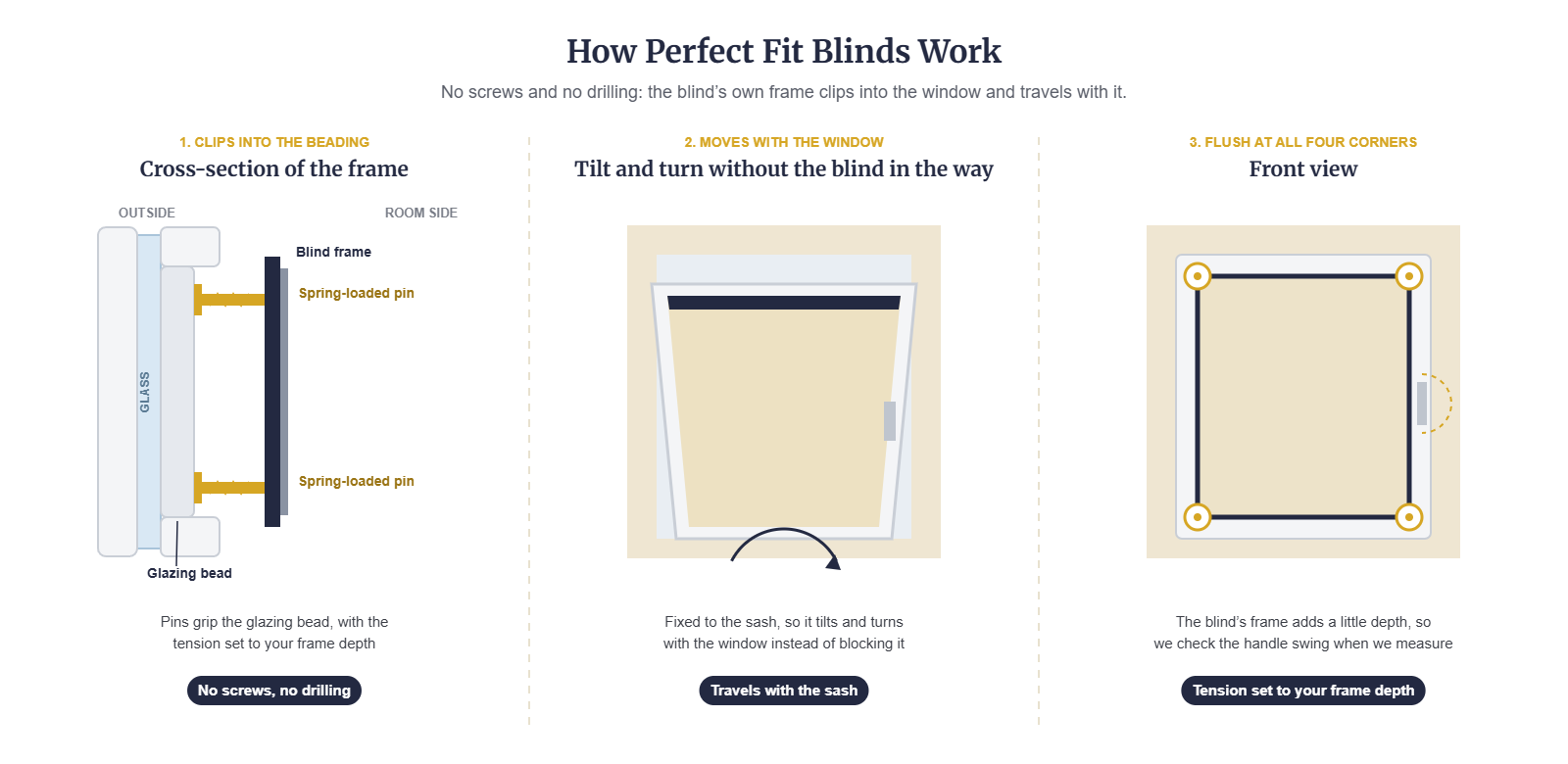
Perfect Fit blinds fit without drilling by using small metal brackets that push in between the glass and the rubber seal on the glazing bead, with the blind’s aluminium frame then clipping onto those brackets. The bead is the uPVC strip that holds the double glazed unit in place, and it is already there on most modern windows.
Once fitted, the blind is part of the sash. It sits close to the glass inside its own frame and travels with the window when you open or tilt it. When you want it off, the frame unclips and the brackets slide back out, leaving the window as it was. Nothing is glued, screwed or cut.
Which windows and doors suit no-drill blinds
No-drill Perfect Fit blinds suit uPVC windows and doors with a square or gently angled glazing bead deep enough for the brackets to grip. That covers most replacement windows and new build glazing we see around Rainham, Hornchurch, Upminster and Romford.
Tilt and turn windows
Tilt and turn windows are common in new build flats in Beam Park and Rainham, and they are the window Perfect Fit was made for. A normal blind swings into the room when the window tilts. A Perfect Fit blind stays flat on the glass in both positions. We cover these in detail in our post on Perfect Fit roller blinds for tilt and turn windows.
French doors and back doors
Each door leaf gets its own blind, so the doors open normally and nothing flaps as you walk through. The frame sits inside the bead line, which keeps the handle clear.
Bifold and patio doors
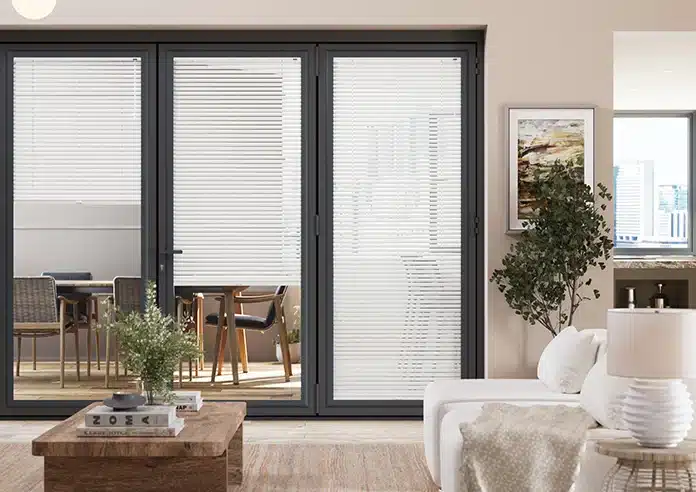
On uPVC bifolds, every glass panel gets its own blind, and the panels fold back with the blinds still on. That suits the kitchen extensions found on many semis and terraces in East London. On aluminium bifolds the bead often will not take the brackets, so we check before recommending them.
Conservatory side windows
uPVC conservatory side frames usually take Perfect Fit well, giving one blind per pane and an even look round the room.
Where no-drill blinds will not work
Timber windows, most steel windows and many aluminium frames do not have a bead the brackets can hold. Very shallow or heavily rounded beads, non-rectangular glass, and handles or vents tight to the bead edge can also rule them out. In those cases a recess or face-fitted blind is the better choice, and we will tell you so at the visit.
No-drill blinds for rented homes and new builds in Rainham
No-drill blinds suit rented homes because many tenancy agreements do not allow drilling, and Perfect Fit blinds leave no holes when you move out. They suit new builds because owners rarely want to drill into brand new uPVC frames.
Rainham has a large number of newer flats and houses, from Beam Park to the developments near the station, and many of them have leasehold terms or tenancy clauses about fixings. A blind that clips into the bead avoids the question altogether. It also avoids drilling into tiled window reveals in kitchens and bathrooms, which is easy to get wrong.
Two practical points for tenants. First, Perfect Fit blinds are made to the size of your current glass, so they only move with you if your next home has panes of the same size. Second, check with your landlord if you are unsure; the brackets are removable, but it is always better to agree it in advance.
Choosing the right no-drill blind for each room
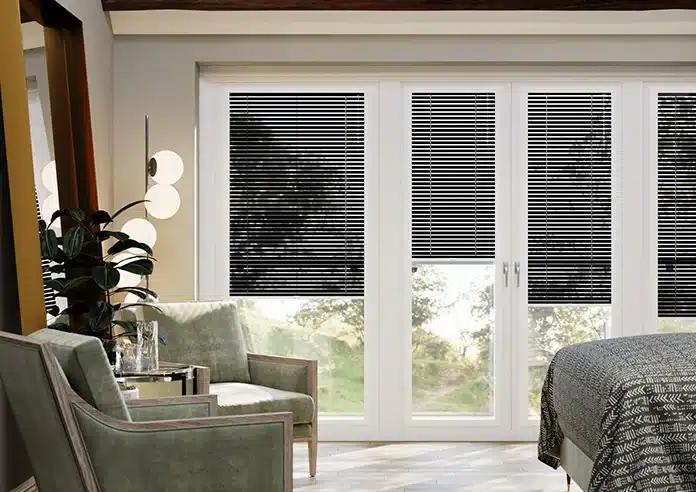
Choose the blind type by the job the room does: blackout for bedrooms, wipeable for kitchens and bathrooms, and adjustable light for living rooms. All of these come in the same clip-in frame.
- Bedrooms and nurseries. Perfect Fit roller blinds in a blackout fabric. The frame cuts side light, which helps on summer mornings and with streetlights.
- Kitchens and bathrooms. A wipeable PVC-coated roller fabric or aluminium Venetian slats, both of which cope with steam and splashes.
- Living rooms facing the street. Day and night blinds or top-down pleated blinds keep the lower half private while letting light in.
- Home offices. Light-filtering rollers or Venetians to cut glare on screens without darkening the room.
- Conservatory panes. Pleated or honeycomb fabrics, usually in a lighter colour to soften glare.
Frame colours include white, anthracite grey and woodgrain effects. Match the frame to the inside face of your window so the blind looks like part of it.
Are no-drill blinds safe for children
Perfect Fit no-drill blinds are a good choice for children’s rooms because their workings sit inside the frame, with no long looped cord hanging beside the window. GOV.UK product safety guidance warns that blind cords and loops can be dangerous for young children, and advises that cots, beds, high chairs and play pens are kept away from blinds because children like to climb.[1]
We follow the same advice when planning a nursery or child’s bedroom: a framed blind on the window, and the cot or bed positioned away from it. If you have older corded blinds elsewhere in the house, GOV.UK also advises fixing cleats out of reach and keeping cords tight with tidies or tensioners.[1]
Do Perfect Fit blinds cause condensation
Perfect Fit blinds do not cause condensation, but because they sit close to the glass they can make existing condensation more noticeable when a room is poorly ventilated. In winter, warm damp air meets the cold glass and water forms on it whatever blind you have.
The Energy Saving Trust says occasional window condensation that clears quickly is common, and recommends keeping trickle vents open and clear, opening windows for at least five minutes several times a day, and running extractor fans after showers and cooking.[2] Do those things and a Perfect Fit blind will stay dry. In bathrooms and kitchens we steer people towards wipeable fabrics or Venetian slats so a little moisture does no harm. Wiping the glass down in the morning in the colder months helps too.
Roof windows and loft rooms need a different blind
Perfect Fit blinds are designed for vertical uPVC windows and doors, not for roof windows. Roof windows have their own blinds that fit to the window’s sash using fixings the maker designed for it, and they are ordered to the window’s type and size code.
On most modern roof windows the code is printed on a type sign in the corner of the top sash, behind the ventilation flap. If you have loft rooms in Rainham, Elm Park or Hornchurch, note that code before you contact us, or we can read it at the visit. Our Velux blinds page covers blackout and pleated options for roof windows.
How much do Perfect Fit no-drill blinds cost in Rainham
Perfect Fit blinds from HomeDecisions start at £60, and most fall between £60 to £75 per blind. Each pane of glass needs its own blind, so count the panes rather than the windows when you budget.
The price moves with the size of the glass, the blind type, the fabric and the frame colour. Rollers in a plain fabric with a white frame sit at the lower end. Large door panels, blackout or honeycomb fabrics and coloured frames sit higher. After our free measuring visit we email or phone through a written quote showing the exact figure for each blind. Our Perfect Fit blinds price guide explains the costs in more detail.
Measuring and fitting no-drill blinds in Rainham
No-drill blinds are measured bead to bead on the glass, every pane separately, and the bead itself has to be checked before anything is ordered. That is where most DIY orders go wrong.
At our free measuring visit we measure the width of each pane at the top, middle and bottom and the height at left, centre and right, take the smallest figures, and check the depth and shape of every bead. We also check handles, restrictors and trickle vents so the frame will clear them. If you would rather measure yourself, our step-by-step guide on how to measure for Perfect Fit blinds shows each step.
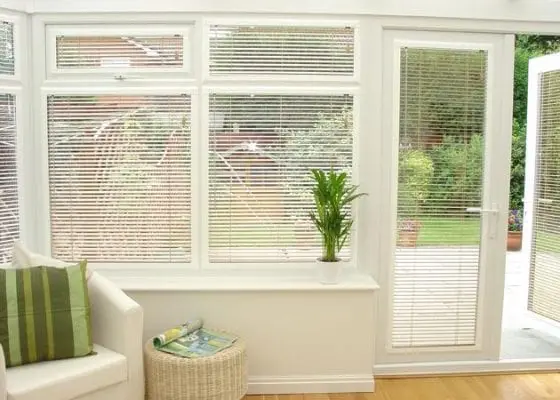
The blinds are then made in our workshop in Rainham and fitted by pushing the brackets in between the glass and the seal, then clipping the frame onto the brackets. More on the range is on our Perfect Fit blinds page.
Frequently asked questions
Do no-drill blinds damage uPVC windows or seals?
Fitted correctly, no. The brackets push in between the glass and the rubber seal and slide out again without marks. Forcing a bracket into a bead that is too tight is what causes damage, which is why we check every bead first.
Can I fit Perfect Fit blinds in a rented flat?
Yes, and they are one of the most popular choices for renters because they need no drilling and leave no holes. If your tenancy mentions fixings, it is still worth letting your landlord know.
Do Perfect Fit blinds work on aluminium or timber windows?
Timber windows almost never take them. Some aluminium windows do, but many do not, because the bead is too shallow or the wrong shape. We check at the visit.
Can Perfect Fit blinds go on Velux roof windows?
No. Roof windows use their own blinds, ordered to the size code on the window’s type sign. We supply blinds for roof windows separately.
Do Perfect Fit blinds reduce airflow?
When the blind is down it sits over the glass, not the trickle vent, so background ventilation carries on. Opening the window works as normal because the blind moves with the sash.
How do I clean no-drill blinds?
Dust with a soft brush or dry cloth, and wipe PVC-coated fabrics and Venetian slats with a damp cloth. The frame unclips if you want to clean the glass behind it.
Book a free no-drill blind visit in Rainham
To have every pane measured and every bead checked, book a free home visit or call us on 01708 505379, Monday to Friday, 9am to 5pm. We measure at your home, make the blinds in our workshop at C3, Star Business Centre, Fair View Industrial Estate, Marsh Wy, Rainham RM13 8UP, and email or phone through a written quote after the visit. We fit across East London and Essex.
References
- ^ a b Child safety: blind cords. Office for Product Safety and Standards (GOV.UK). Retrieved 25 October 2026.
- ^ How to get rid of damp. Energy Saving Trust. Retrieved 25 October 2026.